When gardeners talk about Bordeaux paste vs Bordeaux mixture, they are usually comparing two copper-based fungicides that share the same core ingredients but serve different purposes. If you have ever wondered which one to use for tree wounds, dormant sprays, or disease control in the garden, the difference matters more than you might think.
Both are traditional copper fungicide formulations used to help protect plants from fungal and bacterial diseases. However, their consistency, concentration, and application style are not the same. Understanding Bordeaux paste and Bordeaux mixture can help you choose the right product for healthier plants and better disease management.
What Is Bordeaux Mixture?
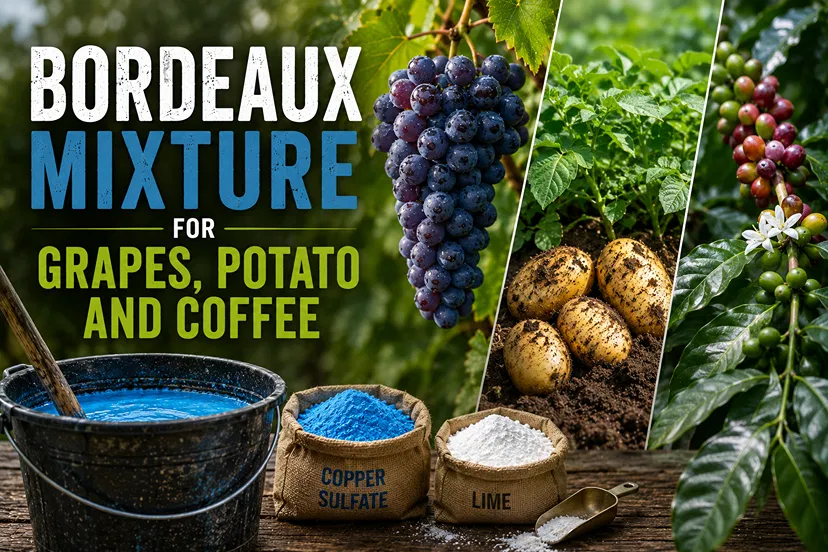
Bordeaux mixture is a classic copper fungicide made from copper sulfate, hydrated lime, and water. It has been used for more than a century to protect plants from disease, especially in orchards, vineyards, and vegetable gardens. Its main strength is as a protective spray applied to foliage, stems, and fruit surfaces before infection occurs.
This formulation is typically diluted and sprayed onto plants. Once applied, it leaves a protective coating that helps prevent fungal spores and some bacterial pathogens from establishing themselves on plant tissue.
Common uses of Bordeaux mixture
- Preventing fungal diseases on grapes, tomatoes, potatoes, and fruit trees
- Protecting dormant trees and shrubs in late winter or early spring
- Reducing the spread of leaf spots, blights, scab, and downy mildew
- Applying as a general preventive treatment in orchards and vineyards
What Is Bordeaux Paste?
Bordeaux paste is a thicker, more concentrated version of the same basic copper-lime formula. Instead of being used as a broad spray, it is usually applied directly to pruning cuts, wounds, or localized areas on tree trunks and branches. Because it is a paste, it adheres well and stays in place longer than a liquid spray.
This makes it especially useful in situations where a plant has been injured or pruned and you want to reduce the chance of infection entering through the open tissue.
Common uses of Bordeaux paste
- Sealing pruning wounds on trees and shrubs
- Applying to cut surfaces after branch removal
- Protecting damaged bark or localized injury sites
- Helping reduce disease entry on exposed plant tissue
Bordeaux Paste vs Bordeaux Mixture: The Main Differences
Although both products contain copper and lime, the practical difference comes down to form, concentration, and use. Bordeaux mixture is designed for spraying over larger plant surfaces, while Bordeaux paste is intended for direct application to small, exposed areas.
Quick takeaway: Use Bordeaux mixture for preventive spray coverage; use Bordeaux paste for targeted wound protection.
1. Formulation
- Bordeaux mixture: A liquid spray made by mixing copper sulfate, lime, and water.
- Bordeaux paste: A thick, sticky preparation that clings to wounds and cuts.
2. Application method
- Bordeaux mixture: Applied with a sprayer or hose-end sprayer.
- Bordeaux paste: Applied by brushing or smearing directly onto the wound.
3. Purpose
- Bordeaux mixture: Prevents disease on leaves, stems, and fruit surfaces.
- Bordeaux paste: Protects cuts and damaged areas from pathogen entry.
4. Coverage
- Bordeaux mixture: Covers larger areas evenly.
- Bordeaux paste: Stays localized and is not meant for full-plant coverage.
Which One Should You Use?
The right choice depends on your goal. If you need to protect an entire plant or orchard from disease, Bordeaux mixture is usually the better option. If you are dealing with a pruning wound, bark injury, or a specific cut surface, Bordeaux paste is more appropriate.
In simple terms:
- Choose Bordeaux mixture for preventive spraying.
- Choose Bordeaux paste for spot treatment on wounds or cuts.
Best Situations for Bordeaux Mixture
Bordeaux mixture works best when applied before disease pressure becomes severe. It is a protective treatment, not a cure for infected tissue. That means timing is important.
- Before bud break: Useful on dormant fruit trees and vines
- After leaf drop: Helps protect plants during seasonal cleanup
- During wet disease-prone weather: Can reduce infection risk when used properly
- On susceptible crops: Helpful for crops prone to blights, mildews, and leaf spots
Best Situations for Bordeaux Paste
Bordeaux paste is more specialized. Because it is thick and concentrated, it is best reserved for localized treatment rather than routine spraying.
- After pruning large branches
- When bark has been damaged by weather, tools, or pests
- On tree trunks where a cut surface needs protection
- For spot application to reduce infection risk on exposed tissue
Safety and Application Tips
Because both products contain copper, they should be used carefully. Copper fungicides can be effective, but overuse may harm plants or accumulate in soil over time.
- Follow label directions closely. Concentration matters, and too much copper can damage foliage.
- Do not spray in hot weather. High temperatures can increase the risk of leaf burn.
- Apply only when needed. Copper products are best used as part of an integrated disease management plan.
- Avoid routine over-application. More is not better with copper fungicides.
- Protect yourself. Wear gloves, eye protection, and appropriate clothing when handling either product.
Can Bordeaux Mixture Replace Bordeaux Paste?
Not usually. Bordeaux mixture can sometimes be used on larger exposed surfaces, but it does not cling as well as paste on vertical wounds or cuts. Since Bordeaux paste is formulated to stay in place, it is often the better choice for tree wound protection.
Likewise, Bordeaux paste should not be treated as a substitute for a spray program when you need broad disease prevention. Each formulation has a specific role, and using the wrong one may reduce effectiveness.
Environmental Considerations
As with all copper-based fungicides, environmental use should be thoughtful. Copper can build up in soil with repeated applications, especially in orchards and vineyards. This is why careful timing, proper dosage, and limited use are important.
Whenever possible, combine fungicide use with good cultural practices such as:
- Pruning for better air circulation
- Removing infected plant debris
- Choosing disease-resistant varieties
- Watering at the base of plants instead of overhead
- Spacing plants to reduce humidity around foliage
Final Verdict: Bordeaux Paste vs Bordeaux Mixture
The debate over Bordeaux paste vs Bordeaux mixture becomes much easier once you understand the purpose of each product. Bordeaux mixture is the better choice for spraying and preventing disease on larger plant surfaces. Bordeaux paste is better for localized protection on pruning wounds, cuts, and damaged bark.
If your goal is whole-plant disease prevention, go with the mixture. If your goal is wound protection, use the paste. Matching the product to the problem will give you better results and help you use copper fungicides more responsibly.
Bottom line: Bordeaux mixture protects plants broadly, while Bordeaux paste protects them precisely. Choose the one that fits the job, and your garden will be better prepared against disease.