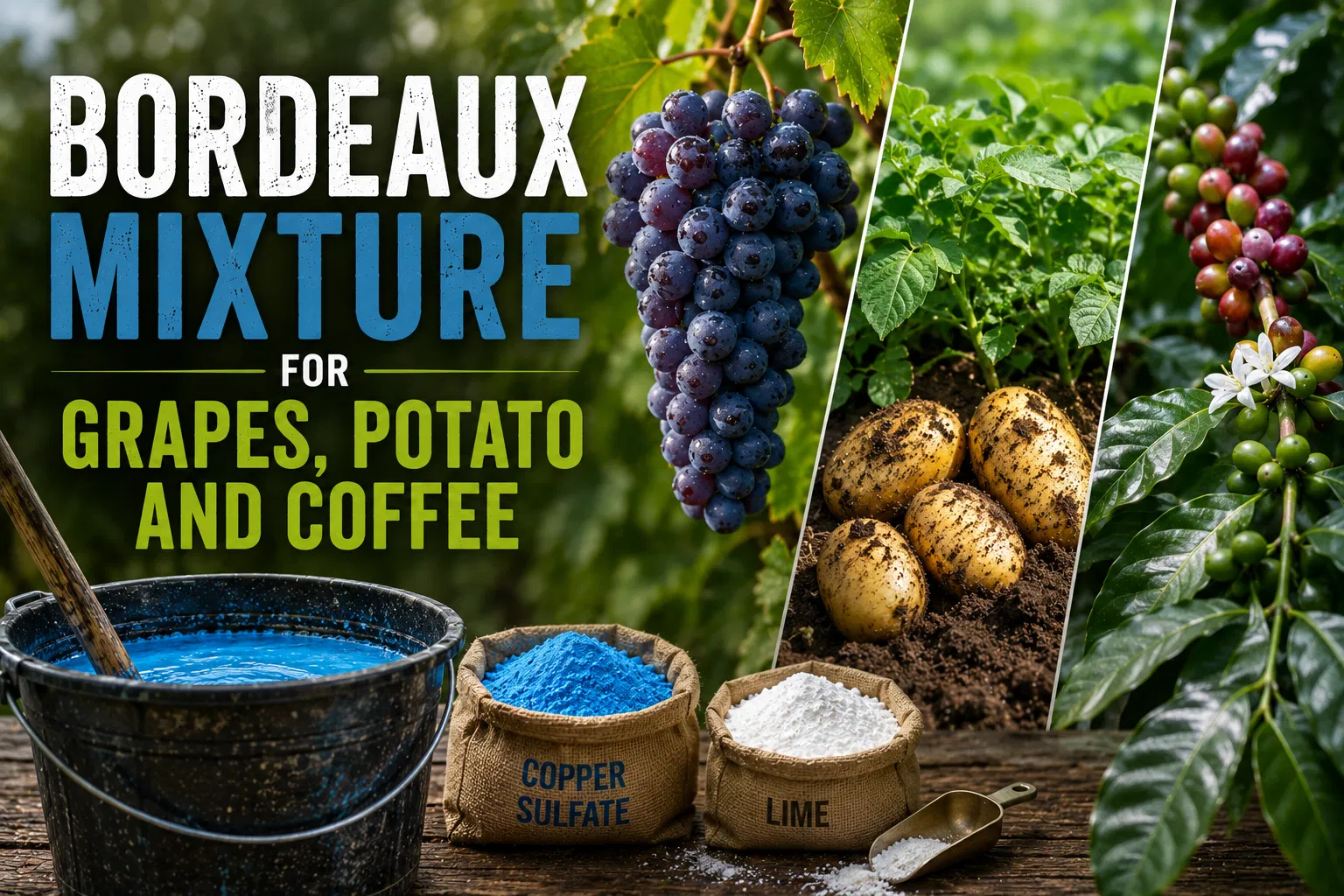
If you grow grapes, potatoes, or coffee, fungal diseases can quickly turn a healthy crop into a disappointing one. That is where Bordeaux mixture comes in. This classic copper-based fungicide has protected plants for generations, helping gardeners and farmers control common diseases before they spread. Used correctly, Bordeaux mixture for grapes, potato, and coffee can be a powerful tool in an integrated plant protection program.
What Is Bordeaux Mixture?
Bordeaux mixture is a fungicidal spray made from copper sulfate, hydrated lime, and water. It was first developed in France and remains one of the most widely recognized preventative fungicides for crop protection.
The mixture forms a protective coating on plant surfaces, helping stop fungal spores from germinating. It is especially useful as a preventive treatment, not a cure for already severe infections.
Why Use Bordeaux Mixture for Grapes, Potatoes, and Coffee?
These crops are vulnerable to destructive fungal and bacterial diseases. Bordeaux mixture is valued because it helps reduce disease pressure while being relatively simple to prepare and apply.
- Grapes: Helps manage downy mildew, black rot, anthracnose, and other fungal problems.
- Potatoes: Commonly used against late blight and early blight, which can devastate foliage and tubers.
- Coffee: Used to reduce leaf rust, berry diseases, and other fungal infections in coffee plantations.
When disease pressure is high, Bordeaux mixture can support crop health and help preserve yield and quality.
How Bordeaux Mixture Works
The copper in Bordeaux mixture acts as a broad-spectrum fungicide. It interferes with the development of fungal spores on plant surfaces. Because it sits on the plant rather than moving through it, coverage matters a great deal.
Important: Bordeaux mixture is most effective before disease becomes severe. It works best as a protective spray applied ahead of wet weather or when disease risk is expected.
Bordeaux Mixture for Grapes
Grapevines are highly susceptible to fungal diseases, especially in humid or rainy climates. Bordeaux mixture is often used in vineyards to help prevent infection during the growing season.
Common Grape Diseases It Helps Manage
- Downy mildew
- Black rot
- Anthracnose
- Leaf spots
Application Tips for Grapes
- Apply before rainy periods or when new growth appears.
- Cover leaves, shoots, and fruit clusters evenly.
- Reapply after heavy rainfall if the protective film has washed off.
- Avoid spraying during intense heat to reduce plant stress.
For grapes, timing is crucial. Young tissue is often more vulnerable, so early-season protection is especially valuable.
Bordeaux Mixture for Potatoes
Potatoes are one of the crops most associated with Bordeaux mixture because of their sensitivity to blight. In wet conditions, fungal diseases can spread rapidly through foliage and into tubers, causing serious losses.
Common Potato Diseases It Helps Manage
- Late blight
- Early blight
- Leaf spots
- Stem infections
Application Tips for Potatoes
- Begin spraying when plants are established and disease risk increases.
- Focus on full coverage of upper and lower leaf surfaces.
- Maintain a regular schedule during cool, wet weather.
- Use extra care after rainfall, since copper residue can be reduced by washing.
Potato growers often rely on Bordeaux mixture as part of a broader disease management strategy that also includes crop rotation, sanitation, and resistant varieties.
Bordeaux Mixture for Coffee
Coffee plants can suffer from fungal diseases that affect leaves, berries, and overall productivity. Bordeaux mixture has long been used in coffee-growing regions to protect plants under disease-prone conditions.
Common Coffee Diseases It Helps Manage
- Leaf rust
- Berry diseases
- Leaf spots
- Fungal infections on young growth
Application Tips for Coffee
- Apply during periods of high humidity or rainfall risk.
- Spray both upper and lower leaf surfaces thoroughly.
- Target young leaves and developing berries, which are often more vulnerable.
- Follow local recommendations for timing and frequency based on climate.
In coffee production, disease control is not only about protecting leaves. Healthy foliage supports stronger flowering, better berry development, and more consistent yields.
How to Prepare Bordeaux Mixture
Bordeaux mixture is typically prepared by combining copper sulfate and lime in water. The exact ratio may vary depending on the crop and intended use. Because copper can be phytotoxic if mixed incorrectly, precision matters.
Basic Preparation Steps
- Dissolve copper sulfate in one container of water.
- In a separate container, mix hydrated lime with water.
- Slowly combine the two solutions while stirring constantly.
- Use the mixture soon after preparation for best results.
Tip: Always use clean tools and containers. Improper mixing can reduce effectiveness or damage plants.
Best Practices for Safe and Effective Use
To get the most from Bordeaux mixture for grapes, potato, and coffee, good application habits are essential. This product is helpful, but it should be used carefully.
- Wear gloves, protective clothing, and eye protection when mixing and spraying.
- Apply in calm weather to reduce drift.
- Do not overuse copper products, as excessive buildup can affect soil health.
- Rotate with other approved disease control methods when appropriate.
- Always follow label instructions or local agricultural guidance.
Because Bordeaux mixture leaves a visible residue, it may not be ideal close to harvest on crops where appearance matters. Plan applications with the crop stage in mind.
Advantages of Bordeaux Mixture
There are several reasons Bordeaux mixture remains popular in agriculture and home gardening:
- Broad disease protection: Effective against many fungal pathogens.
- Low resistance risk: Copper-based sprays are less likely to trigger resistance than some single-site fungicides.
- Long history of use: Proven in vineyards, potato fields, and coffee plantations.
- Preventive action: Helps stop infections before they spread.
Limitations to Keep in Mind
Despite its strengths, Bordeaux mixture is not perfect. It does not remove existing disease damage, and it may need reapplication after rain. Overuse can also contribute to copper buildup in soil over time.
For best results, use it as one part of an integrated approach that includes sanitation, pruning, airflow, monitoring, and resistant crop varieties.
Conclusion
Bordeaux mixture for grapes, potato, and coffee remains a trusted disease-management tool because it is simple, effective, and versatile. When applied correctly and at the right time, it can help protect crops from some of the most damaging fungal diseases in the field and garden.
If you grow these crops, make Bordeaux mixture part of a smart prevention plan. Focus on proper timing, thorough coverage, and safe handling, and you will give your plants a much better chance to stay healthy and productive.