Bitter gourd growers know the frustration: one day the vines look healthy, and the next, fruit flies are destroying developing fruits before harvest. If left unmanaged, bitter gourd fruit fly infestation can cause severe fruit damage, premature fruit drop, and major yield loss. The good news is that a smart combination of traps and spray management can significantly reduce the problem and protect your crop.
In this guide, you’ll learn how to identify bitter gourd fruit fly damage, use traps effectively, and apply spray management the right way for long-lasting control.
Why Bitter Gourd Fruit Fly Is a Serious Problem
Fruit fly is one of the most destructive pests in bitter gourd cultivation. Adult flies lay eggs in young fruits, and the larvae feed inside the fruit flesh. This makes the produce unmarketable and weakens the plant’s productivity.
Common signs of fruit fly infestation include:
- Small puncture marks on fruits
- Soft rotting patches
- Premature fruit yellowing or dropping
- Maggots inside damaged fruits
- Reduced fruit quality and yield
Because the larvae stay hidden inside the fruit, control is most effective when done before the infestation becomes severe. That’s why integrated management is essential.
Trap Management for Bitter Gourd Fruit Fly Control
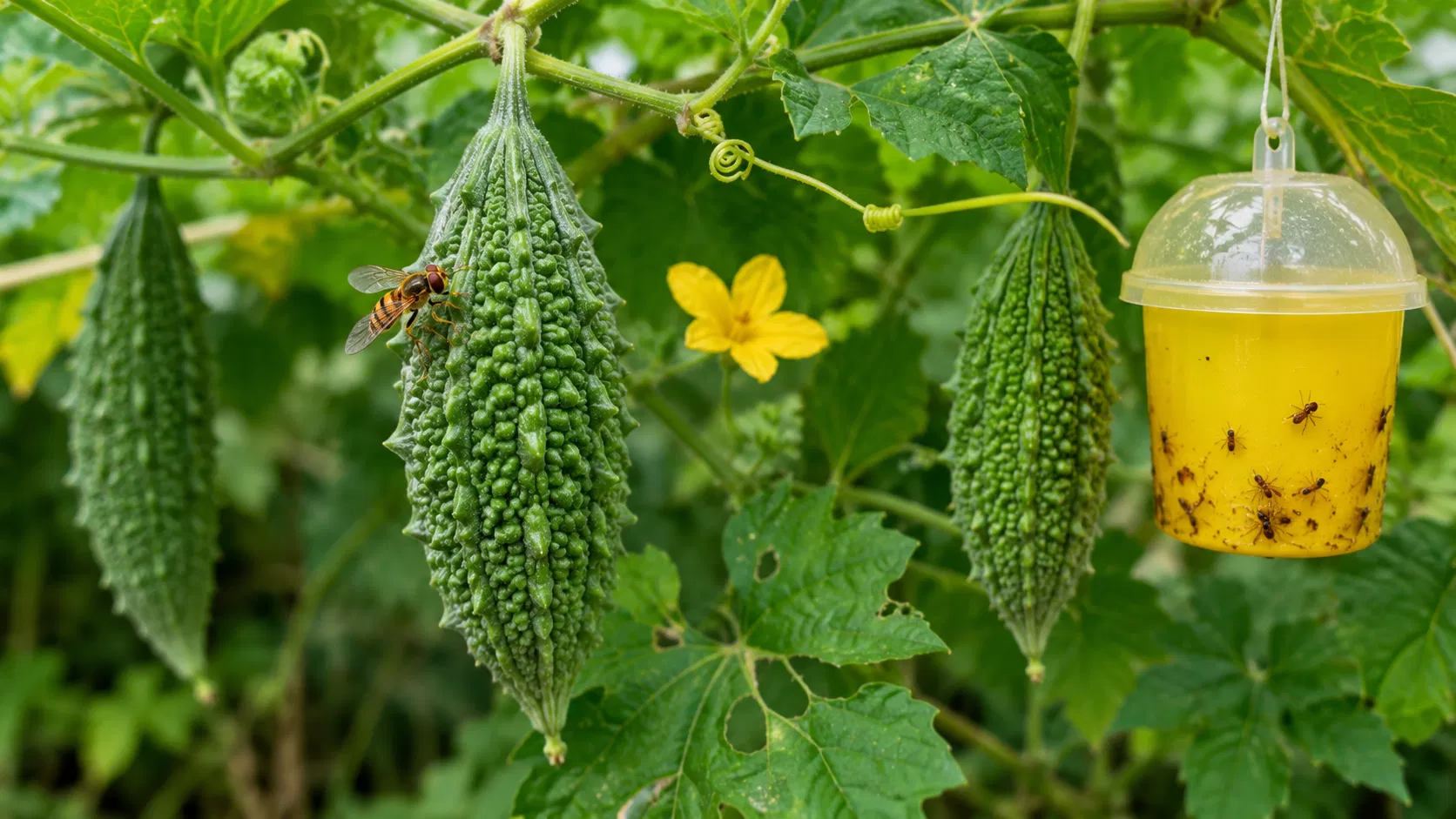
Traps are one of the most effective and eco-friendly methods to monitor and reduce fruit fly populations. They work by attracting adult flies before they can lay eggs in the fruits.
1. Use Methyl Eugenol or Cue-Lure Traps
Male fruit flies are strongly attracted to specific lures such as methyl eugenol or cue-lure, depending on the fruit fly species in your area. These traps help reduce mating activity and lower the overall pest population.
Install traps early, preferably before fruiting begins, so you can catch the first wave of adults before they multiply.
2. Recommended Trap Density
For effective bitter gourd fruit fly management, place enough traps across the field to create broad coverage. A practical approach is:
- 10 to 12 traps per acre for monitoring and mass trapping
- Place traps evenly throughout the field
- Increase trap numbers near borders if nearby crops are also infested
Traps should be hung at canopy level or slightly above, where fruit flies are most active.
3. Maintain and Replace Lures Regularly
Trap efficiency drops when lures lose their potency. Check traps weekly and replace attractants as recommended by the product label. Clean out dead insects and refill trapping solutions if needed.
Tip: Traps are most effective when used consistently from early crop stages through harvest, not as a one-time fix.
4. Use Bait Traps for Additional Control
Protein bait traps can also attract female fruit flies searching for food and egg-laying sites. These traps support mass trapping and are especially useful in high-pressure conditions.
Combining lure traps with bait traps creates stronger field-wide suppression.
Spray Management for Bitter Gourd Fruit Fly
Sprays are important when fruit fly pressure is high, but they should be used strategically. Since adult flies are the target, sprays are most effective when applied as bait sprays or targeted insecticidal sprays rather than blanket spraying alone.
1. Use Bait Sprays for Better Results
Bait sprays combine an attractant with a suitable insecticide, drawing adult fruit flies to treated spots. This helps reduce pest numbers while minimizing overall pesticide use.
A common approach is to spray bait solution on non-edible parts of the crop or border vegetation, depending on local recommendations and product labels. Reapply after rain or as needed based on infestation levels.
2. Apply Sprays at the Right Time
Timing matters. Spray in the early morning or late afternoon when fruit flies are most active and temperatures are cooler. Avoid spraying during windy conditions or heavy sunlight to improve coverage and reduce spray loss.
3. Target Hotspots and Field Borders
Fruit flies often enter from surrounding areas, especially if nearby crops or wild host plants are infested. Focus on field edges, hotspots, and areas showing the first signs of damage. This targeted approach helps break the pest cycle more efficiently.
4. Rotate Products to Prevent Resistance
Repeated use of the same insecticide can reduce effectiveness over time. Rotate chemical groups as advised by agricultural experts or local extension services. Always follow label directions, pre-harvest intervals, and safety precautions.
Integrated Cultural Practices That Support Control
Trap and spray management work best when combined with good farm hygiene and cultural practices. These simple steps can greatly reduce fruit fly breeding and spread.
1. Remove Infested Fruits
Pick up and destroy damaged or fallen fruits regularly. Infested fruits should never be left in the field because they become breeding sites for new flies.
2. Deep Bury or Dispose Properly
Collect infested fruits and bury them deeply, or dispose of them in a way that prevents larvae from emerging. This interrupts the pest lifecycle and lowers future infestations.
3. Harvest Frequently
Frequent harvesting reduces the chance of flies laying eggs in overripe fruits. Harvesting every 2 to 3 days during peak production can make a noticeable difference.
4. Keep the Field Clean
Remove weeds, rotting plant material, and unused fruits around the plot. Clean surroundings reduce hiding places and breeding zones for fruit flies.
Best Practices for Long-Term Bitter Gourd Fruit Fly Management
A successful control strategy is not about one single treatment. It is about combining traps, sprays, and field sanitation into one consistent plan.
- Start traps before flowering or early fruiting
- Monitor pest pressure weekly
- Use bait sprays only when necessary
- Destroy infested fruits immediately
- Harvest regularly to avoid overripe fruits
- Follow safe pesticide use and label instructions
Farmers who use integrated pest management usually see better fruit quality, lower crop loss, and more marketable bitter gourd produce.
Conclusion
Bitter gourd fruit fly control becomes far more effective when trap and spray management are used together. Traps help monitor and suppress adult flies early, while bait sprays and targeted applications provide extra control during peak pressure. When you also maintain field hygiene, remove infested fruits, and harvest on time, you create a strong defense against this damaging pest.
For the best results, begin control measures early and stay consistent throughout the season. A proactive approach today can protect your bitter gourd crop, improve yield, and deliver healthier fruits at harvest.