In modern crop management, the terms biostimulants and plant growth regulators (PGRs) are often used side by side, but they are not the same thing. If you want better root development, stronger stress tolerance, improved flowering, or more predictable growth, understanding the difference matters. Choosing the wrong product can mean wasted money, missed results, or even unwanted plant responses.
So, what separates biostimulants from PGRs? And how do you decide which one fits your crop goals? Let's break it down clearly.
What Are Biostimulants?
Biostimulants are substances or microorganisms that help improve plant performance by supporting natural processes. They do not directly feed the plant like fertilizers, and they are not primarily used to control plant shape or size like PGRs. Instead, they help plants become more efficient, resilient, and productive.
Biostimulants may include:
- Seaweed extracts
- Humic and fulvic acids
- Amino acids
- Protein hydrolysates
- Beneficial microbes such as Bacillus or mycorrhizal fungi
Their main value is in helping the plant handle stress, improve nutrient uptake, and optimize growth under challenging conditions.
Common Benefits of Biostimulants
- Improved root growth and root efficiency
- Better nutrient absorption and utilization
- Enhanced tolerance to drought, heat, salinity, or transplant stress
- Support for overall plant vigor
- Possible improvements in yield quality and uniformity
Biostimulants work by supporting the plant's natural systems, not by forcing a specific growth response.
What Are PGRs?
Plant growth regulators (PGRs) are compounds that directly influence plant hormones or hormone-like activity. They are used to control or modify plant growth in a targeted way. In agriculture and horticulture, PGRs are often applied to regulate plant height, stimulate flowering, improve fruit set, or control branching.
Examples of PGRs include:
- Auxins
- Gibberellins
- Cytokinins
- Abscisic acid
- Ethylene-related compounds
Some PGRs occur naturally in plants, while others are synthetic. Unlike biostimulants, PGRs have a more direct and often more visible effect on plant development.
Common Uses of PGRs
- Reducing excessive vegetative growth
- Promoting compact plant form
- Increasing flowering or fruiting in specific crops
- Improving harvest timing and uniformity
- Managing branching or shoot elongation
Biostimulants vs PGRs: The Core Difference
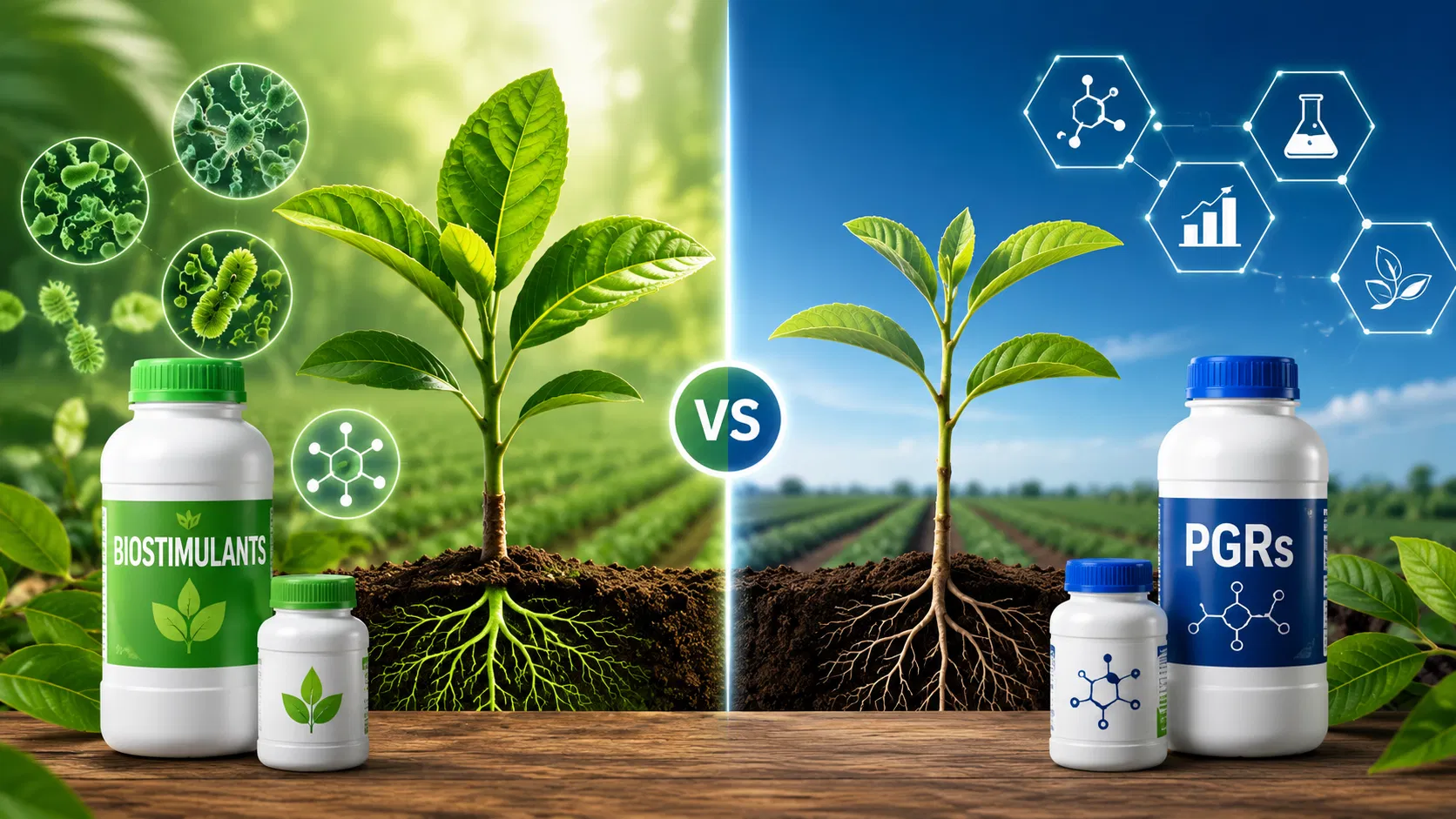
The biggest difference is simple: biostimulants support plant processes, while PGRs directly alter plant growth and development.
Biostimulants are more about strengthening the plant's natural ability to perform. PGRs are more about steering the plant toward a specific growth outcome. That distinction affects how they are used, how they work, and what results you can expect.
Side-by-Side Comparison
- Primary role of biostimulants: Improve plant health, resilience, and efficiency
- Primary role of PGRs: Control plant growth patterns and hormonal responses
- Effect timing of biostimulants: Often gradual and supportive
- Effect timing of PGRs: Often more immediate and measurable
- Typical goal of biostimulants: Boost overall performance under stress or low efficiency
- Typical goal of PGRs: Achieve a specific crop or ornamental growth outcome
How Biostimulants Work
Biostimulants work through several pathways. They may stimulate root expansion, enhance microbial activity in the soil, improve nutrient availability, or trigger natural defense and stress-response mechanisms in the plant.
For example, seaweed extracts may contain natural compounds that encourage root development and stress tolerance. Humic substances can help improve nutrient chelation and uptake. Beneficial microbes may colonize the rhizosphere and make nutrients more accessible.
Because biostimulants typically work with the plant rather than against it, they are often used as part of a broader fertility and crop health program.
How PGRs Work
PGRs affect the plant's hormonal balance. Plant hormones are the internal signals that tell a plant when to grow, branch, flower, drop fruit, or slow down growth. By changing these signals, PGRs can create a specific and often predictable response.
For instance, a grower may use a PGR to reduce stem elongation in ornamental crops, helping produce shorter, sturdier plants. In fruit production, a PGR might be used to improve fruit set or manage ripening.
Because PGRs are powerful and targeted, proper application rate, timing, and crop-specific use are critical.
Which Is Better for Your Crop?
There is no universal winner in the biostimulants vs PGRs debate. The better choice depends on your goal.
Choose Biostimulants When You Want To:
- Support root establishment
- Reduce stress from heat, drought, or transplanting
- Improve nutrient uptake and efficiency
- Enhance long-term plant vigor
- Support soil biology and plant recovery
Choose PGRs When You Want To:
- Control plant height
- Increase branching or compactness
- Promote or delay flowering
- Influence fruit development or ripening
- Create uniform plant architecture
In many cases, growers use both strategically. A biostimulant may improve plant resilience and nutrient use, while a PGR is applied later to shape crop form or timing.
Are Biostimulants and PGRs Compatible?
Yes, they can be compatible, but they are not interchangeable. A biostimulant can complement a PGR program, especially when the goal is to reduce stress and improve overall crop performance. However, they should not be treated as substitutes for one another.
Using a biostimulant does not mean you will get the same height control or flowering response as a PGR. Likewise, applying a PGR will not provide the broad stress tolerance or microbial benefits often associated with biostimulants.
Why the Difference Matters in Agriculture and Horticulture
Knowing the difference between biostimulants and PGRs helps growers make smarter decisions about product selection, timing, and crop management. It also helps avoid unrealistic expectations.
If you expect a biostimulant to behave like a PGR, you may be disappointed. If you use a PGR where your real need is stress recovery or nutrient efficiency, you may miss the underlying issue entirely.
For best results, think in terms of crop goals:
- Health and resilience: biostimulants
- Growth control and architecture: PGRs
- Yield support and efficiency: often biostimulants
- Shape, timing, and uniformity: often PGRs
Final Takeaway
Biostimulants and PGRs both play valuable roles in modern crop production, but they serve very different purposes. Biostimulants help plants perform better naturally, while PGRs are used to directly regulate plant growth. Understanding this difference can improve product selection, reduce guesswork, and lead to better crop outcomes.
If you are managing crops and want stronger plants, smarter input use, and better results, start by identifying your real goal. Then choose the tool that matches it. In many cases, the most effective strategy is not biostimulants or PGRs alone, but the right combination of both at the right time.