Nothing is more frustrating than seeing healthy plants suddenly develop black spots, powdery growth, wilting leaves, or rotting stems. Plant diseases can spread quickly, and once they take hold, they can weaken your garden fast. The good news is that the best fungicides for common plant diseases can help you stop outbreaks early, protect new growth, and keep your plants thriving all season long.
Choosing the right fungicide matters. Different diseases need different solutions, and using the wrong product can waste time while the problem gets worse. In this guide, you’ll learn which fungicides work best for common plant diseases, how they work, and how to use them effectively for healthier plants.
What Fungicides Do?
Fungicides are products designed to prevent or control fungal infections on plants. Some are best used before disease appears, while others help slow or stop active infections. The most effective fungicide depends on the disease, the plant, and whether you want a natural, contact, or systemic treatment.
In general, fungicides fall into three main categories:
- Protectant fungicides – These coat the plant surface and prevent spores from germinating.
- Curative fungicides – These help stop early infections after they begin.
- Systemic fungicides – These are absorbed by the plant and move through its tissues for longer-lasting protection.
Best Fungicides for Common Plant Diseases
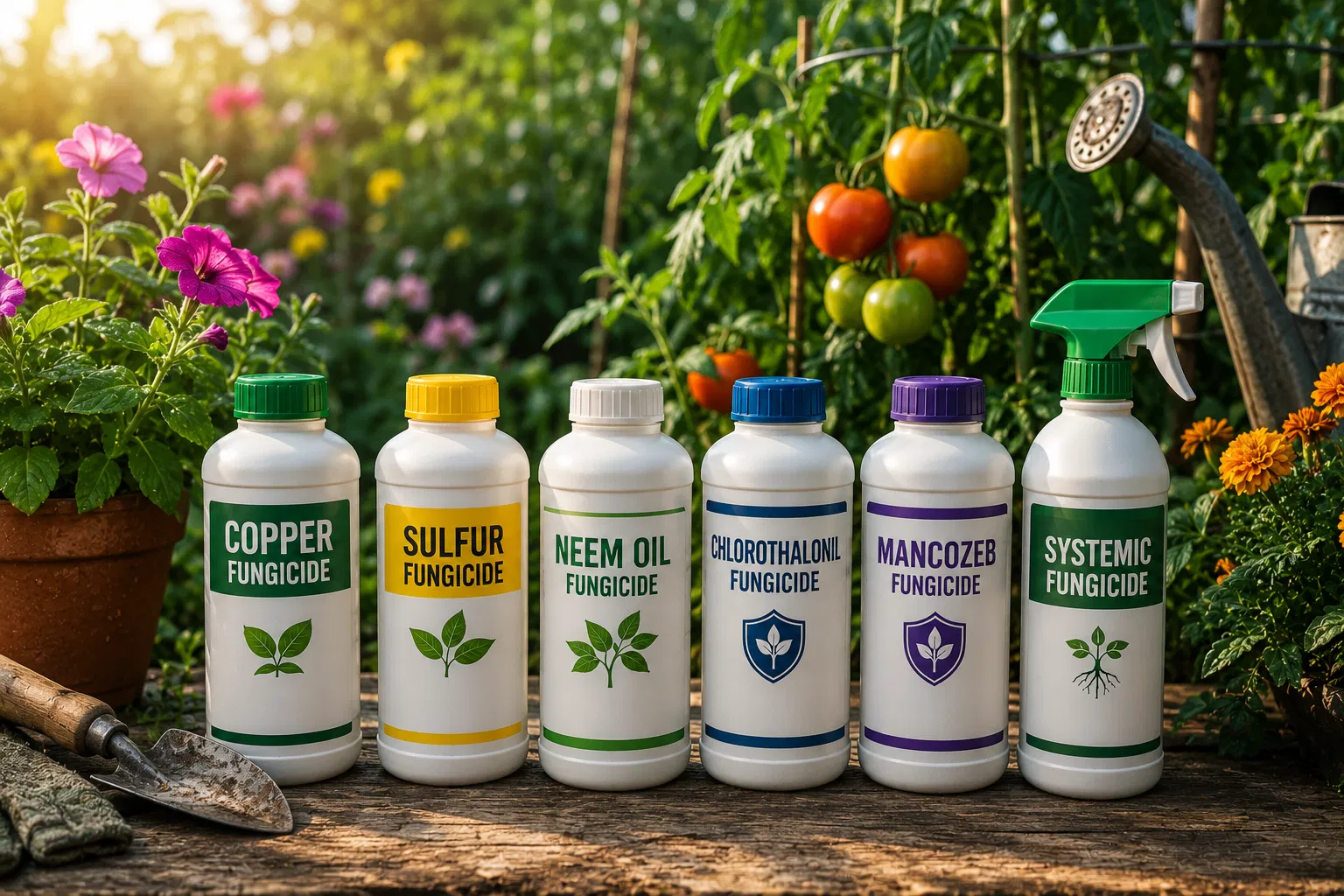
1. Copper Fungicide
Copper fungicide is one of the most widely used treatments for a broad range of plant diseases. It is especially helpful against leaf spot, blight, anthracnose, downy mildew, and bacterial diseases. Many gardeners choose copper because it is effective, versatile, and available in several forms.
Best for: tomatoes, peppers, fruits, ornamentals, and vegetables prone to leaf diseases
Why it works: Copper acts as a protectant on the plant surface, preventing fungal spores from developing. It is often used as a preventive treatment or at the first sign of disease.
Tip: Copper fungicide works best when applied before heavy infection spreads. Always follow label directions, since overuse can damage sensitive plants.
2. Sulfur Fungicide
Sulfur fungicide is a classic choice for powdery mildew, rust, and certain mites. It has been used in gardens for decades because it is effective and relatively low-cost. Sulfur works well on many fruits, vegetables, roses, and ornamentals.
Best for: powdery mildew, rust, and some fungal leaf diseases
Why it works: Sulfur disrupts fungal growth and prevents spores from spreading. It is most effective in warm, dry conditions, but it should not be used during high heat because it may burn foliage.
3. Neem Oil Fungicide
Neem oil is a popular organic option for gardeners looking for a more natural approach. It helps control powdery mildew, black spot, rust, and some other fungal problems. Neem oil also has insecticidal properties, making it useful in integrated garden care.
Best for: roses, houseplants, herbs, vegetables, and ornamental plants
Why it works: Neem oil forms a coating on plant surfaces that helps suppress fungal growth while also interfering with pest activity.
It is especially helpful for gardeners who want one product that can address both fungal issues and soft-bodied insects.
4. Chlorothalonil Fungicide
Chlorothalonil is a broad-spectrum fungicide that is often used to protect plants from leaf spot, blight, anthracnose, and other common fungal diseases. It is a strong preventive option for many landscape plants, turf, and vegetables.
Best for: lawns, flowers, shrubs, tomatoes, and other susceptible plants
Why it works: Chlorothalonil creates a protective barrier on plant surfaces that prevents infection from starting. It is usually applied before disease becomes severe.
Because it is a contact fungicide, thorough coverage is important for best results.
5. Mancozeb Fungicide
Mancozeb is another broad-spectrum contact fungicide commonly used for early blight, downy mildew, leaf spot, and rust. Gardeners and growers often rely on it for vegetables, fruits, and ornamentals.
Best for: tomatoes, potatoes, grapes, cucumbers, and ornamental plants
Why it works: Mancozeb helps protect plant tissue by stopping fungal spores before they invade.
It is especially useful in wet weather, when fungal diseases spread more easily.
6. Triforine and Other Systemic Fungicides
Systemic fungicides like triforine are absorbed into the plant and move through its tissues, making them a powerful option for active fungal diseases. They are commonly used for black spot, powdery mildew, rust, and leaf spot on roses and ornamentals.
Best for: roses, shrubs, and ornamental plants with recurring fungal problems
Why it works: Because the fungicide is taken into the plant, it can provide stronger internal protection than surface-only products.
Systemic fungicides are especially useful when disease keeps returning despite regular spraying.
How to Choose the Right Fungicide
The best fungicide depends on the disease you’re dealing with and how advanced the infection is. Before buying anything, identify the problem as accurately as possible. A fungicide that works on powdery mildew may not help with root rot or bacterial leaf spot.
Use these guidelines:
- For powdery mildew: sulfur, neem oil, or systemic fungicides
- For black spot on roses: neem oil, copper fungicide, or systemic fungicides
- For leaf spot and blight: copper, chlorothalonil, or mancozeb
- For rust: sulfur, neem oil, or systemic fungicides
- For downy mildew: copper, chlorothalonil, or mancozeb
If you prefer organic gardening, neem oil and sulfur are common first choices. If the disease is widespread or difficult to manage, a stronger contact or systemic fungicide may be necessary.
Application Tips for Better Results
Even the best fungicide will not work well if it is applied incorrectly. Timing, coverage, and consistency all matter.
- Apply early. Fungicides are most effective when used at the first sign of disease or before infection spreads.
- Cover all affected areas. Spray the tops and undersides of leaves, stems, and surrounding plant tissue.
- Repeat as directed. Many fungicides need reapplication after rain or at regular intervals.
- Remove badly infected tissue. Prune diseased leaves or stems to reduce spread.
- Rotate products when needed. Using the same fungicide repeatedly can reduce effectiveness over time.
It also helps to improve airflow, water at the base of plants, and keep leaves dry whenever possible. Good cultural care often makes fungicides work even better.
Organic vs. Conventional Fungicides
Gardeners often wonder whether organic fungicides are enough or whether conventional options are necessary. The answer depends on the severity of the disease and your gardening goals.
Organic fungicides like neem oil and sulfur are great for mild to moderate issues and routine prevention. They are often preferred for edible gardens and home landscapes.
Conventional fungicides like chlorothalonil, mancozeb, and systemic products may offer stronger control for severe outbreaks or recurring infections.
The key is to match the product to the problem, then use it carefully and consistently.
Common Plant Diseases Fungicides Help Control
Here are some of the most common fungal diseases gardeners face:
- Powdery mildew – white, powdery coating on leaves
- Black spot – dark spots with yellowing on rose leaves
- Leaf spot – brown, black, or yellow spots that spread across foliage
- Rust – orange, red, or brown pustules on leaves
- Downy mildew – fuzzy growth and discolored leaf patches
- Blight – rapid browning, wilting, and plant collapse
Identifying the disease correctly is the first step toward effective treatment. In some cases, disease symptoms may resemble nutrient problems or insect damage, so close inspection matters.
Final Thoughts on the Best Fungicides for Common Plant Diseases
The best fungicides for common plant diseases are the ones that match your specific problem, protect your plants early, and fit your gardening style. Copper fungicide, sulfur, neem oil, chlorothalonil, mancozeb, and systemic fungicides each have their place in a smart disease-management plan.
If you act quickly, apply products correctly, and combine fungicide use with good garden hygiene, you can greatly reduce disease pressure and keep your plants stronger all season long. Healthy gardens start with prevention, and the right fungicide can make all the difference.
Take action early, choose wisely, and give your plants the protection they need to stay productive and beautiful.