If you want stronger birds, faster growth, and better egg production, the feed you choose matters more than almost anything else. The best chicken feed for layers and broilers is not the same, and giving each flock the right nutrition can make a major difference in health, performance, and profit.
Layer hens need feed that supports steady egg production and strong shells, while broilers need a diet focused on rapid muscle growth and efficient weight gain. In this guide, you'll learn how to choose the right chicken feed for layers and broilers, what ingredients to look for, and how to avoid common feeding mistakes.
Understanding the Difference Between Layer Feed and Broiler Feed
Not all chicken feed is created equal. Layers and broilers have very different nutritional needs, and using the wrong feed can cause problems.
Layer feed
Layer feed is formulated for hens that are producing eggs. It usually contains:
- Higher calcium for strong eggshells
- Balanced protein for egg production
- Moderate energy to maintain health without excessive weight gain
Broiler feed
Broiler feed is designed for meat birds that need to grow quickly. It usually includes:
- Higher protein for muscle development
- More energy for fast growth
- Carefully balanced amino acids for efficient feed conversion
Key point: Layer hens should not be fed broiler feed long term, and broilers should not be kept on layer feed if you want strong growth and healthy development.
Best Nutritional Features to Look for in Chicken Feed
When shopping for the best chicken feed for layers and broilers, check the nutrition label carefully. The right feed should match the bird's purpose and age.
For layers
- Protein: Usually around 16% to 18%
- Calcium: Around 3.5% to 4.5%
- Phosphorus: Supports bone and eggshell health
- Vitamins and minerals: Especially vitamin D3 for calcium absorption
For broilers
- Protein: Typically 18% to 22% or more depending on age
- Amino acids: Lysine and methionine are especially important
- Energy sources: Corn, wheat, or other grains for growth
- Low calcium compared to layer feed: Too much calcium can harm broilers
Best Ingredients in Quality Chicken Feed
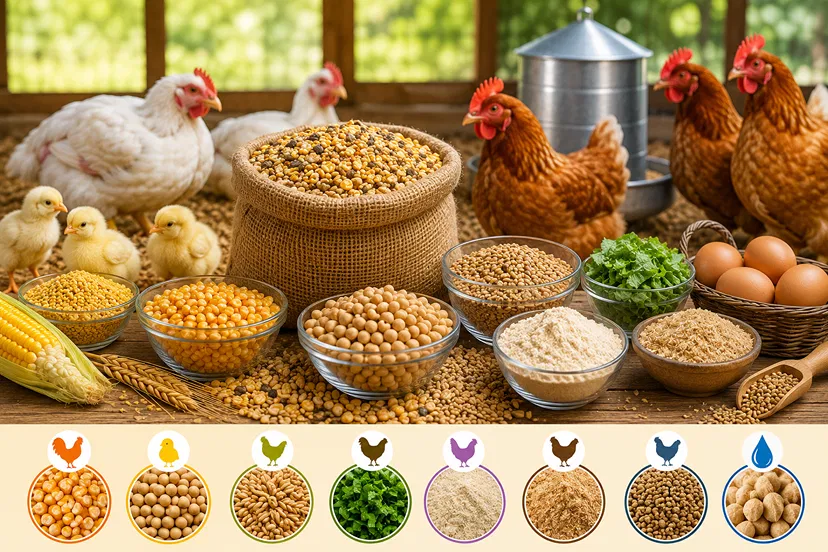
High-quality chicken feed usually contains a mix of grains, protein sources, vitamins, and minerals. The best ingredients support digestion, growth, and long-term health.
Common feed ingredients
- Corn: A great source of energy
- Soybean meal: Rich in protein for muscle and egg development
- Wheat: Provides energy and fiber
- Fish meal or animal protein: Can boost amino acid content
- Oats and barley: Useful for added fiber and variety
- Calcium sources: Limestone or oyster shell for layers
- Vitamin and mineral premix: Helps prevent deficiencies
Look for feed that is fresh, clean, and stored properly. Moldy or stale feed can reduce appetite and cause health issues.
Best Feed Options for Layer Chickens
Layer hens do best on a complete layer feed once they begin laying eggs, usually around 18 to 20 weeks of age. This feed gives them what they need to produce eggs consistently.
What layer hens need most
- Calcium for thick shells and strong bones
- Protein for sustained egg production
- Vitamin D3 to help absorb calcium
- Clean water to support digestion and laying
You can also offer oyster shell separately if hens need extra calcium. This is especially helpful for older layers or during periods of heavy laying.
Tip: Avoid feeding layer hens too many scraps or too much scratch grain. These can dilute the balanced nutrition they need for egg production.
Best Feed Options for Broiler Chickens
Broilers need a different feeding program than layers because their bodies are built for fast growth. A good broiler feed supports healthy muscle development without causing digestive or bone problems.
What broilers need most
- High protein for rapid growth
- Energy-rich grains for weight gain
- Balanced amino acids for efficient feed conversion
- Controlled calcium levels to avoid nutrient imbalance
Broilers are often fed starter, grower, and finisher feeds depending on age. Starter feed is usually higher in protein, while finisher feed supports the final growth stage before processing.
Should You Use Medicated or Non-Medicated Feed?
Some chicken feeds are medicated, especially broiler starter feed. These may help prevent certain diseases in young birds. However, not all flocks need medicated feed.
Choose medicated feed if:
- Your veterinarian recommends it
- Your broilers are at higher risk of disease
- You are managing a young flock in a high-pressure environment
Choose non-medicated feed if:
- You prefer a natural feeding approach
- Your flock is healthy and low-risk
- You are raising backyard chickens with low disease pressure
For laying hens, medicated feed is usually not necessary unless specifically advised by a poultry professional.
Common Feeding Mistakes to Avoid
Even the best chicken feed for layers and broilers can fail if it is used incorrectly. Avoid these common mistakes to keep your flock thriving.
- Using layer feed too early: Young pullets need grower feed before laying begins
- Feeding broiler feed to layers long term: This can lead to excess weight and low calcium intake
- Mixing too many treats into the diet: Too many snacks reduce nutrient intake
- Ignoring clean water: Chickens need constant access to fresh water
- Buying feed in bulk without proper storage: Feed can spoil quickly in heat and moisture
How to Choose the Right Feed for Your Flock
The best chicken feed depends on the age, purpose, and condition of your birds. Use this quick guide to make the right choice.
For laying hens
- Choose a complete layer feed
- Look for 16% to 18% protein
- Make sure calcium is high enough for eggshell quality
- Offer oyster shell if needed
For broilers
- Choose a high-protein starter or grower feed
- Look for strong amino acid content
- Use feed stages appropriate for age
- Keep water available at all times
For mixed flocks
If you keep both layers and broilers together, feeding can be more complicated. In many cases, it is best to separate them if possible. If not, choose a feed strategy that does not harm either group, and consult a poultry nutrition expert for the safest option.
Final Thoughts on the Best Chicken Feed for Layers and Broilers
The best chicken feed for layers and broilers is the one that matches each bird's life stage and purpose. Layers need calcium-rich feed for strong eggs, while broilers need protein-rich feed for fast, healthy growth. When you choose the right ration, store it well, and avoid overfeeding treats, your flock will reward you with better performance and fewer problems.
Bottom line: Feed your chickens according to their needs, not by convenience. A smart feeding plan is one of the simplest ways to raise healthier birds and get better results from your flock.