Broad spectrum insecticides can control several pest groups in a single application, which makes them useful during mixed infestations or fast-moving outbreaks. However, “best” does not mean the strongest or most toxic option. The best product is the one registered for the vegetable crop and target pest, applied at the label rate, timed to the vulnerable pest stage, and used without unnecessary harm to pollinators and natural enemies.
Before choosing among available insecticides, identify the pest correctly. Aphids, whiteflies, jassids, thrips, caterpillars, beetles, mites, leaf miners, and fruit borers do not respond equally to the same active ingredient.
What Does Broad Spectrum Mean?
A broad spectrum insecticide affects more than one insect group or feeding type. Depending on the active ingredient and label, it may suppress sucking pests, chewing insects, borers, or several of these groups together.
Broad spectrum action can be useful, but it also increases the chance of affecting beneficial organisms. Predatory beetles, lacewings, parasitoid wasps, spiders, pollinators, and microbial control agents may be exposed along with the target pest.
When Broad Spectrum Insecticides Are Most Useful
- Two or more damaging pest groups exceed economic thresholds at the same time.
- A rapidly developing infestation threatens flowers, growing points, or marketable produce.
- A selective option is unavailable for the registered crop-pest combination.
- Coverage can be achieved without spraying open flowers or active pollinators.
- The active ingredient fits the resistance-rotation plan.
Use broad spectrum products within an integrated crop protection program rather than as calendar sprays.
Common Broad Spectrum Active-Ingredient Groups
Pyrethroids
Pyrethroids such as lambda-cyhalothrin, deltamethrin, cypermethrin, and related molecules often provide rapid knockdown against exposed insects. Their crop and pest claims differ by formulation. They can also disrupt predators and may trigger pest resurgence when used repeatedly.
Organophosphate and carbamate insecticides
Some older chemistries act against several chewing and sucking pests. Their safety restrictions, residue intervals, crop claims, and environmental risks must be checked carefully. Never assume that an active ingredient registered on one crop is approved on another.
Combination insecticides
Mixtures contain two active ingredients and may cover more than one pest group. They should not be used merely because they appear stronger. A mixture can expose two resistance groups at once, and repeated use may reduce the future usefulness of both.
Broad-activity newer chemistries
Some newer products act against multiple pests but may be more selective than traditional broad spectrum compounds. Selection should be based on the registered label, pest stage, resistance group, and local advisory.
Match the Product to the Pest
| Pest group | Typical damage | Selection priority |
|---|---|---|
| Aphids, jassids and whiteflies | Sap removal, curling, honeydew and virus transmission | Systemic or translaminar activity where labelled |
| Thrips | Scarring, silvering, flower damage and distorted growth | Coverage of young leaves and flowers; rotate modes of action |
| Caterpillars and fruit borers | Holes, feeding inside shoots or fruit, frass | Apply when larvae are small and before they enter protected tissue |
| Beetles | Chewing, shot holes and defoliation | Contact exposure and label-confirmed residual control |
| Mites | Speckling, bronzing and webbing | Use a registered acaricide; many insecticides are weak on mites |
Vegetable-Crop Considerations
Vegetables are harvested frequently, so the pre-harvest interval is critical. A product may control the pest but still be unsuitable when harvest is near. Check the waiting period every time, even if the same active ingredient was used on another crop.
On tomato, for example, whiteflies, thrips, fruit borers, leaf miners, and mites may occur together, but one spray rarely provides equally strong control of every pest. Scouting should identify which pest is causing economic damage.
Coverage and Application Quality
Even a well-selected insecticide fails when spray coverage is poor. Calibrate sprayers, use clean water, maintain the recommended pressure, and direct droplets toward the plant parts where pests are feeding.
Dense vegetable canopies may require attention to the lower leaf surface. Do not compensate for poor coverage by exceeding the label dose.
Use of Adjuvants
Approved adjuvants may improve wetting, spreading, or retention, but they are not automatically compatible with every insecticide or crop. Some combinations increase leaf burn or residue risk. Use an adjuvant only when the insecticide label or a reliable crop recommendation supports it.
Resistance Management
Repeated use of the same mode of action selects resistant survivors. Rotating brand names is not enough when the active ingredients belong to the same resistance group.
- Use economic thresholds and avoid unnecessary sprays.
- Rotate effective modes of action between generations.
- Do not apply sub-label doses.
- Preserve natural enemies and use biological options where practical.
- Remove heavily infested crop residues and alternate hosts.
When to Avoid Broad Spectrum Products
- When only one pest is present and a selective treatment is available
- During flowering when pollinators are active
- When harvest falls inside the waiting period
- When beneficial insects are already suppressing the pest
- When the same mode of action was used in the previous spray
- When the crop or pest is absent from the label
Safe-Use Checklist
- Read the full label before mixing.
- Wear the specified protective clothing and equipment.
- Do not eat, drink, or smoke while handling pesticides.
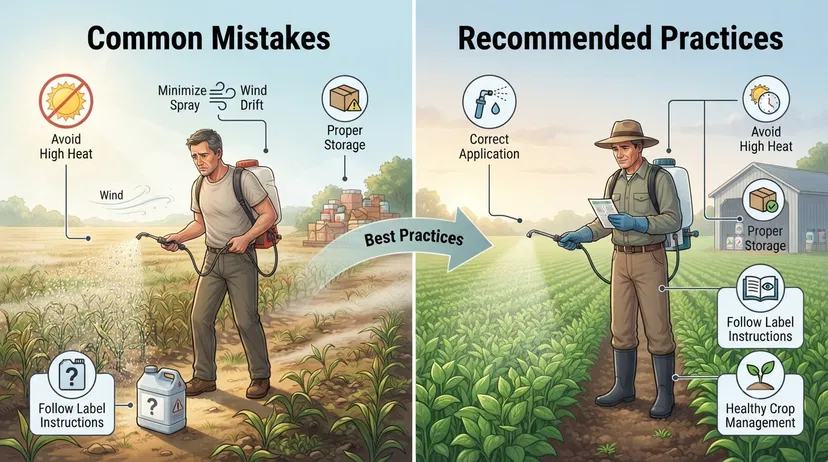
- Prevent drift to people, animals, water bodies, and neighbouring crops.
- Observe the re-entry and pre-harvest intervals.
- Dispose of empty containers according to local requirements.
Final Thoughts
The best broad spectrum insecticide is a label-approved product chosen for a confirmed pest problem, not a routine insurance spray. Use the narrowest effective option whenever possible, rotate modes of action, protect beneficial organisms, and stop applications early enough to meet residue requirements.