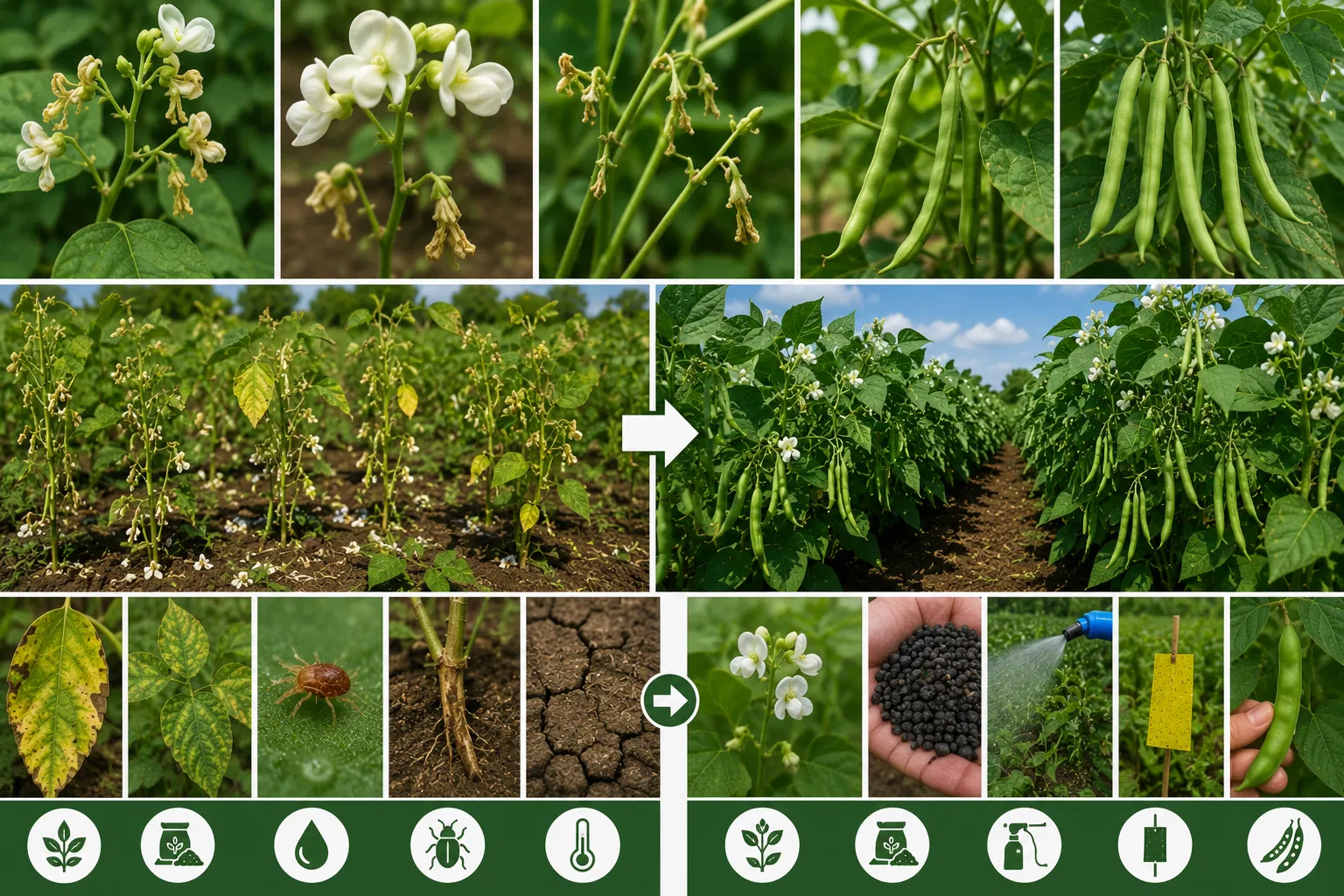
Few problems are more frustrating than seeing healthy bean plants covered with flowers, only for those blooms to fall before pods develop. When beans experience flower drop and poor pod setting, the plants may appear vigorous but still produce a disappointing harvest.
Whether you grow bush beans, pole beans, French beans, or other commercial bean varieties, identifying the cause of flower drop is essential for improving yield. Temperature stress, irregular irrigation, excess nitrogen, nutrient imbalance, pests, and diseases can all interfere with pollination and pod formation.
Why Do Bean Flowers Drop Before Pods Form?
Bean flowers are naturally short-lived. However, when a large number of flowers fall prematurely or fail to develop into pods, the crop is usually experiencing stress.
During unfavourable conditions, bean plants may conserve water and energy by shedding flowers instead of supporting pod development. This reduces pod numbers, lowers marketable yield, and shortens the productive harvesting period.
Common Causes of Bean Flower Drop and Poor Pod Setting
1. High or Low Temperature Stress
Temperature extremes are among the most common causes of poor pod setting in beans. Beans prefer warm growing conditions, but excessive heat during flowering can reduce pollen viability and cause blossoms to fall.
Very cool nights, cold soil, or sudden temperature fluctuations can also interfere with flower development and fertilization. Crops that flower during prolonged heat waves often show heavy blossom drop and fewer pods.
2. Irregular Water Supply
Beans require steady soil moisture during flowering and pod development. When the root zone becomes too dry, plants may drop flowers to conserve resources. Excessively wet soil can also damage roots, reduce oxygen availability, and weaken pod formation.
Even a short period of drought during peak flowering can reduce pod set. Irrigation should therefore maintain even moisture without creating waterlogged conditions.
3. Excess Nitrogen
Too much nitrogen encourages lush vegetative growth at the expense of flowering and pod development. Bean plants may produce large, dark-green leaves but very few pods when nitrogen levels are excessive.
Use balanced fertilizers according to soil-test recommendations rather than applying high-nitrogen products throughout the crop cycle.
4. Poor Pollination Conditions
Beans are primarily self-pollinating, but environmental conditions still influence successful fertilization. Extreme heat, high humidity, strong winds, and continuous rainfall can reduce pollen movement or viability.
When fertilization is incomplete, flowers may dry, yellow, and fall without forming pods.
5. Nutrient Deficiency or Soil Imbalance
Although beans can fix atmospheric nitrogen through root nodules, they still require phosphorus, potassium, sulphur, and micronutrients for flowering and pod development.
Low phosphorus may weaken flowering, while inadequate potassium can reduce stress tolerance and pod filling. Incorrect soil pH can also restrict nutrient availability even when nutrients are present in the soil.
6. Planting at the Wrong Time
Beans planted too early may experience cold soil and slow establishment. Crops planted too late may flower during periods of extreme heat or heavy rainfall.
Selecting suitable vegetable seeds and matching the sowing date to local weather conditions can improve flowering and pod setting.
7. Pest Pressure
Aphids, thrips, spider mites, bean beetles, and other pests can weaken plants and damage flowers. Sap-feeding insects may also transmit viral diseases that interfere with flowering and pod formation.
Regular field scouting and timely use of suitable insecticides as part of integrated pest management can help protect flowers and developing pods.
8. Fungal and Root Diseases
Powdery mildew, root rot, damping-off, and other fungal diseases reduce plant vigour and interfere with reproductive growth. Infected crops often show yellowing, wilting, poor flowering, and reduced pod development.
Where fungal disease is confirmed, suitable fungicides may be used alongside sanitation, proper drainage, and improved airflow.
How to Improve Flower Retention and Pod Setting
Maintain Consistent Soil Moisture
Water beans regularly during flowering and pod development. The objective is to keep the root zone evenly moist without saturating the soil.
- Irrigate at the base of the plants.
- Avoid allowing the soil to dry completely.
- Use mulch to reduce evaporation.
- Prefer drip irrigation where practical.
- Ensure excess water can drain away easily.
Avoid Excessive Nitrogen Fertilization
If plants are producing abundant foliage but few flowers or pods, reduce nitrogen applications. Apply nutrients according to crop stage and soil-test results.
During flowering and pod formation, phosphorus and potassium become particularly important for reproductive growth, stress tolerance, and pod filling.
Plant During Suitable Weather
Sow beans when soil temperatures are warm and the risk of frost has passed. Avoid scheduling peak flowering during periods of extreme heat whenever the local cropping window allows.
Staggered sowing can reduce the risk of the entire crop flowering during unfavourable weather.
Choose Suitable and Stress-Tolerant Varieties
In hot regions, select varieties known for heat tolerance, reliable pod setting, and early maturity. Varieties adapted to local conditions are more likely to flower successfully and retain pods.
Look for seed descriptions that mention:
- Heat tolerance
- Strong pod setting
- Early maturity
- Disease resistance
- Suitability for the local season
Improve Soil Health
Healthy soil supports stronger roots, steady nutrient uptake, and better flowering. Test the soil before planting and correct pH or nutrient imbalances where necessary.
- Add well-decomposed compost or organic matter.
- Avoid compacted soil.
- Maintain good drainage.
- Correct soil pH based on test results.
- Encourage healthy root nodulation.
Manage Pests and Diseases Early
Inspect bean crops regularly, especially the undersides of leaves, growing tips, flowers, and young pods. Early detection prevents minor infestations from developing into severe crop stress.
Remove badly affected plant material, control weeds that harbour pests, and use an integrated crop protection programme suited to the diagnosed problem.
Provide Support for Pole Beans
Pole beans require strong trellises, stakes, or fencing. Proper support keeps vines off the ground, improves light interception and airflow, and reduces disease pressure around flowers and pods.
Quick Troubleshooting Checklist
If bean plants are flowering but not producing pods, check the following:
- Are daytime or nighttime temperatures unusually high or low?
- Is the soil drying out between irrigations?
- Has too much nitrogen fertilizer been applied?
- Is the soil compacted, poorly drained, or nutritionally imbalanced?
- Are aphids, thrips, mites, or other pests present?
- Are there signs of fungal or viral disease?
- Was the crop planted at the correct time for the region?
- Is the selected variety suitable for current weather conditions?
How to Prevent Flower Drop in Future Bean Crops
Preventing flower drop begins before planting. Choose locally adapted varieties, prepare the soil properly, and plan sowing so flowering occurs under favourable weather conditions.
During crop growth, maintain consistent irrigation, avoid excessive nitrogen, monitor pest populations, and protect plant health through timely field management.
Key takeaway: Reliable pod setting depends on stable growing conditions—warm soil, even moisture, balanced nutrition, suitable varieties, and low pest and disease pressure.
Conclusion
Bean flower drop and poor pod setting are usually caused by stress from temperature extremes, irregular watering, excessive nitrogen, nutrient imbalance, unsuitable planting time, pests, or diseases.
Most cases can be reduced by maintaining consistent soil moisture, applying balanced nutrition, planting at the correct time, selecting climate-suitable varieties, and monitoring crop health regularly.
If bean flowers are falling now, begin by checking temperature, irrigation, fertilizer use, and pest pressure. Correcting these factors early can improve flower retention, increase pod formation, and produce a larger, more marketable harvest.