

Introduction
Tomato is one of the most profitable vegetable crops for farmers because of its high market demand and regular income throughout the season. However, tomato plants are highly affected by sucking pests like aphids, which can reduce plant growth, flowering, fruit quality, and overall yield if not controlled at the right time.
What are Aphids?
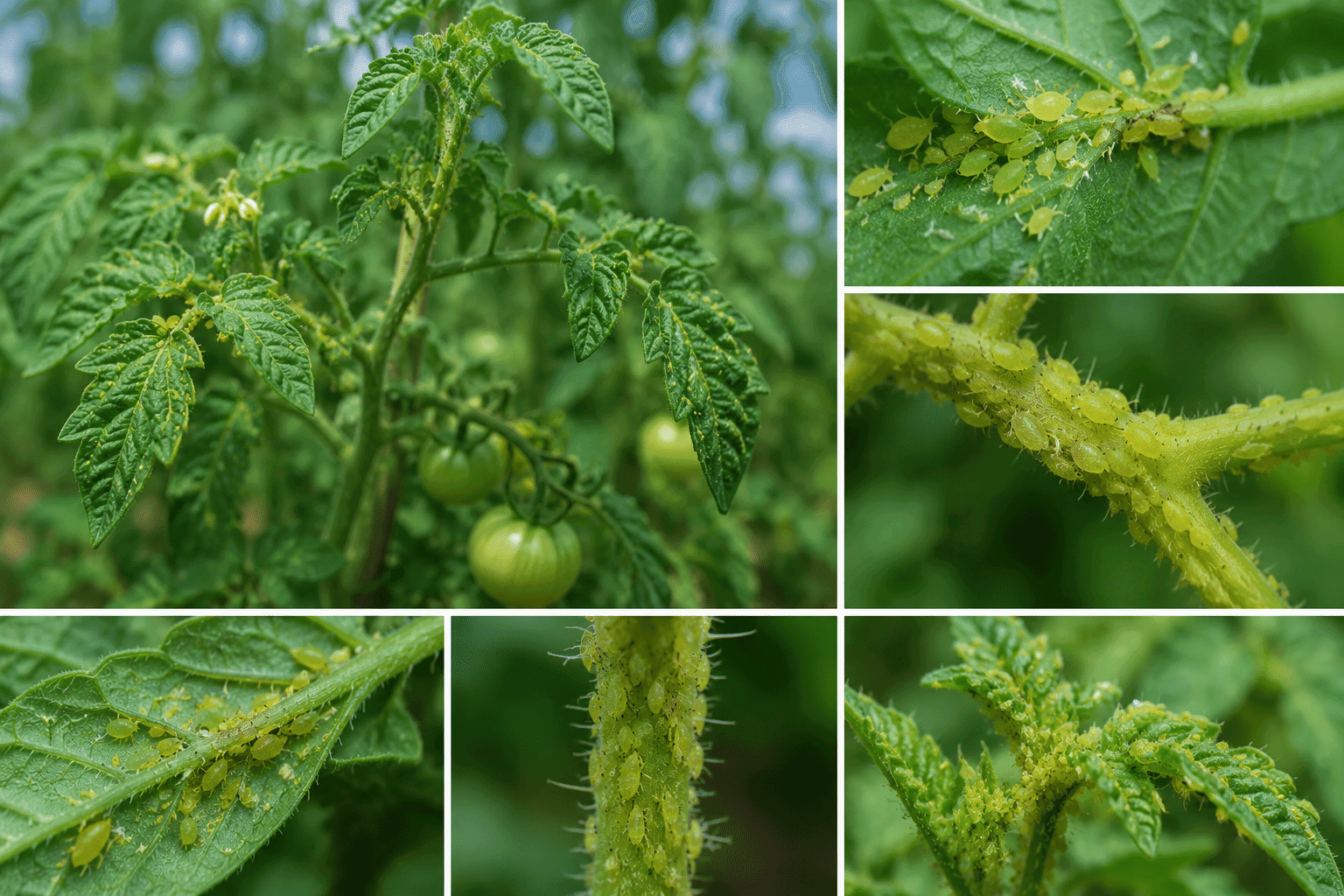
Aphids are tiny, soft-bodied insects that suck sap from tomato plants. They are commonly seen on tender leaves, young shoots, flower buds, and the lower side of leaves. Aphids may appear green, black, yellow, or brown in color.
Symptoms of Aphid Attack
Farmers should regularly monitor the crop and identify the early symptoms of aphid attack. Common signs include:
-
Curling and shrinking of young leaves
-
Yellowing of leaves
-
Sticky honeydew secretion on leaves
-
Black sooty mold formation
-
Weak and stunted plant growth
-
Drying of tender shoots
-
Poor flowering and fruit setting
-
Presence of ants on plants
-
Clusters of small insects on the lower leaf surface
Damage Caused by Aphids
Aphids damage tomato crops by continuously sucking plant sap, which weakens the plant and reduces its ability to grow properly. The black sooty mold formed due to honeydew reduces photosynthesis. Severe infestation during vegetative and flowering stages can reduce yield and fruit quality.
Favorable Conditions for Aphid Infestation
Aphids multiply quickly under:
-
Cool and dry weather
-
Excess nitrogen fertilizer use
-
Dense crop canopy
-
Poor field sanitation
-
Presence of weeds around the field
-
Excessive use of broad-spectrum insecticides
Monitoring Aphids in Tomato Field
Regular scouting helps in early management. Farmers should inspect 10–15 plants from different parts of the field every week. Check the lower side of leaves and tender shoots carefully.
Yellow sticky traps can be installed to monitor aphid activity. Farmers should also observe ant movement, as ants are attracted to the honeydew secreted by aphids.
Best Control Measures for Aphids
Integrated pest management gives better and long-lasting control.
Cultural Control
-
Remove weeds around the field
-
Avoid excess nitrogen fertilizer
-
Use healthy and disease-free seedlings
-
Maintain proper spacing between plants
Mechanical and Physical Control
-
Install 10–12 yellow sticky traps per acre
-
Remove severely affected leaves and shoots
-
Use strong water spray in small fields to reduce aphid population
Biological Control
Natural enemies help control aphids. Useful predators include:
-
Ladybird beetles
-
Lacewings
-
Hoverflies
-
Parasitic wasps
Avoid unnecessary spraying of broad-spectrum insecticides to protect beneficial insects.
Chemical Control
When aphid infestation crosses the economic threshold level, farmers can use recommended insecticides. Always follow label instructions and rotate insecticides with different modes of action to avoid resistance.
Precautions During Spraying
-
Spray during morning or evening hours
-
Cover the lower side of leaves properly
-
Avoid repeated use of the same chemical
-
Use recommended dosage only
-
Wear safety equipment during spraying
Preventive Measures
Farmers can reduce aphid infestation by following preventive practices:
-
Use reflective or silver mulch
-
Monitor the crop every week
-
Follow balanced fertilizer management
-
Take timely pest control action
-
Avoid continuous tomato cultivation in the same field
Conclusion
Aphids are serious sucking pests in tomato farming and can cause major yield loss if ignored. Early detection, regular field monitoring, weed management, balanced fertilizer use, and timely control measures help manage the pest effectively. Farmers should follow integrated pest management practices instead of depending only on chemicals. Proper management protects yield, improves fruit quality, and increases market value.