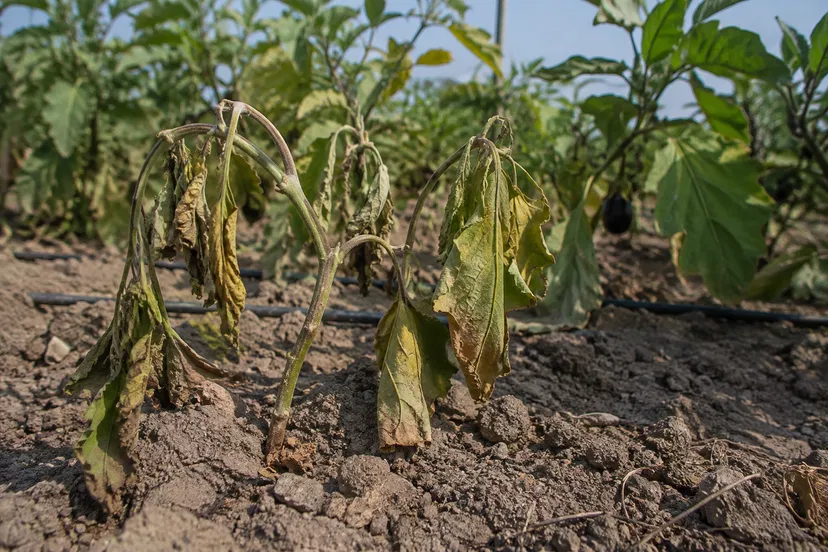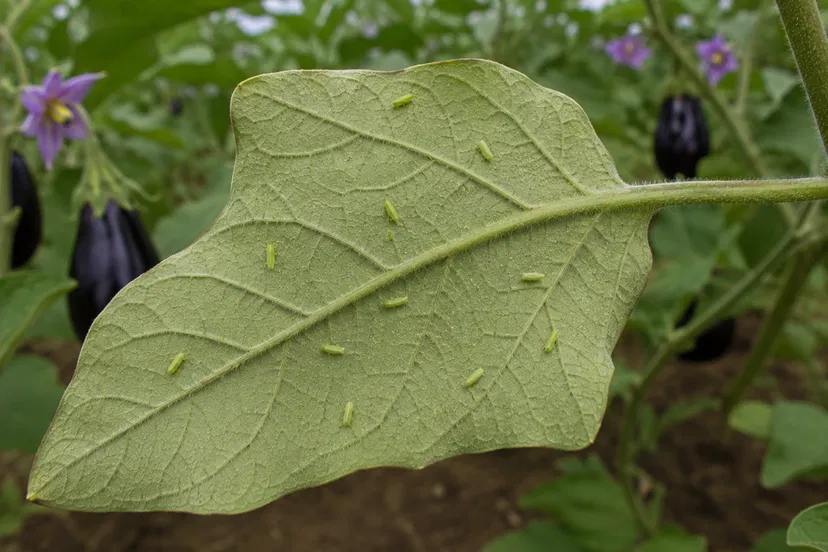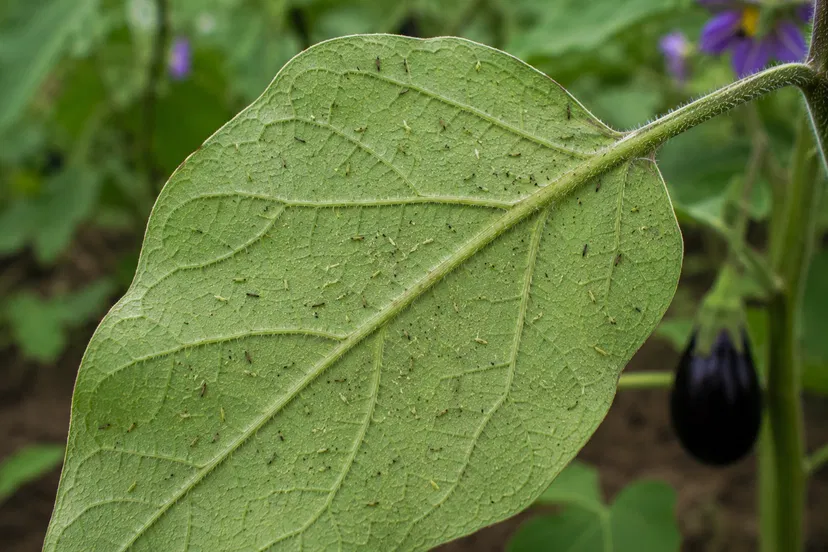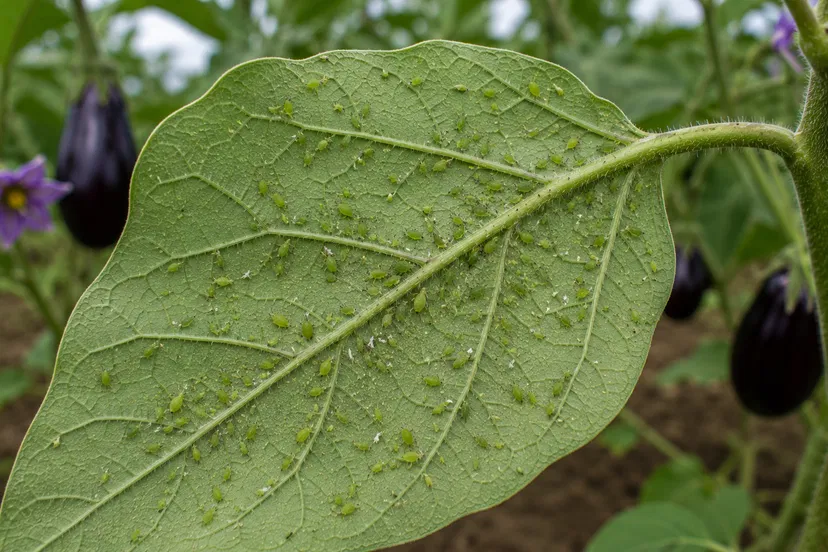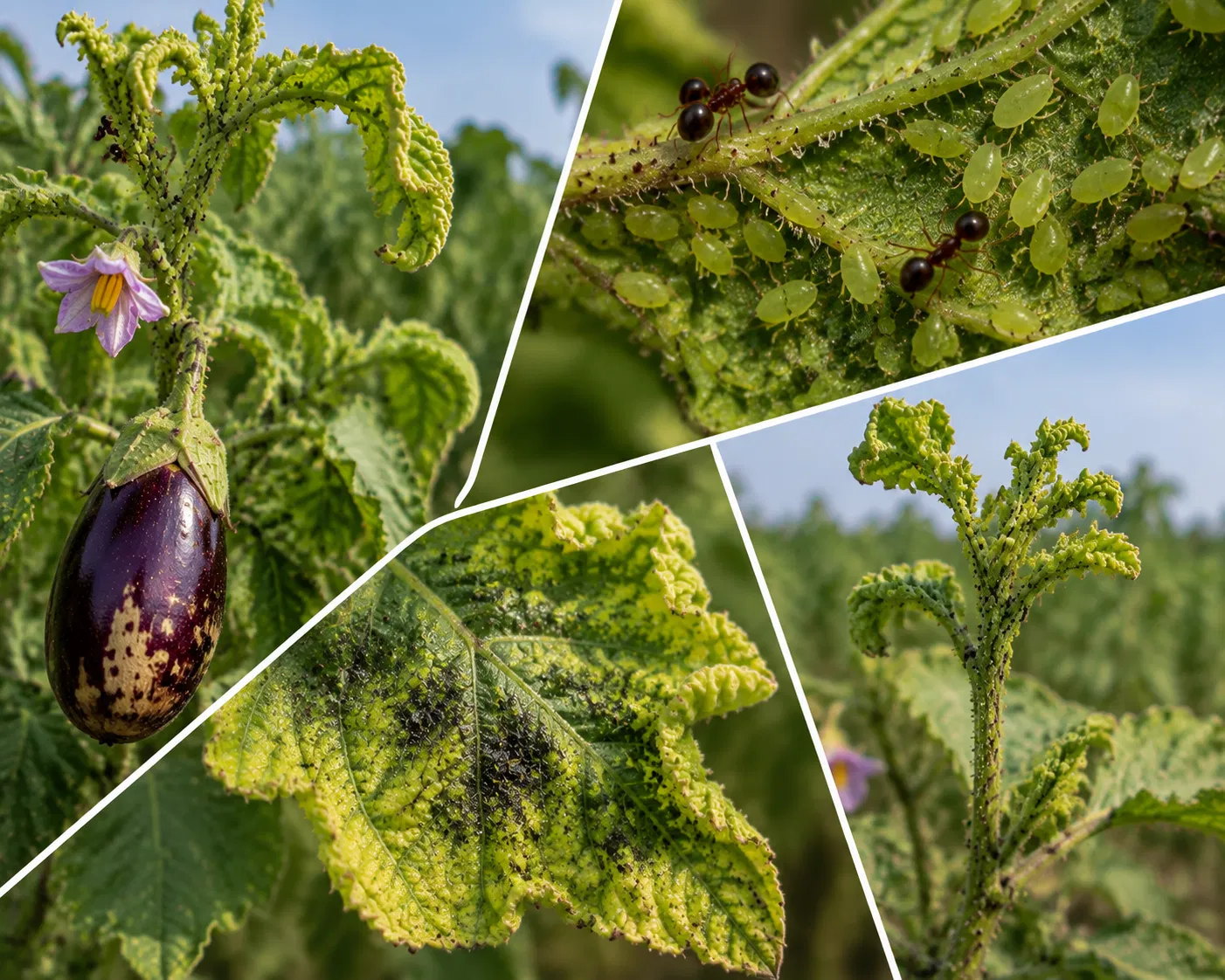
Aphids are among the most common sucking pests in brinjal, feeding on sap from leaves and young shoots. A small population can multiply quickly under the right conditions, weakening the plant well before the damage becomes obvious.
Symptoms
- Leaves curling, crinkling, or turning pale yellow
- A sticky residue (honeydew) on leaves, often followed by black sooty mould
- Ants moving up and down the plant, drawn to the honeydew
- Stunted shoot growth and smaller leaves at the growing tip
- Reduced flowering and poor fruit set under heavy infestation
Causes
- Warm weather with mild temperatures, ideal for fast aphid breeding
- Excess nitrogen fertiliser, which produces soft, tender growth aphids prefer
- Weeds or nearby crops already carrying an aphid population
- Few natural predators around, often due to frequent broad-spectrum spraying
- Young seedling and early vegetative stage, when plants are most vulnerable
How to Identify
Aphids are small, soft-bodied insects, usually green, black, or yellowish, that cluster together on the underside of leaves and along tender shoots and flower buds. Unlike whitefly, which scatters in a cloud when you disturb the plant, aphids mostly stay put in their cluster. Look closely at new growth first, since that's where they gather to feed. The sticky honeydew they leave behind, and the black sooty mould that often follows it, is usually the first sign growers notice before spotting the insects themselves.
Control Methods
Chemical Control
1. Beta-cyfluthrin 8.49% + Imidacloprid 19.81% OD pairs a fast-knockdown pyrethroid with a systemic neonicotinoid, giving quick action along with longer-lasting protection.
Product Recommendation
2. Cyantraniliprole 10.26% OD works through both contact and systemic action, stopping aphids from feeding within hours and also helping against whitefly and thrips.
Product Recommendation
3. Pyriproxyfen 8% + Dinotefuran 5% + Diafenthiuron 18% SC combines a growth regulator with two other modes of action, giving broad coverage against aphids, whitefly, and jassids in a single spray.
Product Recommendation
4. Flonicamid 50% WG stops aphids from feeding almost immediately rather than killing on contact, so they starve rather than keep damaging the plant. It's also considered gentle on bees.
Product Recommendation
5. Dinotefuran 70% WG is a systemic neonicotinoid absorbed quickly into the plant, giving fast knockdown along with longer residual protection against aphids, jassids, and whitefly.
Product Recommendation
6. Clothianidin 3.5% + Pyriproxyfen 8% SE pairs a systemic neonicotinoid with an insect growth regulator, giving control across different aphid life stages in one application.
Product Recommendation
Biological Control
Verticillium lecanii is a naturally occurring fungus that infects aphids on contact, making it a useful option for growers who want to reduce chemical use or rotate with a non-chemical spray.
Product Recommendation
Cultural Control
- Avoid excess nitrogen application; follow a balanced fertiliser schedule
- Keep field borders free of weeds that can host aphids
- Encourage natural predators like ladybird beetles by limiting unnecessary sprays
- Monitor the crop closely from the seedling stage onward
Mechanical Control
Yellow sticky traps attract and catch winged aphids moving into the field, helping with both early detection and reducing the population.
Product Recommendation
Conclusion
Aphid damage in brinjal is easiest to manage when caught early, before the population builds up and starts affecting flowering and fruit set. Combining a chemical or biological spray with cultural steps like balanced fertilisation and field sanitation gives more reliable, longer-lasting control than relying on spraying alone.
Disclaimer: Always confirm current label registration, approved dosage, water volume, and pre-harvest interval (PHI) for your state before using any product, since labels are periodically revised by regulatory authorities.
This guide is a general advisory. Do your own research and verification before using any product. Always confirm suitability for your crop stage, region, and field conditions before making any purchase, spray, or crop-management decision.