Healthy plants need more than sunlight, water, and the common NPK nutrients. They also depend on tiny but powerful micronutrients that support growth, disease resistance, flowering, fruiting, and overall plant vitality. Even though plants use them in small amounts, a shortage of these essential plant nutrients can quickly lead to poor performance, yellowing leaves, stunted growth, and reduced yields.
If you want stronger roots, greener foliage, and better harvests, understanding the 8 essential micronutrients plants need is a must. Below, we’ll break down what each micronutrient does, why it matters, and how deficiency can show up in your garden or crops.
What Are Micronutrients in Plants?
Micronutrients are essential plant nutrients required in small quantities, but they play major roles in enzyme activation, chlorophyll formation, nutrient transport, and metabolic functions. Unlike macronutrients such as nitrogen, phosphorus, and potassium, micronutrients are needed in trace amounts. Still, a lack of even one can disrupt plant growth and reduce productivity.
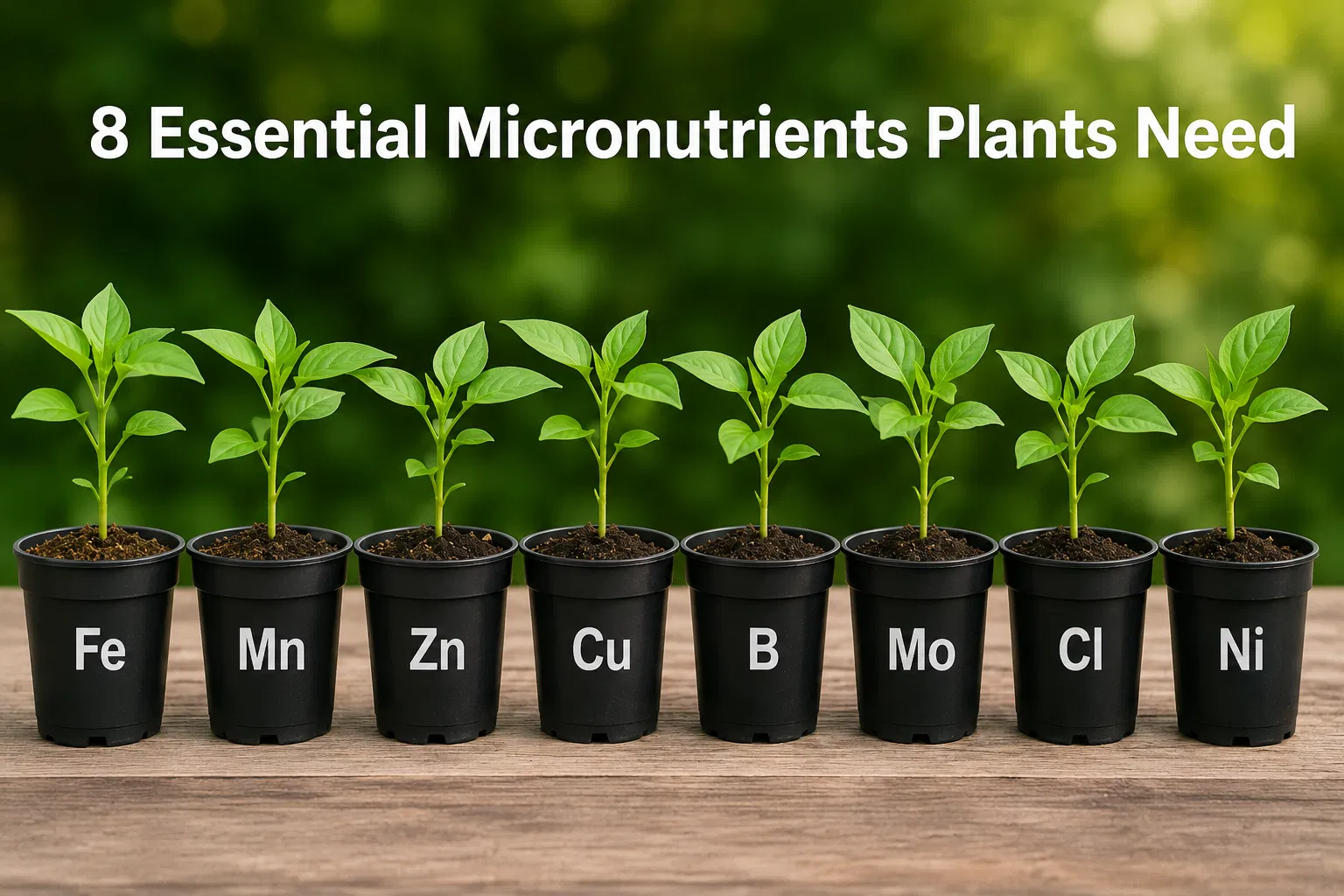
The eight essential micronutrients for plants are:
- Iron (Fe)
- Manganese (Mn)
- Zinc (Zn)
- Copper (Cu)
- Boron (B)
- Molybdenum (Mo)
- Chlorine (Cl)
- Nickel (Ni)
1. Iron (Fe)
Iron is one of the most important micronutrients for plants because it helps produce chlorophyll, even though it is not part of the chlorophyll molecule itself. It also supports electron transfer in photosynthesis and respiration, making it essential for energy production.
Main Functions
- Supports chlorophyll synthesis
- Helps with photosynthesis and respiration
- Assists enzyme activity and energy transfer
Deficiency Signs
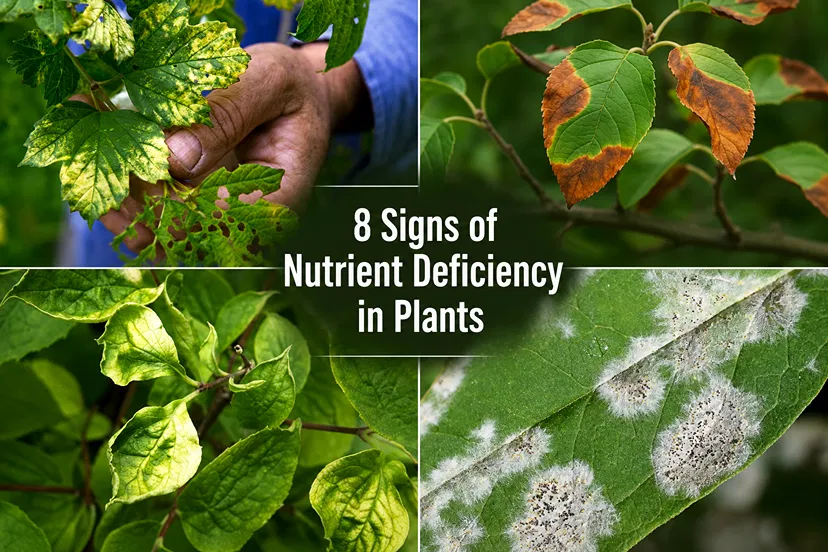
Iron deficiency usually appears first in young leaves as interveinal chlorosis, where the tissue turns yellow while veins remain green. In severe cases, leaves may become almost white and plant growth slows significantly.
2. Manganese (Mn)
Manganese plays a key role in photosynthesis, especially in the process that splits water molecules and releases oxygen. It also activates important enzymes involved in nitrogen metabolism and overall plant development.
Main Functions
- Supports photosynthesis
- Activates enzymes
- Helps in nitrogen metabolism
Deficiency Signs
Manganese deficiency often causes yellowing between leaf veins, mottling, and reduced vigor. Unlike iron deficiency, manganese symptoms may appear on slightly older leaves depending on the plant species. Crops may also show poor growth and weaker stems.
3. Zinc (Zn)
Zinc is vital for hormone production, especially auxins, which regulate growth and stem elongation. It also helps enzymes function properly and supports protein synthesis and leaf development.
Main Functions
- Supports growth hormone production
- Helps enzyme function
- Assists protein synthesis and leaf expansion
Deficiency Signs
Zinc deficiency may cause short internodes, small leaves, rosetting, and delayed maturity. In many plants, young leaves become distorted or show chlorosis. Fruit crops may produce smaller yields and reduced quality.
4. Copper (Cu)
Copper is needed for several enzyme systems and is involved in photosynthesis, respiration, and lignin formation. Lignin helps strengthen cell walls, so copper contributes to structural integrity and disease resistance.
Main Functions
- Supports enzyme systems
- Helps with photosynthesis and respiration
- Promotes lignin formation and plant strength
Deficiency Signs
Copper deficiency may lead to wilting, weak stems, poor flowering, and distorted young leaves. In some cases, leaf tips die back, and plants become more susceptible to disease because cell walls are weaker.
5. Boron (B)
Boron is essential for cell wall formation, pollen germination, root growth, and the movement of sugars within the plant. It is especially important during flowering and fruit development.
Main Functions
- Helps build cell walls
- Supports pollen tube growth and fertilization
- Assists in sugar transport
- Promotes root and shoot development
Deficiency Signs
Boron deficiency often shows up as brittle leaves, cracked stems, poor root growth, and failed fruit or seed set. Growing points may die back, and fruits may become misshapen or hollow. Because boron is immobile in many plants, symptoms often appear in new growth first.
6. Molybdenum (Mo)
Molybdenum is a trace nutrient that plays a major role in nitrogen use. It helps convert nitrate into forms the plant can use, making it essential for protein production and healthy growth.
Main Functions
- Helps reduce nitrate into usable forms
- Supports nitrogen metabolism
- Assists protein formation
Deficiency Signs
Molybdenum deficiency can resemble nitrogen deficiency, with pale leaves and poor growth. In some plants, leaves may become curled or twisted. Legumes may struggle to fix nitrogen effectively, reducing vigor and yield.
7. Chlorine (Cl)
Chlorine is often overlooked, but it is an essential micronutrient involved in osmosis, ionic balance, and stomatal regulation. It also plays a role in photosynthesis and disease tolerance.
Main Functions
- Helps regulate water balance
- Supports stomatal function
- Assists photosynthesis
- Improves stress and disease response
Deficiency Signs
Chlorine deficiency is rare, but it may cause wilting, chlorosis, and restricted root growth. Since chlorine is naturally present in many water sources and soils, deficiencies are uncommon in most growing conditions.
8. Nickel (Ni)
Nickel is the newest micronutrient recognized as essential for plants. It is required in very small amounts, mainly for the enzyme urease, which helps break down urea into usable nitrogen.
Main Functions
- Supports urease activity
- Helps with nitrogen metabolism
- Contributes to seed viability and plant health
Deficiency Signs
Nickel deficiency is uncommon, but it can cause leaf tip necrosis, poor seed germination, and abnormal urea buildup in tissues. Because the plant needs so little nickel, deficiency is usually linked to extremely low levels in soil or nutrient solutions.
Why Micronutrient Balance Matters
Even if your plants receive enough macronutrients, a lack of trace nutrients can limit growth. This is often called hidden hunger, where plants look somewhat healthy at first but fail to reach their full potential. Balanced nutrition is especially important for vegetables, fruit trees, ornamentals, and high-yield crops.
Healthy plants are built on balance. When micronutrients are supplied in the right amounts, plants use macronutrients more efficiently and perform better overall.
How to Prevent Micronutrient Deficiencies
Preventing micronutrient shortages starts with good soil management and proper fertilization. A soil test can reveal what your plants actually need, helping you avoid guesswork and nutrient imbalance.
- Test your soil before applying fertilizers.
- Use complete fertilizers that include trace elements when appropriate.
- Adjust soil pH because pH affects nutrient availability.
- Apply organic matter such as compost to improve nutrient retention.
- Watch for early symptoms on new leaves, stems, and growing points.
For hydroponics or container gardening, nutrient solution balance is especially important because micronutrients can deplete quickly. Regular monitoring helps maintain consistent plant health.
Conclusion
The 8 essential micronutrients plants need may be required in small amounts, but their impact is enormous. Iron, manganese, zinc, copper, boron, molybdenum, chlorine, and nickel all contribute to healthy growth, strong structure, efficient metabolism, and better yields. When one is missing, plants struggle to perform at their best.
If you want thriving plants, focus on balanced nutrition rather than just the big three nutrients. Test your soil, observe your plants closely, and supply micronutrients when needed. Small elements make a big difference.