When weeds start taking over lawns, pastures, crops, or roadside areas, 2,4-D herbicide is often one of the first tools people reach for. It is widely used because it targets many broadleaf weeds effectively while leaving grasses unharmed when applied correctly. But like any powerful herbicide, it must be used with care. One of the biggest concerns with 2,4-D is drift, which can damage nearby plants, gardens, trees, and sensitive crops.
If you are considering 2,4-D herbicide for weed control, understanding its uses, how it works, and how to reduce drift is essential. The right application practices can help you get effective results while protecting surrounding vegetation and avoiding costly mistakes.
What Is 2,4-D Herbicide?
2,4-D is a selective herbicide that controls many broadleaf weeds. It has been used for decades in agriculture, turf management, pasture maintenance, and non-crop areas. Because it mainly affects broadleaf plants, it is commonly used in areas with grasses, such as lawns and cereal grain fields.
This herbicide works by mimicking plant growth hormones, which causes uncontrolled growth in susceptible weeds. As a result, the plants become distorted, stop growing properly, and eventually die. When used according to label directions, 2,4-D can be an effective and economical weed control option.
Common Uses of 2,4-D Herbicide
2,4-D herbicide is valued for its broad range of applications. It is especially useful where broadleaf weeds are a problem and grass needs to be preserved.
1. Lawn and Turf Weed Control
Homeowners and turf managers often use 2,4-D to control weeds such as dandelion, clover, plantain, and chickweed in lawns. It is commonly included in selective lawn herbicide blends designed for broadleaf weed control.
2. Pasture and Rangeland Management
In pasture systems, 2,4-D helps reduce invasive broadleaf weeds that compete with forage grasses. This can improve pasture quality and support better grazing conditions for livestock.
3. Crop Production
Farmers use 2,4-D in certain crops, including wheat, corn, and sorghum, depending on the product label and timing. It helps manage weeds that would otherwise compete with crops for nutrients, sunlight, and moisture.
4. Roadsides, Rights-of-Way, and Non-Crop Areas
2,4-D is often used along roadsides, fence lines, utility corridors, and industrial sites to keep broadleaf weeds under control and reduce maintenance needs.
5. Aquatic and Forestry Applications
Some formulations are designed for use in or near water to control certain invasive aquatic plants. It may also be used in forestry settings for vegetation management, depending on product labeling and site requirements.
Weeds Commonly Controlled by 2,4-D
2,4-D herbicide is effective against many broadleaf weeds, including:
- Dandelion
- Clover
- Chickweed
- Plantain
- Thistle
- Mustard species
- Bindweed
- Wild carrot
- Spurge
Its performance can vary depending on weed size, growth stage, temperature, and whether the product is applied properly. Young, actively growing weeds are usually easier to control than mature, stressed, or hardened weeds.
Why Drift Is a Serious Concern
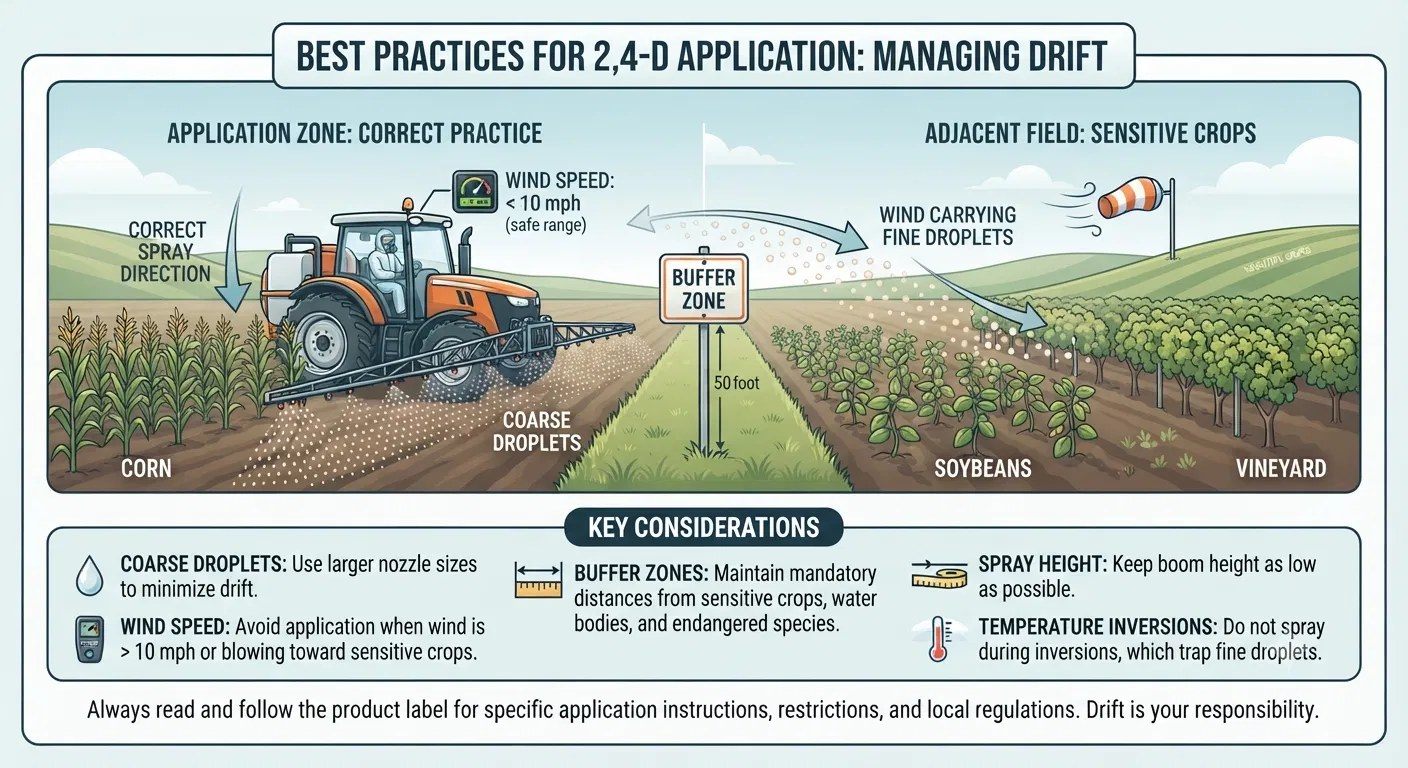
Drift happens when herbicide droplets or vapors move away from the intended target area. With 2,4-D herbicide, drift can be especially problematic because many ornamental plants, vegetables, grapes, tomatoes, beans, and broadleaf trees are very sensitive to it.
Even a small amount of drift can cause noticeable injury, such as curled leaves, twisted stems, yellowing, or stunted growth. In agricultural settings, drift can reduce yield, damage neighboring fields, and lead to complaints or liability issues.
Key point: Preventing drift is just as important as choosing the right herbicide.
How to Reduce 2,4-D Herbicide Drift
Safe and effective application starts with understanding the conditions that increase drift risk. Wind, temperature, spray pressure, nozzle type, and product formulation all play a role.
1. Choose the Right Formulation
Some 2,4-D products are more prone to drift than others. Ester formulations, for example, may be more volatile under certain conditions, meaning they can turn into vapor and move off-target after application. Amine formulations are often preferred where volatility is a concern, but the label should always guide your choice.
2. Apply in Favorable Weather Conditions
Wind speed and temperature matter. Apply 2,4-D herbicide when winds are light and steady, not gusty. Avoid spraying during hot weather, especially when temperature inversions may occur, because tiny droplets can remain suspended and travel farther than expected.
Best practice is to spray when:
- Wind is low to moderate and consistent
- Temperatures are cooler
- No temperature inversion is present
- No rain is expected immediately after application
3. Use the Correct Nozzles and Droplet Size
Using nozzles that produce larger droplets can help reduce drift. Fine droplets are more likely to blow away from the target area. Low-drift nozzles and proper spray setups can make a major difference in on-target performance.
4. Keep Spray Pressure in Check
Higher pressure can create smaller droplets, which increases drift potential. Follow label recommendations for pressure settings and calibrate your equipment regularly to maintain consistent output.
5. Maintain Buffer Zones
Buffer zones help protect sensitive plants and areas next to the spray site. Leave a no-spray zone near gardens, orchards, vineyards, ornamentals, or other susceptible vegetation. The required buffer may depend on local regulations and the specific herbicide label.
6. Watch for Volatility Risks
Some 2,4-D products can cause injury even after spraying if conditions encourage vapor movement. This is why it is important not to assume that drift only happens during application. Reading the label and paying attention to temperature and humidity can reduce this risk.
Application Best Practices for 2,4-D Herbicide
Good herbicide stewardship goes beyond drift prevention. Proper timing, calibration, and handling help maximize weed control and minimize problems.
- Read the label carefully. The label is the legal and technical guide for use rates, timing, crops, and restrictions.
- Calibrate equipment before spraying. This ensures the correct amount of herbicide is applied.
- Target young weeds. Smaller weeds are usually easier to control.
- Avoid spraying stressed plants. Drought, heat, or poor growth conditions can reduce herbicide effectiveness.
- Clean equipment thoroughly. Residual herbicide in tanks or hoses can create contamination issues.
- Do not spray near sensitive crops. Tomatoes, grapes, cotton, legumes, and many ornamentals are highly vulnerable.
Signs of 2,4-D Injury on Sensitive Plants
Recognizing herbicide injury quickly can help prevent further damage and support a faster response. Common symptoms on sensitive broadleaf plants include:
- Twisted or curled leaves
- Stem elongation or bending
- Leaf cupping
- Yellowing or spotting
- Distorted flower or fruit development
- Reduced growth and vigor
If drift is suspected, documenting conditions, wind direction, and application timing can be helpful for troubleshooting and reporting.
Safety Considerations When Handling 2,4-D
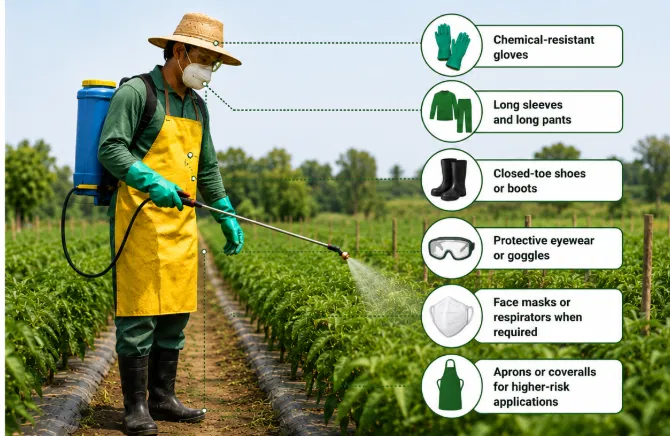
Like all herbicides, 2,4-D should be handled with care. Use protective equipment recommended on the label, including gloves, long sleeves, and eye protection when needed. Avoid inhaling spray mist and wash exposed skin after application.
It is also important to store 2,4-D products securely, away from children, pets, feed, and food. Never mix or apply herbicides in a way that conflicts with the product label or local regulations.
Conclusion
2,4-D herbicide is a powerful and widely used weed control tool for lawns, pastures, crops, and non-crop areas. Its ability to control broadleaf weeds while preserving grasses makes it highly valuable, but that same strength also means drift precautions are critical. By choosing the right formulation, spraying under favorable weather conditions, using proper equipment, and respecting buffer zones, you can reduce risk and improve results.
If you use 2,4-D, make safety and precision your top priorities. Read the label, plan every application carefully, and protect nearby plants from unnecessary exposure. Smart use leads to better weed control, fewer mistakes, and healthier landscapes.