Walk into almost any Indian farm store, and one fertilizer is likely to stand out: urea. For decades, it has remained the most widely used nitrogen fertilizer in India, shaping crop yields, farming decisions, and even government policy. But why has urea become so dominant when there are many other nitrogen fertilizers available?
The answer lies in a mix of economics, accessibility, crop demand, and policy support. From paddy fields in the east to wheat belts in the north, urea continues to be the first choice for millions of farmers. Understanding why helps explain not only Indian agriculture, but also the challenges and opportunities ahead for sustainable farming.
What Is Urea and Why Is It Important?
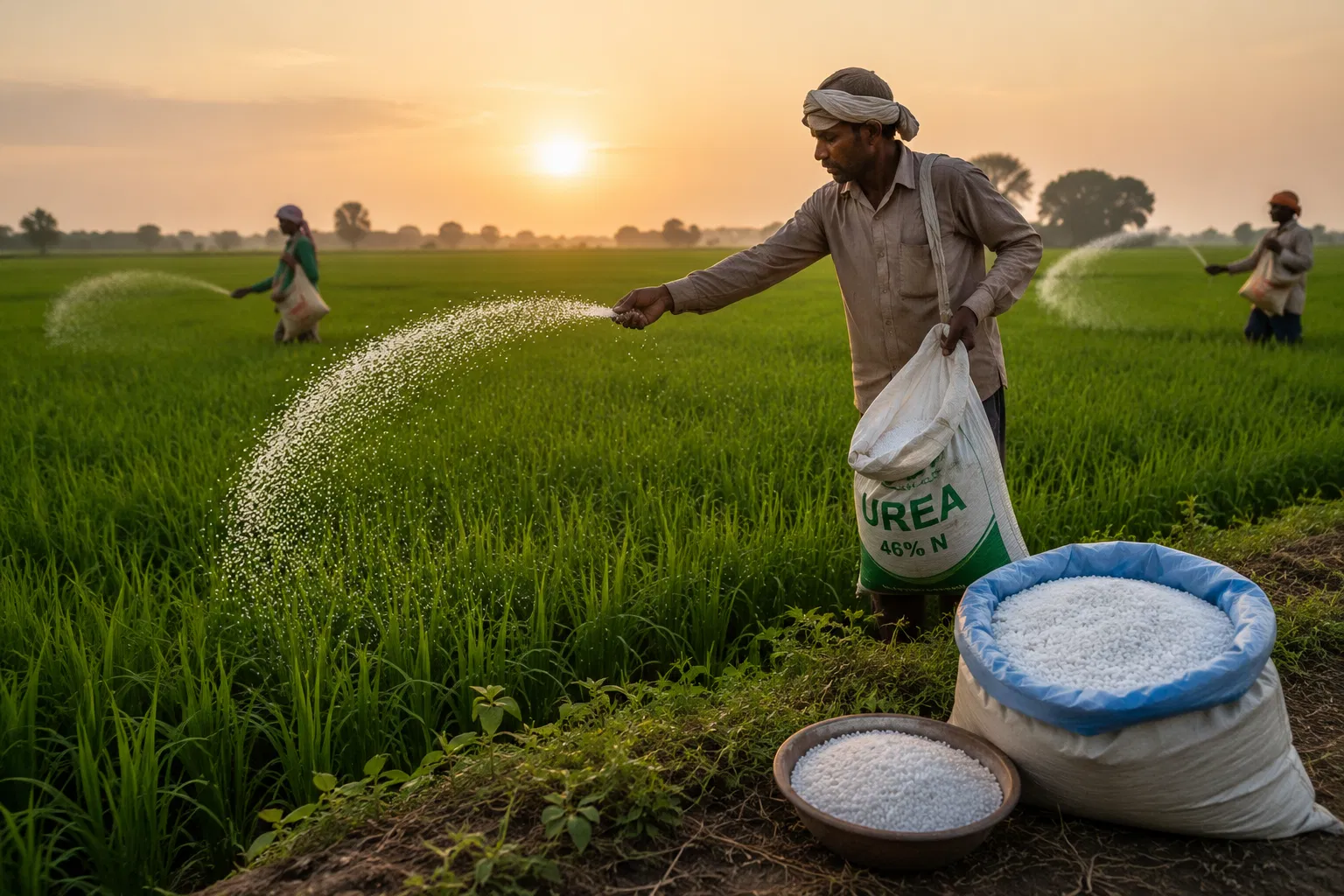
Urea is a nitrogen-rich fertilizer containing about 46% nitrogen, making it one of the most concentrated solid nitrogen sources available to farmers. Nitrogen is essential for plant growth because it supports leaf development, chlorophyll formation, and overall vegetative vigor.
In simple terms, nitrogen helps crops look greener, grow faster, and produce better yields. Since many Indian soils are deficient in nitrogen, urea has become a practical and effective solution for farmers seeking quick crop response.
1. Urea Is Highly Affordable
The biggest reason urea is the most used nitrogen fertilizer in India is its low price. Compared with other nitrogen fertilizers, urea is heavily subsidized by the government, which makes it much cheaper for farmers.
This affordability matters enormously in Indian agriculture, where farming margins are often thin and input costs can determine profitability. When farmers need a dependable nitrogen source at a manageable cost, urea naturally becomes the preferred choice.
For many farmers, urea is not just a fertilizer choice; it is the most economical way to meet crop nitrogen needs.
2. It Delivers Fast Crop Response
Urea works quickly once applied and converted in the soil. Farmers often see visible crop greening and improved growth soon after application, especially in nitrogen-deficient fields. This fast response builds trust and reinforces repeated use.
In agriculture, visible results matter. A fertilizer that shows quick effects is more likely to be used again and recommended by other farmers. Urea has earned that reputation over generations.
3. It Has a High Nitrogen Content
Urea is favored because it provides a large amount of nitrogen in a compact form. Since it contains 46% nitrogen, farmers can transport and store more nutrient value in less product compared with lower-analysis fertilizers.
This high concentration offers practical advantages:
- Less material is needed per acre
- Transport and storage become easier
- Application is simpler for farmers
- It is cost-effective per unit of nitrogen
In a country with diverse farm sizes and logistics challenges, efficiency is a major advantage.
4. Government Subsidy Supports Its Use
India’s fertilizer subsidy system has historically kept urea prices low for farmers. This policy has made urea more accessible than other fertilizers, many of which are either less subsidized or more expensive in the market.
Because of this support, urea has become deeply embedded in Indian farming practices. For many growers, it is the most readily available and financially viable nitrogen fertilizer.
However, this subsidy also creates a strong market imbalance. Farmers may use more urea than crops actually need, sometimes leading to nutrient imbalance in the soil. Still, the subsidy remains one of the key drivers behind urea’s widespread adoption.
5. Farmers Know It Well
Another major reason for urea’s popularity is familiarity. Indian farmers have used it for decades, and its effects are well understood across generations. This knowledge reduces uncertainty and makes it easier to plan crop nutrition.
In farming, trust is built through experience. When a fertilizer has been used successfully for many years, farmers are more likely to continue using it, especially when yields depend on quick and reliable decisions.
6. It Works Across Many Crops
Urea is used in a wide range of crops, including:
- Rice
- Wheat
- Maize
- Sugarcane
- Cotton
- Vegetables
- Fodder crops
This versatility makes urea a universal fertilizer option for Indian agriculture. Since it can be applied to many crop types, farmers do not need to switch between multiple nitrogen sources for different seasons or cropping systems.
7. Easy Availability in Rural Markets
Urea is distributed widely across India through cooperatives, retail outlets, and public supply channels. Its strong supply network ensures that farmers can find it relatively easily in most agricultural regions.
Availability is a crucial factor in fertilizer adoption. Even a highly effective product will lose appeal if it is difficult to source. Urea’s deep market presence gives it a major advantage over many alternatives.
8. It Fits Traditional Farming Practices
Indian farming has long relied on nitrogen-heavy fertilizer strategies, especially for staple crops like rice and wheat. Urea fits neatly into these traditional practices because it is easy to apply and produces immediate visible growth.
Farmers often apply it in split doses during the crop cycle, which aligns well with existing field routines. Its simplicity supports widespread use, even among smallholders with limited access to advanced soil testing or precision agriculture tools.
9. It Is Supported by Strong Supply Chains
Urea benefits from large-scale domestic production and import arrangements, which help maintain stable supply across the country. This strong supply chain reduces the risk of sudden shortages and makes it a dependable input for farmers and distributors alike.
Consistency matters in agriculture. When a fertilizer is available when needed, it becomes the default choice. Urea has maintained that status through strong national procurement and distribution systems.
10. It Has Become the Default Nitrogen Fertilizer
Over time, repeated use, low cost, and government support have turned urea into the default nitrogen fertilizer in India. For many farmers, choosing urea is less a decision and more a habit formed through practical experience.
This dominance has created a cycle:
- Urea is affordable and easy to get
- Farmers use it widely
- Its success reinforces trust
- Demand remains high year after year
That cycle is one reason urea continues to dominate even as awareness grows about balanced nutrition and soil health.
The Challenge: Overuse and Nutrient Imbalance
While urea is effective, excessive dependence on it has created challenges. Crops need more than nitrogen; they also require phosphorus, potassium, sulfur, and micronutrients. Overuse of urea can lead to nutrient imbalance, reduced soil health, and lower efficiency of fertilizer use.
Some common issues linked to excessive urea use include:
- Declining soil fertility over time
- Poor nutrient balance in crops
- Lower nitrogen use efficiency
- Environmental losses through volatilization and leaching
Because of this, agriculture experts increasingly recommend balanced fertilization rather than relying on urea alone.
The Future of Urea Use in India
Urea will likely remain important in Indian agriculture for years to come, but its role may gradually shift as farmers adopt better nutrient management practices. Soil testing, precision application, and integrated nutrient management are helping farmers use fertilizers more efficiently.
The future is not about eliminating urea. It is about using it smarter. When combined with organic matter, crop-specific recommendations, and other fertilizers, urea can still play a valuable role in productive and sustainable farming.
Conclusion
Urea is the most used nitrogen fertilizer in India because it is affordable, widely available, rich in nitrogen, and deeply supported by government policy and farming tradition. Its quick crop response and broad applicability across major crops have made it the backbone of nitrogen fertilization in the country.
At the same time, the growing need for sustainable agriculture calls for more balanced and efficient use. Farmers who combine urea with other nutrients and follow soil-based recommendations can improve yields while protecting long-term soil health.
In the end, urea remains popular not just because it works, but because it works within the realities of Indian farming.