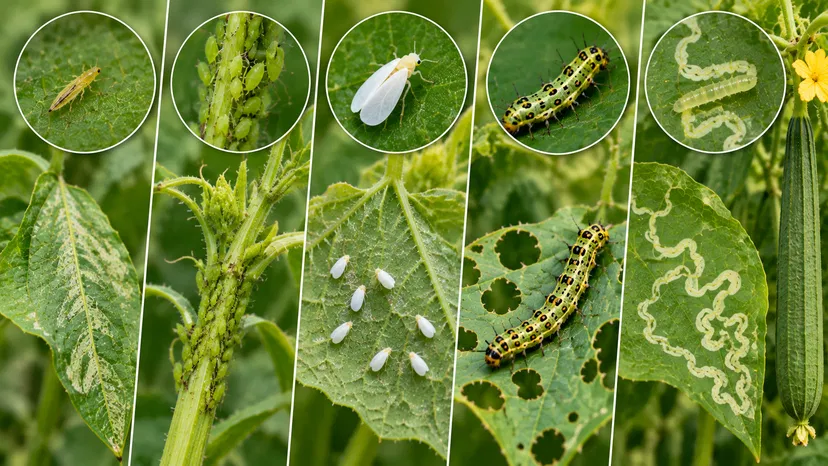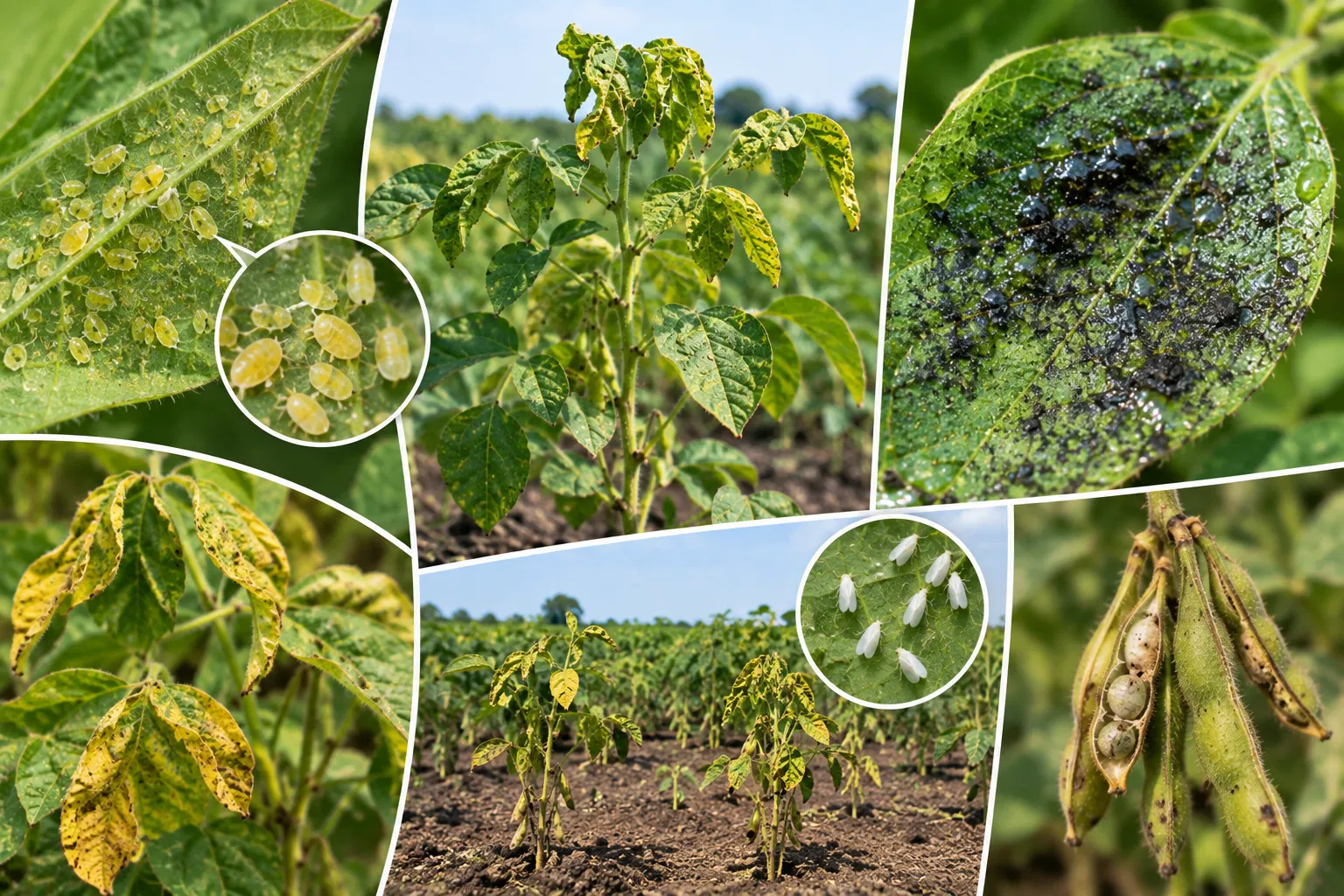
Whitefly in soybean is caused by Bemisia tabaci, a tiny sap-sucking insect that clusters on the underside of leaves. Both nymphs and adults feed on plant sap, weakening the crop and coating leaves with sticky honeydew that invites sooty mould. Left unchecked, heavy infestations stunt growth and cut yield.
How to Spot Whitefly in Your Field
- Tiny white insects that fly up in clouds when plants are disturbed
- Yellow, sticky nymphs clustered on the underside of leaves
- Sticky honeydew coating leaves, often followed by black sooty mould
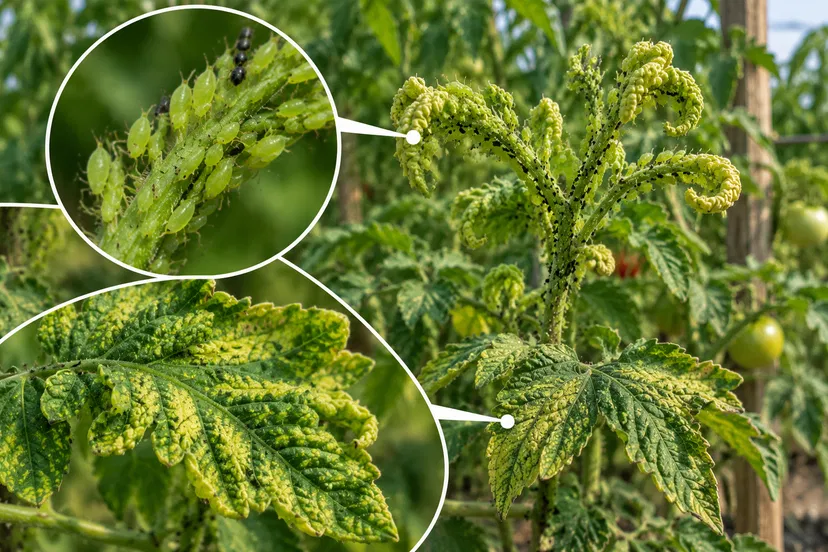
- Yellowing and curling of leaves under heavy infestation
- Weak, stunted plants with reduced pod-fill
What Triggers Whitefly Buildup
- Warm, dry weather that favours rapid whitefly breeding
- Dense, overcrowded canopy that shelters colonies
- Nearby infested crops or weeds acting as a source
- Continuous cropping without a break to disrupt the pest cycle
- Low natural predator activity from indiscriminate spraying
Ways to Control Whitefly in Soybean
1. Flonicamid 50% WG
A selective feeding blocker that disrupts the insect's feeding behaviour almost immediately after contact, causing whiteflies to stop feeding and eventually starve. It is systemic in action, moving through the plant to protect new growth, and is gentle on beneficial insects like pollinators and natural predators.
2. Thiamethoxam 30% FS
A systemic seed treatment that gets absorbed by the germinating seed and moves through the young plant, protecting it from whitefly and other sucking pests right from emergence. Because protection starts before the pest even appears, it reduces the need for early foliar sprays.
3. Pyriproxyfen 10% + bifenthrin 10% EC
A dual-action mix where Pyriproxyfen disrupts moulting and egg hatching, while Bifenthrin gives fast knockdown of adults by disrupting their nervous system. Together they control whitefly at every life stage, from egg to adult, and the translaminar action reaches insects hiding on the underside of leaves.
4. Acetamiprid 25% + bifenthrin 25% WG
Acetamiprid works systemically on the insect's nervous system while Bifenthrin adds a fast-acting contact punch, giving both quick knockdown and lasting residual control. This combination handles whitefly along with other sucking and chewing pests that often show up alongside it in soybean.
5. Yellow Sticky Traps
Whitefly adults are strongly attracted to the colour yellow, and these traps use that pull to draw them in and hold them on a sticky adhesive surface. They help monitor how fast the population is building up and provide some mass-trapping alongside sprays, working best as a supporting tool rather than a standalone control.
Note: Whitefly populations build up fast in warm, dry spells, so checking the underside of leaves regularly helps catch an outbreak before it spreads. Rotating between different insecticide groups across the season, rather than repeating the same one, helps prevent resistance building up in the whitefly population.
Disclaimer: Always confirm current label registration, approved dosage, water volume, and pre-harvest interval (PHI) for your state before using any product, since labels are periodically revised by regulatory authorities.
This guide is a general advisory. Do your own research and verification before using any product. Always confirm suitability for your crop stage, region, and field conditions before making any purchase, spray, or crop-management decision.