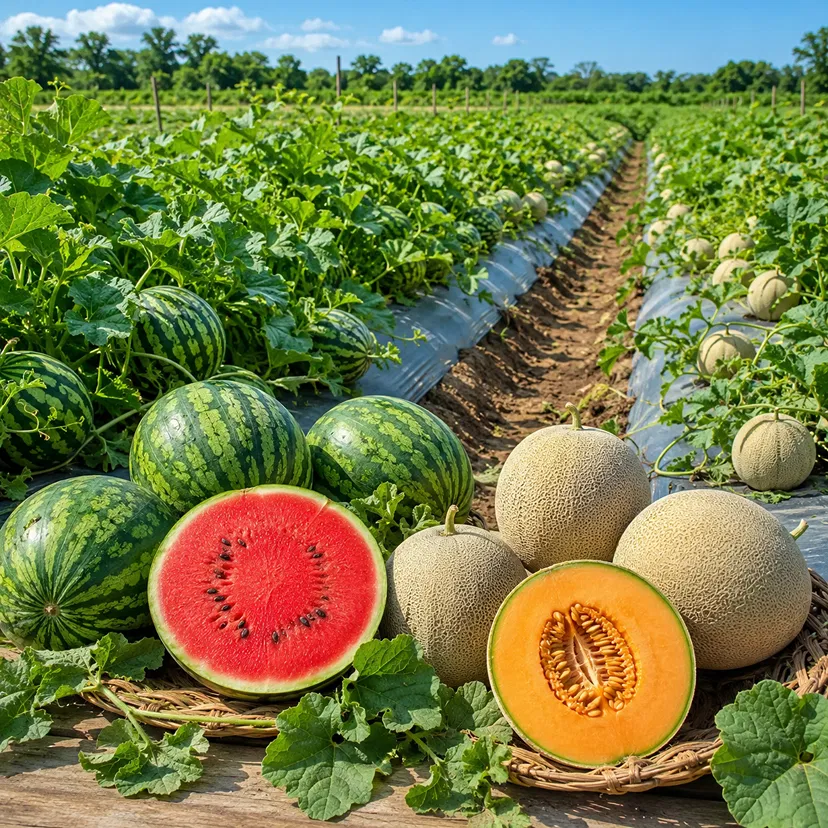
Nothing says summer quite like a ripe, juicy watermelon straight from the field. Whether you’re a small-scale grower or planning a commercial crop, successful watermelon cultivation depends on timing, soil health, water management, and smart pest control. With the right practices, you can grow flavorful melons that size up well and bring strong market value.
Choosing the Right Watermelon Variety
The first step in watermelon farming is selecting a variety suited to your climate, market, and growing season. Some watermelons mature early, while others need a longer warm period to produce large fruits. Seeded varieties are still popular, but seedless watermelons often bring premium prices in many markets.
- Early varieties: Best for short growing seasons.
- Seedless types: High consumer demand and strong market appeal.
- Large heirloom varieties: Often preferred for local sales and traditional flavor.
- Hybrid varieties: Usually offer better yield, uniformity, and disease resistance.
Choose varieties based on your local weather, soil conditions, and whether you want fresh market sales, roadside marketing, or wholesale production.
Ideal Climate and Soil Conditions
Watermelons thrive in warm weather and need plenty of sunlight to develop sweet flesh. They grow best in temperatures between 70°F and 90°F. Cold soil slows germination and weakens young plants, so planting too early can reduce success.
Soil quality plays a major role in watermelon cultivation. The best soil is sandy loam, well-drained, and rich in organic matter. Watermelons do not perform well in heavy clay or waterlogged areas because roots need oxygen to grow properly.
- Soil pH: 6.0 to 6.8 is ideal.
- Drainage: Essential for healthy root development.
- Sunlight: Full sun for at least 8 hours daily.
- Organic matter: Improves soil structure and moisture retention.
Land Preparation and Planting
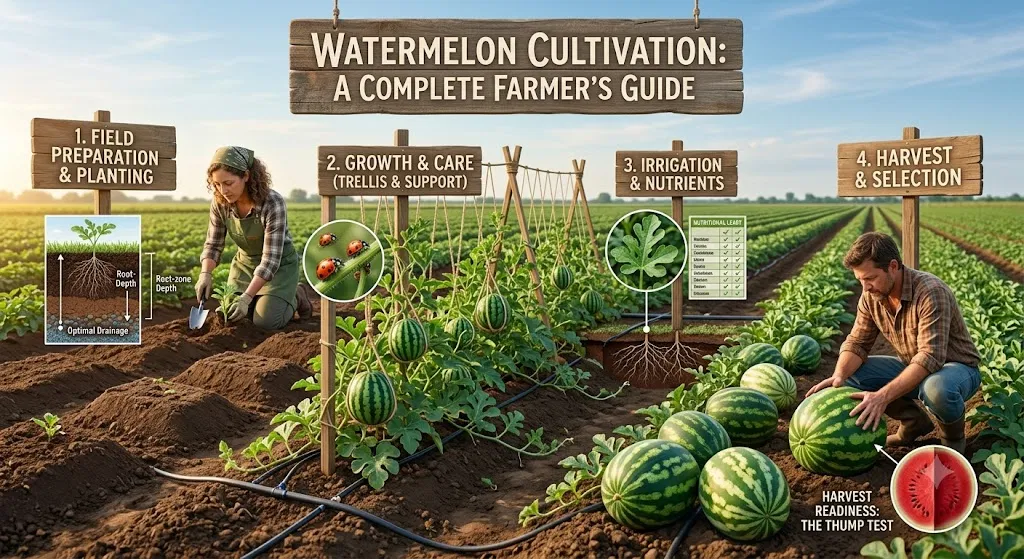
Good land preparation gives watermelon plants the best possible start. Begin by clearing weeds, removing debris, and loosening the soil deeply. Add compost or well-rotted manure to improve fertility and soil texture. Many farmers also form raised beds or mounds to improve drainage and warm the soil faster.
Watermelon seeds are usually planted directly in the field after the last frost when the soil has warmed sufficiently. In cooler regions, transplants can help shorten the growing cycle.
Planting Tips
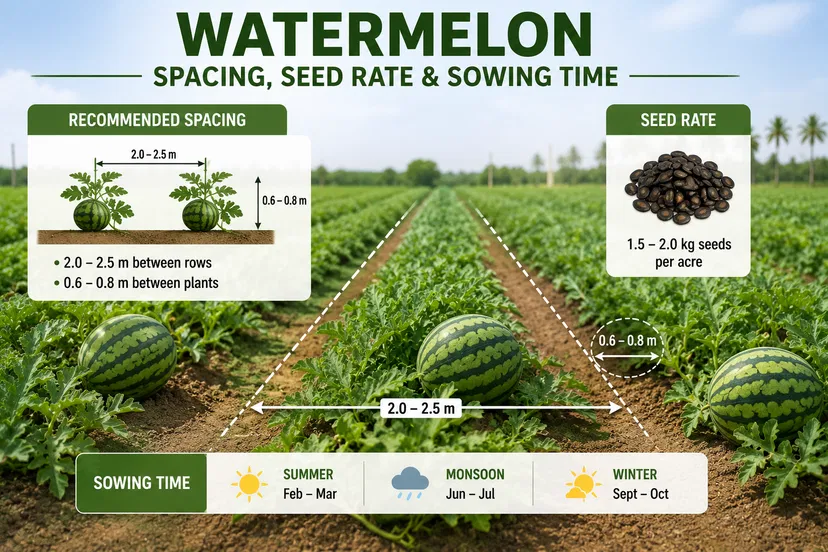
- Prepare raised beds or hills spaced according to the variety.
- Plant 2 to 3 seeds per hill, then thin to the strongest seedling.
- Maintain proper spacing to reduce disease and improve air circulation.
- Keep rows wide enough for vines to spread freely.
For commercial production, spacing is important because overcrowding leads to poor fruit size and more pest pressure.
Watering and Irrigation Management
Water is critical during early growth, flowering, and fruit development. However, too much water can reduce sweetness and increase disease risk. The goal is to keep soil evenly moist without flooding the field.
Tip: Watermelons need consistent moisture early on, but reduce watering as fruits approach maturity to improve sweetness and prevent splitting.
Drip irrigation is one of the best systems for watermelon cultivation because it delivers water directly to the root zone and helps keep leaves dry. This reduces the chance of fungal diseases and improves water-use efficiency.
Best Watering Practices
- Water deeply rather than lightly and frequently.
- Avoid overwatering during fruit ripening.
- Mulch around plants to conserve moisture and suppress weeds.
- Monitor soil moisture regularly, especially during hot weather.
Fertilization for Strong Growth
Watermelons are heavy feeders, especially during vine growth and fruit set. A balanced fertilization plan supports healthy vines, improves flowering, and helps fruits reach good size and quality.
Before planting, a soil test is highly recommended. It helps determine what nutrients your field needs and prevents unnecessary fertilizer use. In general, watermelon plants benefit from nitrogen early in the season, followed by increased potassium and phosphorus during flowering and fruiting.
- Nitrogen: Promotes early vine growth.
- Phosphorus: Supports root development and flowering.
- Potassium: Essential for fruit quality, sweetness, and size.
Avoid excessive nitrogen later in the season because it encourages leafy growth instead of fruit production. Balanced feeding is key to high yields and better flavor.
Weed, Pest, and Disease Control
Weeds compete with watermelon plants for water, sunlight, and nutrients. Early weed control is crucial, especially before vines cover the soil. Mulching, cultivation, and careful herbicide use can help keep the field clean.
Common pests include aphids, cucumber beetles, cutworms, and squash bugs. These insects can damage leaves, spread disease, and weaken plants. Regular scouting helps you catch problems early before they spread.
Common Diseases
- Powdery mildew: Appears as white powdery patches on leaves.
- Downy mildew: Causes yellowing and leaf damage.
- Fusarium wilt: A soilborne disease that damages plant vascular tissue.
- Anthracnose: Leads to leaf spots and fruit blemishes.
To reduce disease pressure, rotate crops, use resistant varieties, avoid overhead irrigation, and remove infected plant debris. Healthy field hygiene is one of the best defenses in watermelon farming.
Pollination and Fruit Set
Watermelons depend on pollinators, especially bees, to move pollen from male flowers to female flowers. Without good pollination, fruits may be misshapen, small, or poorly developed. Encouraging bee activity can make a major difference in yield.
Avoid spraying insecticides during peak flowering hours, and if possible, place hives near the field to improve pollination success. Good pollination leads to larger, more uniform fruits with better marketability.
Harvesting Watermelons at the Right Time
Harvest timing is one of the most important parts of watermelon cultivation. Picking too early can result in bland fruit, while harvesting too late may reduce shelf life and quality. Several signs can help determine maturity.
- The tendril nearest the fruit turns brown and dries up.
- The underside of the melon changes from white to creamy yellow.
- The rind becomes dull rather than shiny.
- The fruit produces a deep, hollow sound when tapped.
Handle fruits carefully during harvest to avoid bruising and cracking. Use clean tools and store melons in a shaded, dry area after picking.
Postharvest Handling and Storage
Good postharvest handling helps preserve watermelon quality and reduce losses. Since watermelons are bulky and easily damaged, careful transport matters just as much as good field management. Keep harvested fruits off the ground, avoid stacking too high, and move them quickly to market or storage.
Watermelons can be stored for a short period in cool conditions, but they are best sold fresh. Gentle handling, proper grading, and attractive presentation can improve returns, especially in competitive markets.
Final Thoughts
Watermelon cultivation can be highly rewarding when you focus on the fundamentals: the right variety, healthy soil, proper irrigation, balanced nutrition, and strong pest management. From planting to harvest, every step affects fruit quality and yield. With careful management and attention to detail, you can produce sweet, market-ready watermelons that stand out in any season.
If you want better yields and sweeter fruit, start with smart planning and consistent field care. The results will show in every harvest.