Choosing the right fertilizer can make the difference between a thriving garden and a disappointing one. If you’ve ever wondered whether water-soluble fertilizer or granular fertilizer is the better choice, you’re not alone. Both have their strengths, both feed plants effectively, and both can play an important role in your garden or landscape. The key is knowing when to use which.
Understanding the difference between these two fertilizer types helps you give plants the nutrients they need at the right time. Whether you’re growing vegetables, flowers, shrubs, or lawn grass, the right fertilizer choice can improve plant health, boost growth, and support better results overall.
What Is Water-Soluble Fertilizer?
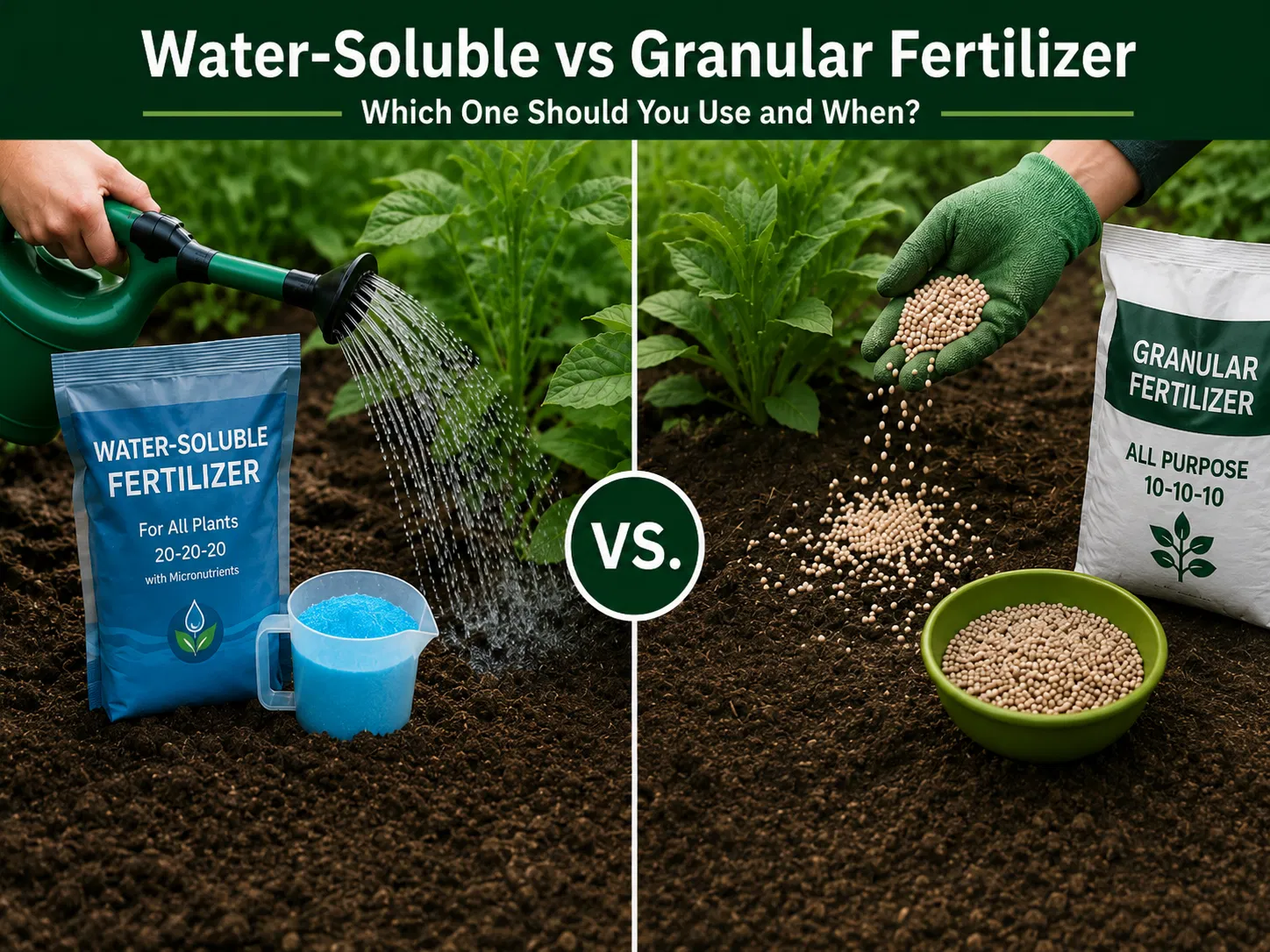
Water-soluble fertilizer is exactly what it sounds like: a fertilizer that dissolves in water and is applied as a liquid feed. It’s designed to deliver nutrients quickly because the plant can absorb them soon after application.
This makes water-soluble fertilizer a popular choice for fast results. It’s commonly used for container plants, seedlings, vegetables, and plants showing signs of nutrient deficiency. Because nutrients are available immediately, it is often considered a “quick fix” fertilizer.
Best uses for water-soluble fertilizer
- Feeding plants during active growth
- Correcting nutrient deficiencies quickly
- Supporting seedlings and transplants
- Container gardening and houseplants
- Vegetables that need frequent feeding
What Is Granular Fertilizer?
Granular fertilizer comes in dry pellets or granules that are spread over the soil. Some types are fast-release, but many are slow-release fertilizers that feed plants gradually over time.
This makes granular fertilizer a great option for long-term feeding. It’s often used in lawns, garden beds, trees, and shrubs because it reduces the need for frequent applications. Once applied, it works with water and soil moisture to release nutrients steadily.
Best uses for granular fertilizer
- Lawns and turf grass
- Large garden beds
- Trees and shrubs
- Long-term feeding schedules
- Low-maintenance fertilizing
Water-Soluble vs Granular Fertilizer: Key Differences
Both fertilizer types provide essential nutrients, but they work differently. Knowing these differences helps you choose the right one for your plants and your goals.
1. Speed of nutrient release
Water-soluble fertilizer delivers nutrients fast. Plants can begin absorbing them almost immediately after application. This is useful when plants need a quick boost.
Granular fertilizer usually releases nutrients more slowly. Depending on the formula, it may feed plants for weeks or even months.
2. Frequency of application
Water-soluble fertilizers usually need to be applied more often. Because nutrients are quickly taken up or washed away, regular feeding is often necessary.
Granular fertilizers, especially slow-release options, typically require fewer applications, making them more convenient for many gardeners.
3. Precision and control
Water-soluble fertilizer gives you precise control over nutrient delivery. You can adjust concentration based on plant needs, which is helpful for delicate plants or specific feeding programs.
Granular fertilizer is easier to apply over large areas, but it may be less precise unless carefully measured and distributed evenly.
4. Risk of overfeeding
Because water-soluble fertilizer acts quickly, overapplication can burn plants if mixed too strongly. It requires careful attention to dilution rates.
Granular fertilizer can also cause problems if overapplied, but slow-release formulas generally lower the risk of sudden nutrient overload.
5. Best application environment
Water-soluble fertilizer works especially well in pots, raised beds, and controlled growing setups where nutrients can be managed closely.
Granular fertilizer is often better for open soil, lawns, established plants, and larger landscapes where long-term feeding is preferred.
When to Use Water-Soluble Fertilizer
Water-soluble fertilizer is ideal when plants need immediate support. If your plants look weak, pale, or slow-growing, this type of fertilizer can provide a fast nutrient response.
It’s also useful during periods of active growth, especially in spring and early summer. Vegetables, flowering annuals, and potted plants often benefit from regular liquid feeding during these high-demand stages.
Use water-soluble fertilizer when speed, precision, and quick correction matter most.
Here are common situations where water-soluble fertilizer makes sense:
- Plants show nutrient deficiency: If leaves are yellowing or growth has stalled, a liquid feed can help quickly.
- Seedlings and transplants: Young plants benefit from gentle, easy-to-absorb nutrients.
- Container plants: Pots lose nutrients faster due to frequent watering, so liquid feeding helps replenish them.
- Heavy feeders: Tomatoes, peppers, cucumbers, and many blooming plants often respond well to regular feeding.
- Short growing seasons: When plants need to grow fast, water-soluble fertilizer can support quicker development.
When to Use Granular Fertilizer
Granular fertilizer is best when you want a steady, low-maintenance feeding strategy. It works especially well for established plants that don’t need constant attention.
For lawns, shrubs, and trees, granular fertilizer is often the most practical option. It can be applied less often while still supplying consistent nutrition over time.
Use granular fertilizer when you want long-lasting nutrition with fewer applications.
Granular fertilizer is a smart choice in these situations:
- Lawns: Large areas benefit from even, long-term nutrient release.
- Established landscape plants: Trees and shrubs usually need less frequent feeding.
- Seasonal feeding plans: Granular formulas can support plants for weeks or months.
- Busy gardeners: If you prefer fewer fertilizing sessions, granular is convenient.
- Soil improvement goals: Some granular products are designed to support overall soil fertility over time.
Which Fertilizer Is Better for Vegetables?
Vegetable gardens often benefit from both types, depending on the crop and timing. Water-soluble fertilizer is useful during germination, transplanting, and fruit production because vegetables often need quick access to nutrients.
Granular fertilizer is useful before planting and for maintaining soil fertility through the season. A slow-release granular formula can help build a strong nutritional foundation, while water-soluble fertilizer can provide a midseason boost.
For best results, many gardeners use a combination: granular fertilizer at planting time, then water-soluble fertilizer during active growth or fruiting.
Which Fertilizer Is Better for Lawns?
For lawns, granular fertilizer is usually the preferred choice. It covers large areas efficiently and provides steady feeding over time. Slow-release lawn fertilizers are especially popular because they support consistent growth and reduce the risk of quick surges.
Water-soluble fertilizer can be used in special cases, such as recovering stressed turf or addressing a nutrient issue, but it is less common for routine lawn care.
Can You Use Both Together?
Yes, in many cases, using both water-soluble and granular fertilizer can be effective. They serve different purposes and can complement each other well.
A common strategy is to use granular fertilizer for long-term feeding and water-soluble fertilizer for targeted, short-term support. This approach gives you both consistency and flexibility.
- Granular: baseline nutrition
- Water-soluble: quick correction or growth boost
The best approach depends on plant type, growth stage, and your fertilizing schedule. Always follow product instructions and avoid overfertilizing.
How to Choose the Right Fertilizer
To decide between water-soluble and granular fertilizer, ask yourself a few simple questions:
- Do my plants need a quick nutrient boost?
- Am I feeding potted plants or large garden areas?
- Do I want fewer applications or more precise control?
- Am I feeding seedlings, vegetables, lawns, or shrubs?
- Is this a short-term fix or a long-term feeding plan?
If you need fast results, go with water-soluble fertilizer. If you want lasting, low-maintenance feeding, granular fertilizer is usually the better fit. In many gardens, the smartest answer is not choosing one forever, but using each one at the right time.
Conclusion: Match the Fertilizer to the Plant’s Needs
When it comes to water-soluble vs granular fertilizer, there is no one-size-fits-all winner. Water-soluble fertilizer is best for quick absorption, active growth, and immediate correction. Granular fertilizer is best for long-lasting feeding, convenience, and broad application.
The healthiest gardens often use both strategically. Start with the needs of your plants, then choose the fertilizer that matches your timing, goals, and maintenance style. When you feed plants the right way at the right time, you set them up for stronger growth, better color, and improved performance all season long.