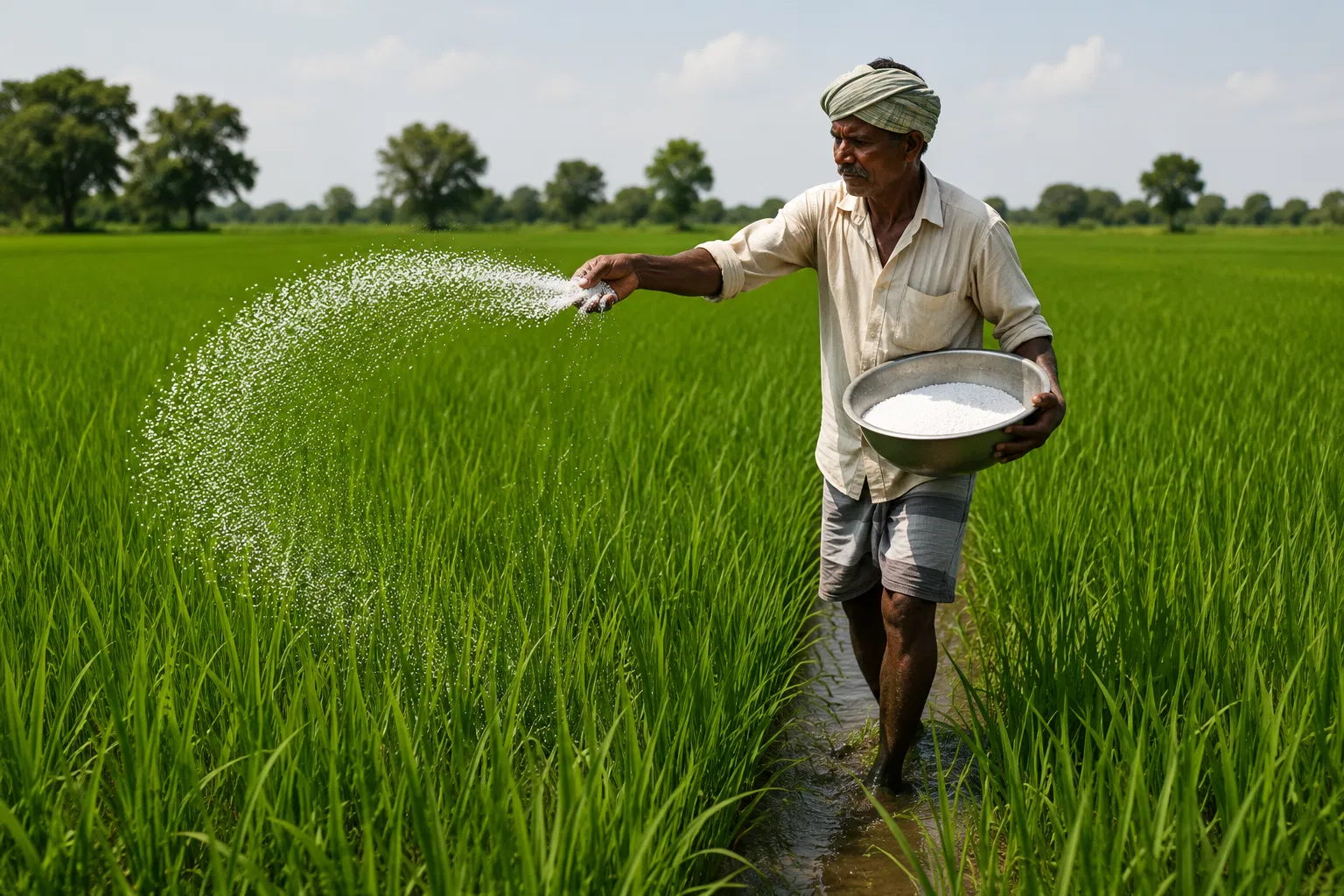
If you want a healthy paddy crop with strong tillers, greener leaves, and better grain filling, how you apply urea matters as much as how much you apply. Many farmers lose nitrogen through poor timing, shallow water management, or applying all the urea at once. The result is simple: wasted fertilizer, weak crop response, and lower yield.
The good news is that urea for paddy works very well when it is split correctly and applied at the right growth stages. In this guide, you will learn the best urea splitting schedule for paddy, when to apply it, and how to avoid common mistakes that reduce efficiency.
Why Urea Timing Matters in Paddy
Rice plants do not need all their nitrogen at one time. Their demand changes with growth stages. In the early stage, nitrogen supports root growth and tillering. Later, it helps with panicle development, grain formation, and final yield.
If you apply too much urea early, the crop may grow too fast, lodge easily, or lose nitrogen before the plant can use it. If you apply too late, the crop may remain pale and underfed during the most important yield-building stages.
Correct splitting of urea in paddy ensures the plant gets nitrogen when it needs it most.
Best Time to Apply Urea in Paddy
The ideal urea application schedule depends on the crop stage, soil condition, and variety. In most paddy fields, nitrogen is best split into three main doses:
- Basal dose at transplanting or sowing
- Top dressing at active tillering
- Top dressing at panicle initiation
In some high-yield systems, a fourth light dose may be used depending on crop condition and local recommendations. However, three splits are the most common and practical for many rice-growing areas.
1. Basal Application of Urea
The first split is applied at transplanting or just after sowing in direct-seeded rice. This dose supports early establishment and initial growth. But the basal dose should not be too large.
Recommended practice: apply a small portion of total urea with basal phosphorus and potassium fertilizers. Excess nitrogen at this stage can cause weak rooting and unnecessary vegetative growth.
In flooded fields, urea should be incorporated properly or applied under controlled water conditions to reduce nitrogen loss.
Best tips for basal urea application
- Apply only a small share of total nitrogen.
- Use it when the soil is moist or after transplanting.
- Avoid broadcasting large amounts on standing deep water.
- Combine with other basal fertilizers as per soil test recommendations.
2. Urea Application at Active Tillering
This is one of the most important stages for paddy yield. During active tillering, the plant produces more productive shoots. Proper nitrogen supply at this stage increases the number of panicles and improves crop vigor.
Best timing: about 20 to 30 days after transplanting, or when the crop starts producing vigorous tillers.
If the crop looks pale green, slow, or weak in tillering, this top dressing becomes even more important. But the application should still be balanced, not excessive.
Strong tillering at the right time leads to more panicles later. A well-timed urea dose here can significantly improve the final harvest.
How to apply urea during tillering
- Drain excess standing water before application if possible.
- Apply urea evenly over the field.
- Re-flood lightly after application to reduce loss.
- Do not apply before heavy rain or strong irrigation flow.
3. Urea at Panicle Initiation
The final major split should be applied at panicle initiation, which is the stage when the rice plant begins forming the ear head inside the stem. This dose helps support spikelet formation, grain number, and grain filling.
Best timing: around 45 to 55 days after transplanting in many varieties, though this varies by crop duration and local conditions.
This application is especially important for achieving higher yield. If nitrogen is lacking at this stage, the crop may produce fewer grains per panicle and poor grain development.
Why this split is crucial
- Supports panicle development
- Improves grain number per head
- Helps maintain leaf greenness during reproductive growth
- Enhances final grain filling
How Much Urea Should Be Split?
The exact amount depends on soil fertility, expected yield, variety, and fertilizer recommendation for your region. Still, a common approach is to divide the total nitrogen dose into three parts:
- 25% to 30% as basal
- 35% to 40% at tillering
- 30% to 35% at panicle initiation
In nutrient-rich soils, the basal dose may be reduced. In low-fertility soils or high-yielding fields, the total nitrogen requirement may be higher, but splitting remains essential.
Always follow local soil test-based recommendations when available.
Signs Your Paddy Needs Urea
Observing the crop helps you fine-tune nitrogen management. Paddy often shows visible signs when it needs more nitrogen.
- Leaves become pale green or yellowish
- Tillers are weak or fewer than expected
- Plants grow slowly
- Older leaves lose color first
However, do not rely only on leaf color. Over-application of urea can make the crop too lush and increase the risk of lodging, pests, and disease.
Common Mistakes to Avoid with Urea in Paddy
Many yield losses happen not because farmers skip urea, but because they apply it incorrectly. Avoid these mistakes for better fertilizer efficiency.
1. Applying all urea at once
This is one of the most common errors. Rice cannot absorb all the nitrogen at once, so much of it may be lost through volatilization, leaching, or runoff.
2. Applying on deep standing water
Broadcasting urea into deep water reduces efficiency. Urea should be applied under shallow water or drained conditions when possible.
3. Applying before heavy rain
Rain can wash away fertilizer or reduce uptake. Timing matters, especially in open fields.
4. Overfeeding the crop
More urea does not always mean more yield. Excess nitrogen can cause lodging and make the crop more vulnerable to pests and diseases.
5. Ignoring crop stage
Applying urea at the wrong time may not help yield. Focus on basal, tillering, and panicle initiation stages for best results.
Best Practices for Urea Use in Paddy
For strong crop response and better nitrogen use efficiency, follow these simple practices:
- Split urea into multiple doses instead of one large application.
- Apply at the right crop growth stage.
- Use soil test results to determine total nitrogen need.
- Maintain proper water control in the field.
- Avoid fertilizer loss by applying before light irrigation or controlled flooding.
- Keep the field free from excessive weeds that compete for nutrients.
When urea is timed well, the crop uses nitrogen more efficiently and the farmer gets better value from every bag of fertilizer.
Conclusion
Successful paddy farming is not just about using urea; it is about using urea at the right time and in the right split. A well-planned schedule at basal, tillering, and panicle initiation stages helps the crop build strong roots, produce more tillers, and fill grains properly.
If you want better rice yield and less fertilizer waste, focus on correct urea splitting, proper water management, and stage-wise application. Small changes in timing can make a big difference in the harvest.
Use urea wisely, split it correctly, and let your paddy crop respond with stronger growth and higher yield.