When comparing Trichoderma viride vs Trichoderma harzianum, the differences may seem subtle at first glance, but they matter a lot in agriculture, biocontrol, and soil health. Both are powerful beneficial fungi known for suppressing plant pathogens, improving root growth, and supporting healthier crops. Yet each species has its own strengths, preferred applications, and performance patterns.
If you are choosing between Trichoderma viride and Trichoderma harzianum, understanding their key differences can help you make the right decision for disease management, crop protection, and soil treatment.
What Is Trichoderma?
Trichoderma is a genus of beneficial fungi widely used as a biocontrol agent and plant growth promoter. These fungi live naturally in soil, compost, and root zones, where they compete with harmful pathogens and help plants absorb nutrients more efficiently.
Among the many species in this genus, Trichoderma viride and Trichoderma harzianum are two of the most commonly used in agriculture and horticulture.
Trichoderma viride vs Trichoderma harzianum: Main Differences
Although both species belong to the same genus and share several functions, they differ in growth behavior, pathogen control, and practical use.
1. Biological Activity
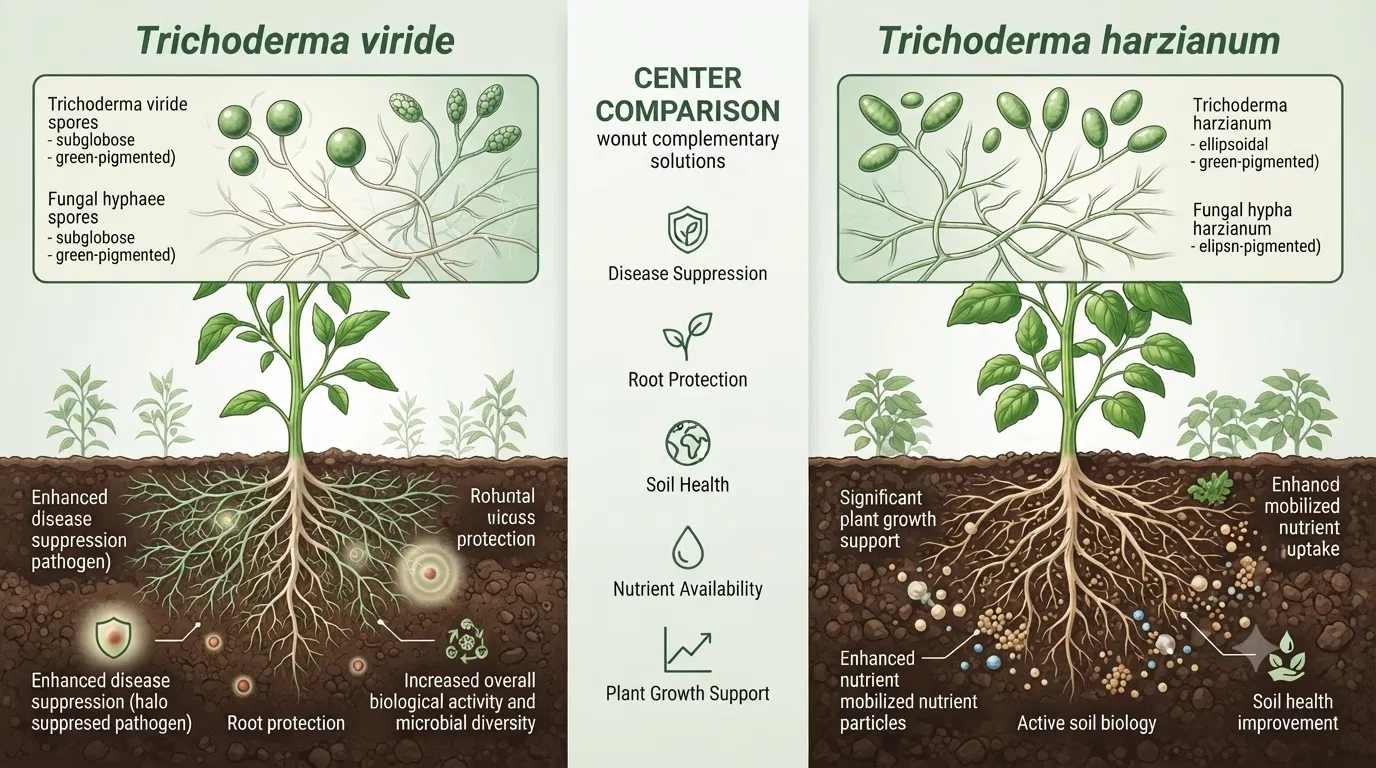
Trichoderma viride is often recognized for its strong enzyme production, especially enzymes that break down fungal cell walls. It is highly effective against certain soil-borne pathogens and is often used in seed treatment and soil application.
Trichoderma harzianum is known for broader adaptability and aggressive colonization of the root zone. It tends to perform well across a wider range of crops and environmental conditions.
2. Spectrum of Pathogen Control
T. viride is often used against pathogens such as:
- Rhizoctonia
- Fusarium
- Alternaria
- Some Pythium species
T. harzianum is widely valued for its ability to suppress a broader set of pathogens, including:
- Fusarium oxysporum
- Rhizoctonia solani
- Sclerotium rolfsii
- Pythium species
- Botrytis in some conditions
3. Root Colonization
Trichoderma harzianum is generally considered more efficient at colonizing roots and establishing long-term presence in the rhizosphere. This makes it especially useful for crops that need ongoing protection throughout the growing season.
Trichoderma viride also colonizes roots effectively, but it is often selected for specific disease control programs where rapid antifungal activity is desired.
4. Enzyme and Antifungal Production
Both fungi produce enzymes such as chitinases, cellulases, and glucanases, which help degrade harmful fungal structures. However, T. viride is often associated with stronger direct enzyme-mediated antagonism, while T. harzianum is known for combining multiple modes of action, including competition, antibiosis, mycoparasitism, and induced resistance.
5. Environmental Adaptability
T. harzianum usually shows better adaptability across different soil types, moisture levels, and crop systems. This is one reason it is commonly found in commercial biofungicide formulations.
T. viride can also perform well, but in some field conditions it may be more sensitive than T. harzianum to environmental variation.
How They Work
Both species protect plants through similar mechanisms, but the intensity and reliability of these mechanisms can vary.
1. Competition for Space and Nutrients
They rapidly occupy root surfaces and soil niches, leaving less room for harmful fungi to grow.
2. Mycoparasitism
They directly attack pathogenic fungi by attaching to them, coiling around them, and breaking down their cell walls.
3. Antibiosis
They release natural compounds that inhibit pathogen growth and reduce spore germination.
4. Induced Systemic Resistance
They can stimulate plant defenses, helping crops respond faster and more effectively to disease pressure.
In simple terms: both fungi act like biological bodyguards for plants, but Trichoderma harzianum is often the more versatile defender, while Trichoderma viride is often favored for targeted antifungal action.
Uses in Agriculture
Both species are widely used in sustainable farming, organic production, and integrated pest management. Their applications include:
- Seed treatment to protect seedlings from early-stage infections
- Soil drenching to reduce soil-borne pathogens
- Root dip treatment for transplants
- Compost enrichment to improve microbial activity
- Foliar or nursery applications in some crop systems
Trichoderma harzianum is often preferred in commercial formulations because of its consistency and adaptability. Trichoderma viride is also widely used, especially where specific pathogen suppression is the priority.
Which Is Better: Trichoderma viride or Trichoderma harzianum?
There is no single answer for every situation. The better choice depends on the crop, target pathogen, climate, and application method.
- Choose Trichoderma viride when you need strong antifungal action and targeted suppression of certain soil-borne diseases.
- Choose Trichoderma harzianum when you want broader performance, better root colonization, and more reliable results across different conditions.
In many cases, T. harzianum is considered more versatile, while T. viride remains a valuable option for specific disease management strategies.
Advantages of Trichoderma viride
- Strong enzyme production
- Effective against several fungal pathogens
- Useful in seed and soil treatments
- Supports early-stage disease suppression
- Compatible with sustainable farming practices
Advantages of Trichoderma harzianum
- Broader disease suppression
- Excellent root colonization
- Highly adaptable to different environments
- Commonly used in commercial biofungicides
- Supports plant growth and stress tolerance
Practical Tips for Use
To get the best results from either species, proper application is essential.
- Use fresh, quality formulations from trusted suppliers.
- Apply at the right time, preferably before disease pressure becomes severe.
- Avoid mixing with harsh chemical fungicides unless compatibility is confirmed.
- Follow recommended dosage for the crop and formulation type.
- Apply in moist soil conditions to help fungal establishment.
Conclusion
When it comes to Trichoderma viride vs Trichoderma harzianum, both are valuable biological tools for improving plant health and controlling fungal diseases. The key difference is that T. viride is often chosen for targeted antifungal activity, while T. harzianum is usually preferred for its broader adaptability and stronger root colonization.
For growers, the best choice depends on your crop needs, disease pressure, and local growing conditions. If you want a more versatile and widely proven biocontrol option, Trichoderma harzianum is often the first choice. If your goal is specific fungal suppression, Trichoderma viride can be an excellent option as well.
Bottom line: both species can play a powerful role in sustainable agriculture when used correctly, and choosing the right one can make a meaningful difference in crop performance and disease management.