If you want healthier roots, stronger plants, and better soil biology, Trichoderma dosage per acre and application timing matter more than many growers realize. Applied at the right rate and at the right stage, Trichoderma can help suppress soil-borne pathogens, support root development, and improve crop vigor naturally.
But using too little may reduce effectiveness, while applying at the wrong time can limit results. That is why understanding the correct Trichoderma dosage per acre and the best application timing is essential for getting consistent field performance.
What Is Trichoderma?
Trichoderma is a beneficial fungus commonly used as a biocontrol agent in agriculture. It works in the rhizosphere, the soil zone around plant roots, where it competes with harmful fungi and helps create a healthier growing environment.
Farmers use Trichoderma for:
- Managing soil-borne diseases
- Improving root health
- Enhancing nutrient uptake
- Promoting seedling vigor
- Supporting sustainable farming practices
Because it is a living organism, successful use depends on proper handling, correct dosage, and timely application.
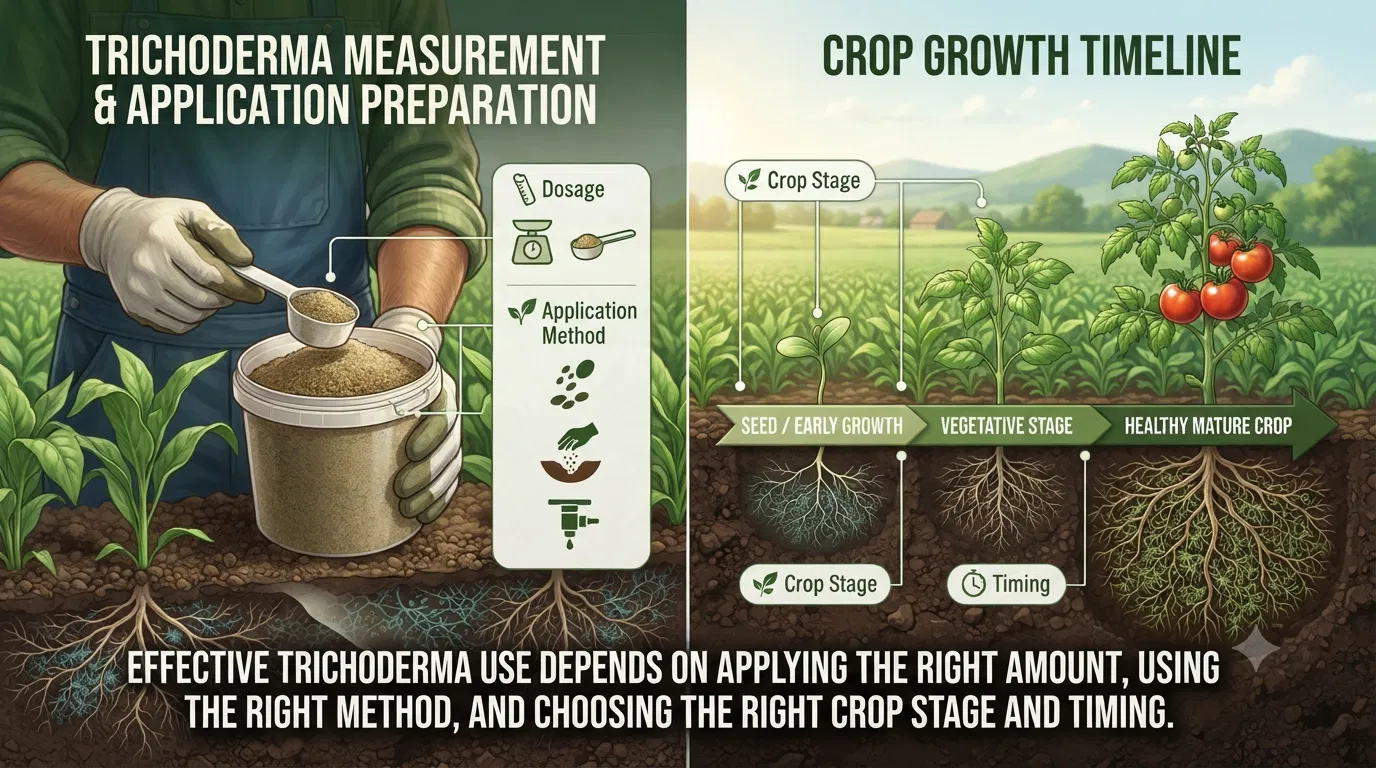
Trichoderma Dosage Per Acre
The ideal Trichoderma dosage per acre depends on the formulation, crop type, application method, and product concentration. Always check the product label first, but the following are commonly used field ranges.
General Field Dosage Guidelines
- Soil application: 2 to 4 kg per acre of Trichoderma-based formulation
- Seed treatment: 4 to 10 grams per kg of seed
- Nursery/seedling dip: 5 to 10 grams per liter of water
- Compost enrichment: 2 to 5 kg per acre mixed with compost or FYM
- Drip application: As recommended on the label, usually diluted and flushed through the irrigation system
For liquid formulations, dosage is usually expressed in milliliters per acre or liters per hectare, depending on the product strength. Since concentrations vary widely, follow the manufacturer's recommendation carefully.
Factors That Affect Dosage
The right dosage is not one-size-fits-all. Consider these factors before application:
- Crop type: Vegetables, cereals, fruit crops, and plantation crops may need different rates
- Disease pressure: Fields with a history of wilt, root rot, or damping-off may require stronger management
- Soil condition: Organic matter, moisture, and microbial activity influence performance
- Product formulation: Powder, granule, and liquid products all have different concentrations
- Application method: Seed treatment, soil drenching, and broadcasting do not use the same amount
Best Application Timing for Trichoderma
Timing is just as important as dosage. Trichoderma performs best when it is introduced before pathogen buildup becomes severe. Early application helps the beneficial fungus establish itself around the roots first.
1. Seed Treatment Before Sowing
Seed treatment is one of the most effective ways to apply Trichoderma. It protects the seed and emerging seedling from early infections.
Best timing: Apply just before sowing after mixing the recommended amount with a sticking agent or water as directed.
This method is especially useful for:
- Vegetable seeds
- Paddy and cereal seeds
- Pulses and oilseeds
- High-value crops with damping-off risk
2. Nursery Bed or Seedling Treatment
For crops raised in nurseries, Trichoderma should be applied early in the seedling stage. A root dip or soil treatment in the nursery helps seedlings establish strong roots before transplanting.
Best timing: At sowing in nursery beds or 5 to 10 days before transplanting.
3. Soil Application at Planting
Soil application is ideal at the time of land preparation or planting. When mixed with compost, farmyard manure, or organic matter, Trichoderma multiplies better and spreads more effectively in the root zone.
Best timing: Apply before planting or during final field preparation.
This ensures the beneficial fungus is present in the soil when roots begin to grow.
4. Root Zone Drenching After Transplanting
If crop stress or disease risk is high, a root zone drench can help reinforce protection after transplanting.
Best timing: 7 to 15 days after transplanting, or when early signs of root stress are observed.
5. Repeat Application During Crop Growth
In crops with longer duration, a second or third application may improve long-term effectiveness, especially in pathogen-prone fields.
Best timing: During active vegetative growth or before periods of high disease incidence.
How to Apply Trichoderma for Best Results
To get the most benefit from Trichoderma, proper application technique is essential. Since it is a living bio-agent, harsh handling can reduce its viability.
Recommended Application Methods
- Seed treatment: Coat seeds evenly and dry in shade before sowing.
- Soil mixing: Mix with compost, FYM, or vermicompost and apply in the root zone.
- Nursery drenching: Apply diluted solution around seedlings to protect roots.
- Root dipping: Dip transplant roots in Trichoderma suspension before planting.
- Irrigation system application: Use only if the formulation is suitable for drip or fertigation.
Important Application Tips
- Apply in the morning or evening to avoid intense heat
- Keep soil moist for better fungal establishment
- Avoid mixing with fungicides unless compatibility is confirmed
- Use fresh, quality product with good shelf life
- Store in a cool, dry place away from direct sunlight
Tip: Trichoderma works best as a preventive input, not a rescue treatment. Apply it early for stronger disease management and better root colonization.
Common Mistakes to Avoid
Even a high-quality Trichoderma product may underperform if used incorrectly. Avoid these common mistakes:
- Applying after disease has already spread heavily
- Using more than the recommended dose without label guidance
- Mixing with chemical fungicides immediately before application
- Applying in dry soil without irrigation or moisture support
- Using expired or poorly stored product
- Expecting instant visible results instead of gradual improvement
Best Crops for Trichoderma Application
Trichoderma is widely used across many crop systems, especially where root diseases are common. It is effective in:
For these crops, early soil colonization and regular root-zone management are key to maximizing the benefits of Trichoderma.
Final Takeaway
The right Trichoderma dosage per acre and smart application timing can make a major difference in crop health and disease control. Use the correct rate based on formulation, apply it early, and focus on the root zone where it can establish and work effectively.
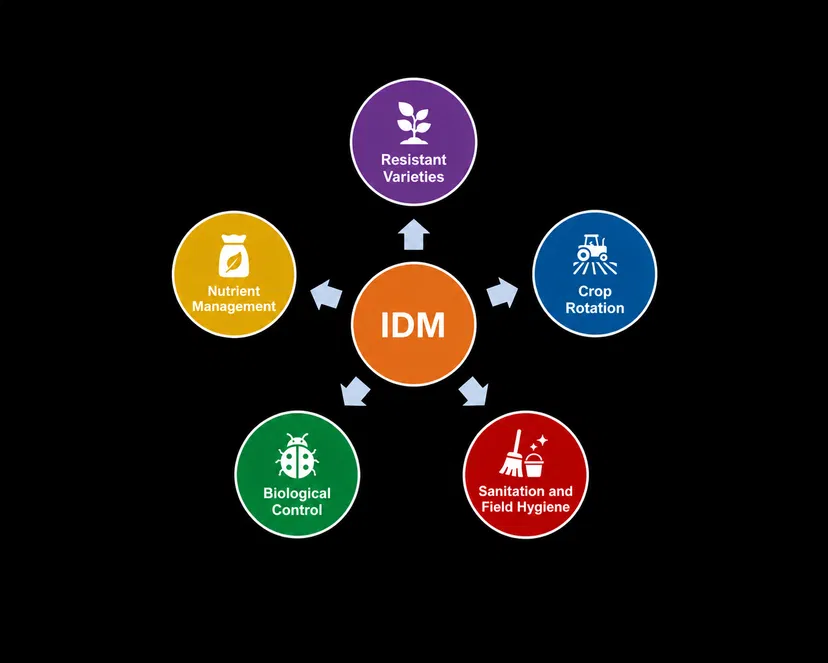
For best results, treat Trichoderma as a preventive biological tool, not a last-minute fix. When used properly, it can become a valuable part of an integrated crop management program that supports stronger roots, healthier soil, and better yields.
Before application, always check the product label and follow crop-specific recommendations for the most accurate dosage and timing.