Organic and Sustainable Ways to Control Phomopsis Blight in Brinjal
Organic and Sustainable Ways to Control Phomopsis Blight in Brinjal
Quick Answer: How to Control Phomopsis Blight in Brinjal?
Phomopsis blight in brinjal can be managed through healthy seeds, crop rotation, removal of infected plant parts, proper drainage and preventive biological treatments. Watch for brown leaf spots, drying shoots and sunken fruit lesions. Remove infected fruits immediately and use only brinjal-approved fungicides when chemical control is necessary.
What Is Phomopsis Blight in Brinjal?
Phomopsis blight is a fungal disease of brinjal caused by Phomopsis vexans, also known as Diaporthe vexans. It attacks seedlings, leaves, stems and fruits, causing blight and fruit rot.
The disease is especially troublesome during warm, humid and rainy conditions. It spreads through infected seeds, crop residues, rain splashes and contaminated farm tools. Early prevention is important because severely infected fruits cannot recover.
Major Symptoms of Phomopsis Blight
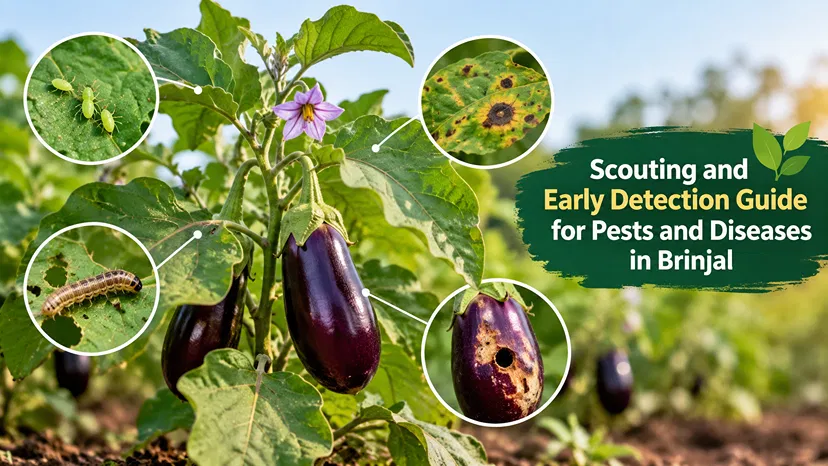
Seedlings: Dark lesions develop near the stem base, causing seedlings to collapse.
Leaves: Small circular or irregular brown spots develop greyish centres and dark margins.
Stems: Brown lesions enlarge, sometimes girdling stems and drying shoots.
Fruits: Small, sunken spots expand into soft, rotten patches. Severely affected fruits may dry and become mummified.
Similar symptoms can occur with other fungal diseases or physical fruit injuries. Examine affected leaves, stems and fruits together before confirming the disease.
Conditions That Favour Phomopsis Blight
Warm temperatures and prolonged humidity.
Frequent rainfall and water splashing onto plants.
Overcrowded plants with poor airflow.
Infected seeds and leftover diseased crop residues.
Excessive overhead irrigation and poor field sanitation.
Best Organic and Sustainable Management Practices
1. Use Healthy Seeds and Resistant Varieties
Always select healthy, disease-free brinjal seeds from reliable sources. Avoid collecting seeds from diseased fruits.
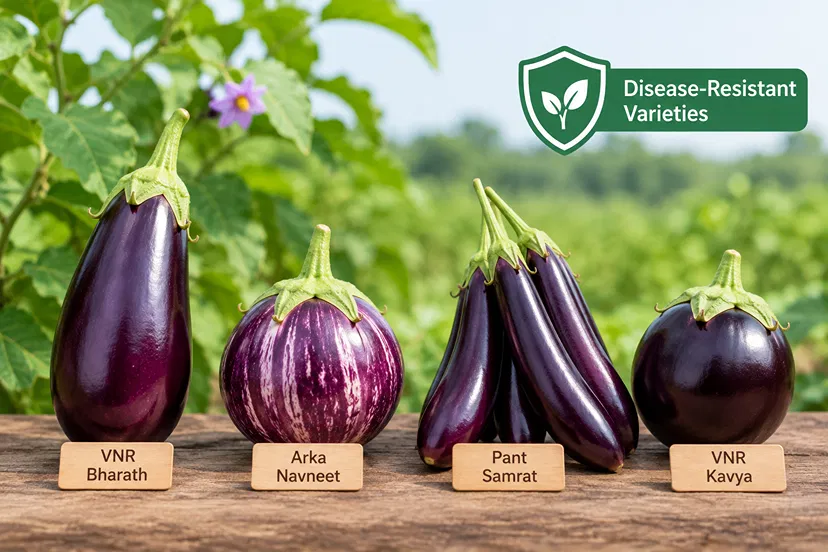
Kerala Agricultural University identifies Pusa Bhairav, Pant Samrat and Haritha as resistant varieties in its Phomopsis blight guidance. Confirm local suitability and seed availability before planting.
2. Follow Crop Rotation
Avoid repeatedly growing brinjal in infected fields. Rotate with suitable non-host crops, preferably cereals, to help reduce disease carryover. Remove infected crop residues before establishing the next crop.
3. Maintain Field Sanitation
Remove infected leaves, shoots and fruits regularly.
Collect fallen, rotten and mummified fruits.
Dispose of diseased material away from the cultivation area.
Clean pruning tools after working on infected plants.
Avoid handling healthy plants immediately after infected ones.
4. Improve Drainage and Air Circulation
Maintain recommended plant spacing and prevent waterlogging. Where practical, use drip irrigation to supply water directly to the root zone without repeatedly wetting leaves and fruits.
5. Use Preventive Nursery Management
Raise seedlings in clean, well-drained nursery media. Agricultural guidance describes hot-water seed treatment at 50°C for 30 minutes, but temperature must be controlled precisely to avoid damaging seeds.
Remove infected nursery seedlings and avoid transplanting unhealthy plants.
Biological Control Products Available on BigHaat
Beneficial fungi such as Trichoderma viride can help suppress certain soil-borne and seed-borne pathogens. These products are preventive tools and should not be considered proven curative treatments for Phomopsis fruit rot.
BigHaat Product
Technical Content
Purpose and Application
Pioneer Agro Trichoderma Viride Bio Fungicide
Trichoderma viride
Root dipping at 500 g for seedlings required for one acre.
EBS Trichoderma Viride Bio Fungicide
Trichoderma viride 2%
Seed-treatment rate of 10 ml/kg seed.
Chemical Control of Phomopsis Blight in Brinjal
BigHaat Product
Technical Content
Dosage
Tata Rallis Blitox Fungicide
Copper Oxychloride 50% WP
2gm/lt of water
Safety advice: Use a chemical fungicide only when its current label specifically permits the intended crop and disease use. Follow the approved dose, spray interval, protective equipment instructions and pre-harvest waiting period. Copper fungicides must not automatically be treated as organic-certified inputs.
Integrated Disease Management Calendar for Brinjal
Crop Stage
Recommended Practices
Before sowing
Choose healthy seeds, rotate crops and prepare clean nursery media.
Nursery stage
Inspect seedlings, manage moisture and use suitable preventive treatments.
After transplanting
Maintain spacing, improve drainage and inspect lower leaves.
Flowering and fruiting
Remove infected fruits, minimize leaf wetness and monitor disease spread.
After harvest
Remove infected residues, clean tools and plan crop rotation.
Frequently Asked Questions
1. What causes Phomopsis blight in brinjal?
It is caused by the fungus Phomopsis vexans. The pathogen survives in infected seeds and crop debris and spreads through rain splashes and contaminated materials.
2. Can Phomopsis blight be controlled organically?
Preventive practices such as healthy seeds, sanitation, crop rotation, proper drainage and suitable biological treatments can help reduce disease risk. Severe infections may still require additional management.
3. How can farmers identify Phomopsis fruit rot?
Look for small, sunken brown spots that enlarge into soft, rotten areas. Severely infected fruits may dry and become mummified.
4. Is Trichoderma useful against Phomopsis blight?
Trichoderma can suppress certain seed-borne and soil-borne fungi. However, the listed BigHaat formulations have not been verified specifically for Phomopsis blight control in brinjal.
5. Can infected brinjal fruits recover?
No. Rotten fruits cannot return to a healthy condition. Remove infected fruits to reduce potential sources of infection.
6. Does Phomopsis blight spread during rainfall?
Yes. Rain splashes can spread fungal spores from infected plant material to healthy leaves, stems and fruits.
7. What is the best long-term prevention method?
Combine healthy seeds, appropriate varieties, crop rotation, field sanitation and consistent disease monitoring. Preventing early infection is generally more effective than attempting to rescue severely diseased plants.
Also Read
Brinjal Wilt Diseases: Symptoms and Management
Conclusion
Managing Phomopsis blight sustainably requires prevention throughout the growing season. Healthy seeds, clean nursery practices, crop rotation, regular removal of infected material and careful moisture management form the foundation of disease control. Biological products may support preventive disease management, while chemical fungicides should be used only where the exact crop–disease approval is confirmed.
Disclaimer: Agricultural recommendations vary with local conditions and product registrations. BigHaat product availability can change. Always check the current product label and consult a local agricultural expert before pesticide application.