Different Methods of Potato Cultivation in India: Complete Farming Guide
Potato (Solanum tuberosum) is one of the most widely grown vegetables in India, mainly in Uttar Pradesh, West Bengal, Bihar, Gujarat, Madhya Pradesh and Punjab. In the plains it is mainly a rabi crop planted in October and November, in the hills it is a summer crop, and on the plateau of Karnataka and Maharashtra it is also grown in kharif.
Depending on soil, water, season and budget, farmers can choose from several growing methods.
Potato Cultivation Methods at a Glance
Method
Best suited for
Main benefit
Main limitation
Ridge and furrow
Plains, rabi season
Simple and well proven
High seed cost and labour
Raised bed or paired row
Heavy soils, drip irrigated fields
Better drainage and more plants
Needs bed making
Drip and fertigation
Water short areas
Saves water and fertiliser
Higher setup cost
Zero tillage with straw mulch
Rice fallows in eastern India
No ploughing and less water
Needs a lot of straw
True potato seed
North East, plateau areas
Very low seed cost
Late and uneven crop
Seed potato production
Farmers growing their own seed
Healthy seed for later crops
Needs timing and care
Hill cultivation
Hills of the north and North East
Good seed and summer crop
Slopes and cyst nematode
Intercropping
Sugarcane and other crop belts
Extra income from the same land
Needs careful planning
1. Ridge and Furrow Planting
This is the most common method in the plains. Healthy, sprouted 30 to 50 g tubers are planted at about 60 x 20 cm and 8 to 10 cm deep, using about 25 to 30 quintals of seed per hectare. Earthing up is generally done 20 to 25 days after planting. The first light irrigation is given within about 10 days and later ones every 10 to 14 days, keeping water below two thirds of the ridge. Haulms are cut 10 to 20 days before harvest to harden the skin. Full steps are in this guide on potato planting and package of practices.
Treating seed tubers with a VAM bio-fertiliser such as Tapas VAM SP, which lists potato at 0.25 g per kg of seed, can support early root growth.
2. Raised Bed and Paired Row Planting
On heavy or poorly drained soils, potato can be planted on raised beds with two rows about 40 cm apart and plants about 20 cm apart. Beds drain quickly, reduce tuber rot, fit well with drip and allow more plants per acre. Good field preparation for potato comes first.
3. Drip Irrigation and Fertigation
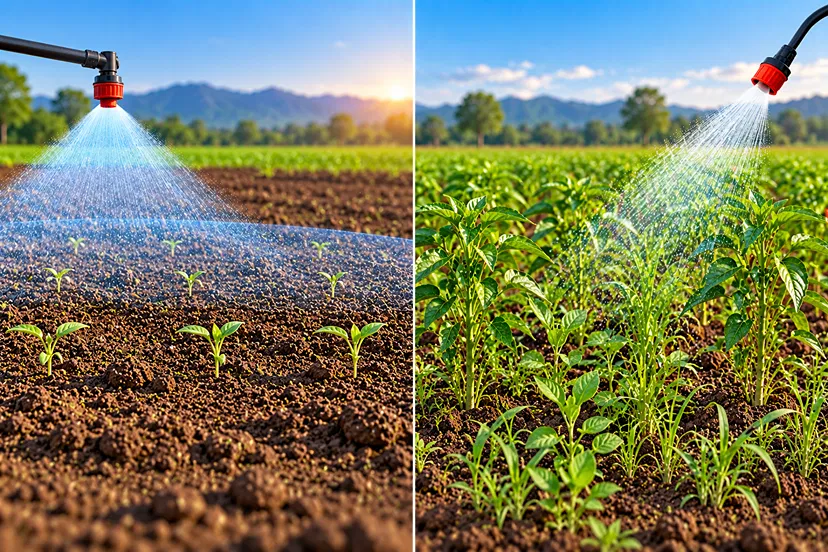
Drip can save about 40 to 50% water compared with furrow irrigation and can reduce fertiliser use. It is generally run on alternate days, as longer gaps can stress the crop. About one third of the nitrogen is given at planting and the rest through drip, about twice a week up to around 50 days after planting.
Water soluble fertilisers that list potato, such as Multiplex Multi PK 0:52:34, can be used for fertigation.
4. Zero Tillage Potato With Paddy Straw Mulch
In rice fallows of West Bengal, Bihar and Assam, potato can be grown without ploughing. Right after the rice harvest, seed tubers are placed on the moist soil, covered with compost and fertiliser, then with a thick layer of paddy straw, about 15 cm or more. The crop is generally ready in about three months and needs less water and labour. This method needs plenty of straw and healthy seed. More details are on this official page on zero tillage potato.
5. True Potato Seed (TPS)
Instead of tonnes of tubers, only about 100 to 120 g of true potato seed is needed per hectare. Seed is sown in nursery beds in early October, and seedlings are transplanted after 25 to 30 days on ridges about 50 cm apart, with about 10 cm between plants. Small seedling tubers from the first season can also be planted the next season. TPS suits the North East and plateau areas, though the crop can be late and uneven.
6. Growing Your Own Seed Potato
Seed is the costliest input in potato, so many farmers grow their own seed with the seed plot technique. The seed crop is planted in October in the plains with whole 30 to 40 g tubers and less nitrogen. Haulms are cut in early to mid January, before aphids build up, and seed is replaced with certified seed every 3 to 4 years.
Tissue culture minitubers, aeroponics and apical rooted cuttings now produce disease free early seed much faster. See this success story on apical rooted cuttings.
7. Hill Potato Cultivation
In the hills, potato is mainly a rainfed summer crop, planted in March and April and harvested in August and September. Rows are made across the slope, about 50 to 60 cm apart, to reduce soil loss. Potato cyst nematode can be a problem in some hill areas, so resistant varieties and a 3 to 4 year rotation are generally advised.
8. Intercropping Potato
Potato fits well between rows of autumn planted sugarcane, where two potato rows can be grown between cane rows and harvested before the cane grows tall. Potato can also be intercropped with crops such as onion, coriander and pulses, and a row of marigold every few potato rows may help reduce root knot nematode.
Organic Potato Farming
Organic potato relies on farmyard manure, vermicompost, neem cake and bio-fertilisers that list potato, such as Arihant Azofix. Yields may be lower at first, but soil health generally improves.
Tips Before You Choose a Method
Pick a variety suited to your region and market; the official list of Indian potato varieties can help
Use healthy, certified seed from a trusted source
Watch for blight in cool, cloudy weather; this guide on early and late blight explains the signs
For harvesting, a potato digger attachment for power tillers can save labour
Conclusion
Potato can be grown in many ways in India, from ridge and furrow to drip, zero tillage, true potato seed and hill farming. Matching the method to your soil, water, season and budget can help farmers get better yields at lower cost.
Frequently Asked Questions
Which method of potato cultivation is most common in India?
Ridge and furrow planting with seed tubers in the rabi season is the most common method, especially in the plains.
How much seed potato is needed per acre?
About 10 to 12 quintals of healthy 30 to 50 g tubers is generally used per acre for a ridge and furrow crop.
What is zero tillage potato farming?
Seed tubers are placed on moist soil right after the rice harvest and covered with compost and a thick layer of paddy straw, without ploughing.
Can potato be grown from seeds instead of tubers?
Yes, true potato seed can be raised in a nursery and transplanted, and only about 100 to 120 g of seed is needed per hectare.
Disclaimer: Seed rate, spacing, fertiliser and irrigation needs for potato can vary with variety, soil, season and region. The figures here are general guidance, so check with your local agriculture officer or KVK before adopting a new method.