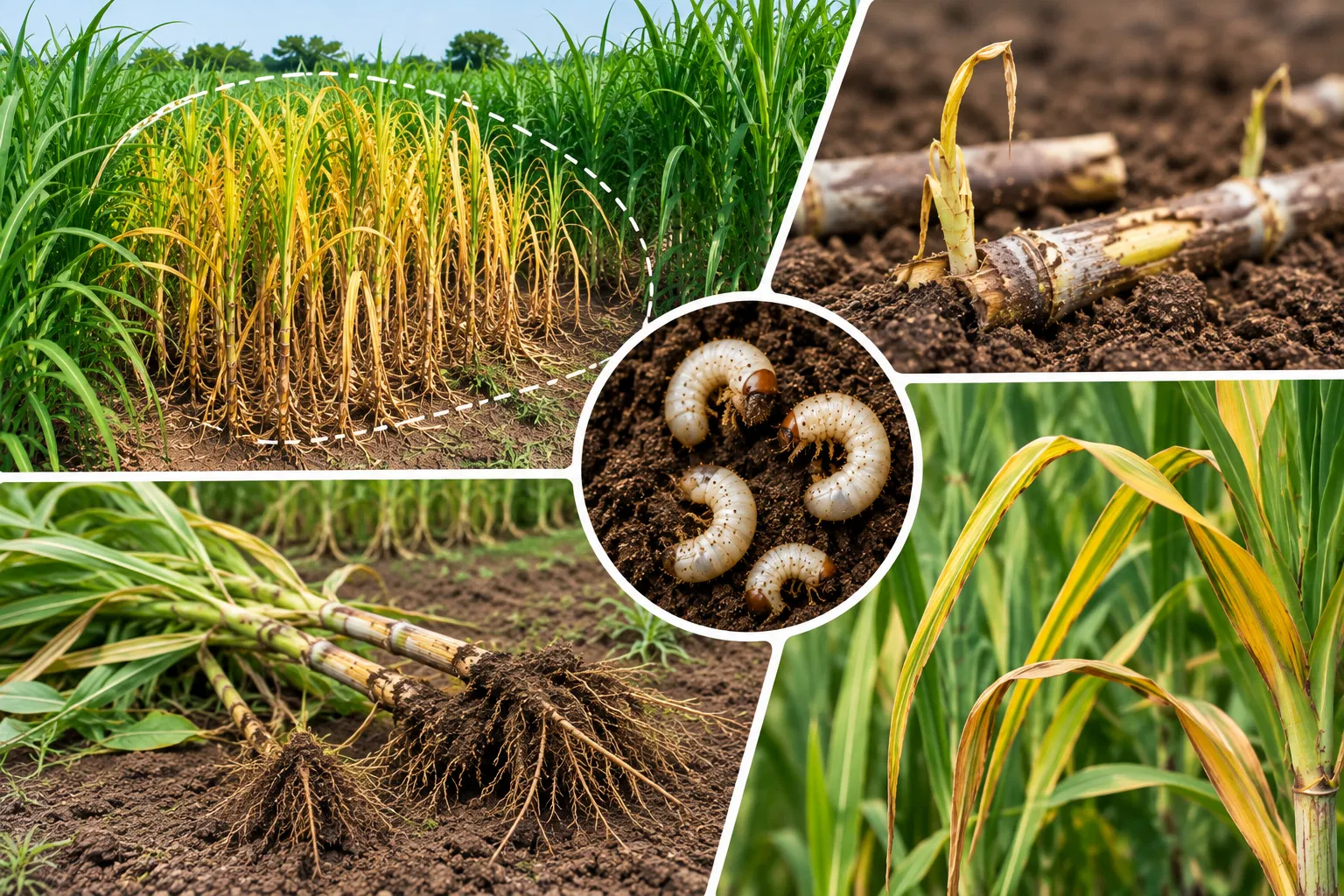
White grub, the larval stage of a soil-dwelling beetle, lives in the soil and feeds on sugarcane roots. Because the damage happens underground, it's often missed until the crop is already struggling. Sets fail to sprout properly, established clumps wilt and dry up in patches, and canes can be pulled out of the ground with almost no resistance since the root system is already gone.
Signs of White Grub Damage
- Yellowing and wilting of canes in patches, even with enough water
- Poor or delayed sprouting from planted setts
- Canes that topple over or pull out easily due to weak roots
- Digging near affected clumps reveals white, C-shaped grubs in the soil
- Beetle swarms around field lights during early monsoon evenings
Conditions That Favour White Grub
- Sandy or light-textured soils where grubs move and feed easily
- Fields near uncultivated land or forest edges where adult beetles breed
- Well-decomposed farmyard manure applied without checking for grubs first
- First rains after a dry spell, which trigger beetle emergence and egg-laying
- Continuous sugarcane cultivation without soil treatment between crops
Solutions to Control White Grub in Sugarcane
1. Fipronil 40% + imidacloprid 40% WG
Applied as a soil drench around the root zone, Fipronil kills on contact and through ingestion, while Imidacloprid moves into the plant and keeps protecting new root growth from the inside. Together they knock down existing grubs and guard against fresh attacks for weeks after application, and farmers often notice healthier, greener regrowth as a side benefit.
2. Acephate 50% + imidacloprid 1.80% SP
This one works a little differently, it's absorbed by the plant and moves through its tissue, so grubs feeding on the roots pick up the poison as they feed. Because it moves systemically, it also helps against early shoot borer and termite, two other soil pests that often trouble the same sugarcane fields.
3. Thiamethoxam 0.90% + fipronil 0.20% GR
Sold as ready-to-use granules, this one skips the mixing and spraying altogether, you simply apply it directly to the soil near the root zone. It slowly releases both actives into the soil, giving season-long protection against grubs and termites without needing repeat applications, which makes it a low-effort option at planting time.
4. Trap for Adult Beetles
Instead of waiting for grubs to show up in the soil, this option catches the beetles before they mate and lay eggs. A pheromone lure draws the adult beetles into a bucket trap as they emerge with the first monsoon rains, cutting down how many eggs make it into the ground for the next generation of grubs.
Note: White grub is easiest to manage at planting time, before the beetles have a chance to lay eggs in the field. Checking farmyard manure for grubs before applying it, and treating the soil early in the season, saves a lot of trouble later when the crop is already established.
Disclaimer: Always confirm current label registration, approved dosage, water volume, and pre-harvest interval (PHI) for your state before using any product, since labels are periodically revised by regulatory authorities.
This guide is a general advisory. Do your own research and verification before using any product. Always confirm suitability for your crop stage, region, and field conditions before making any purchase, spray, or crop-management decision.