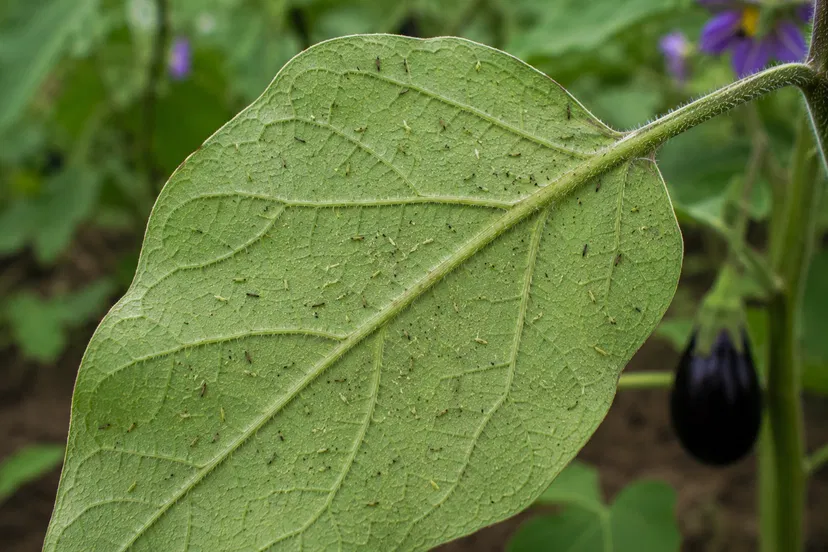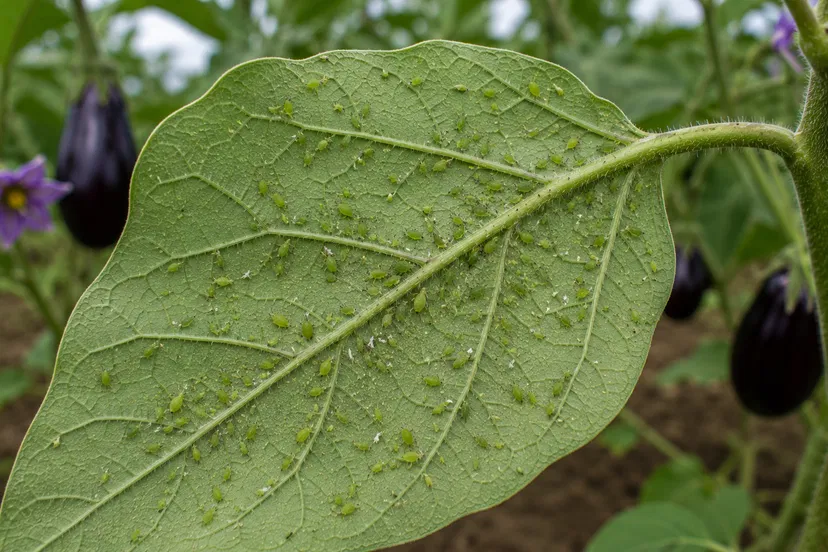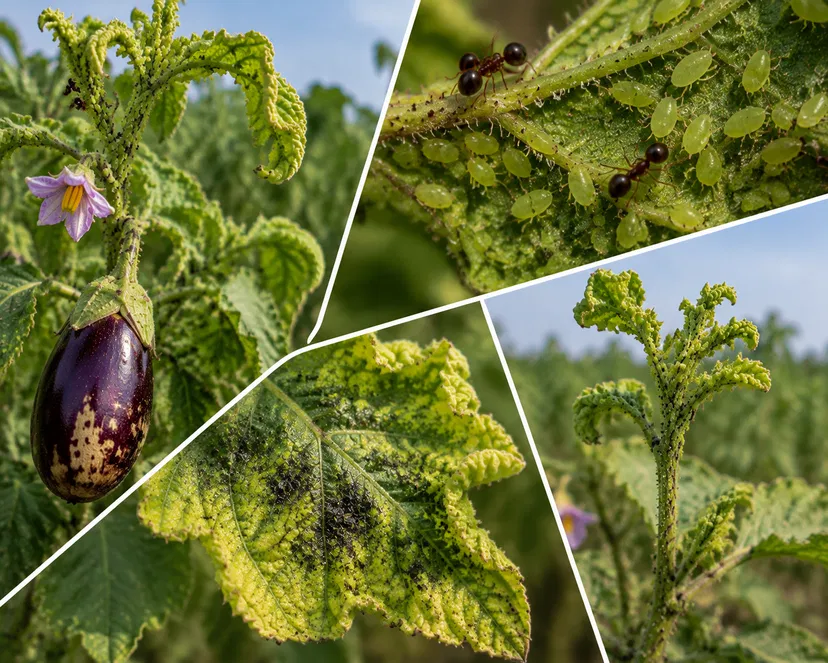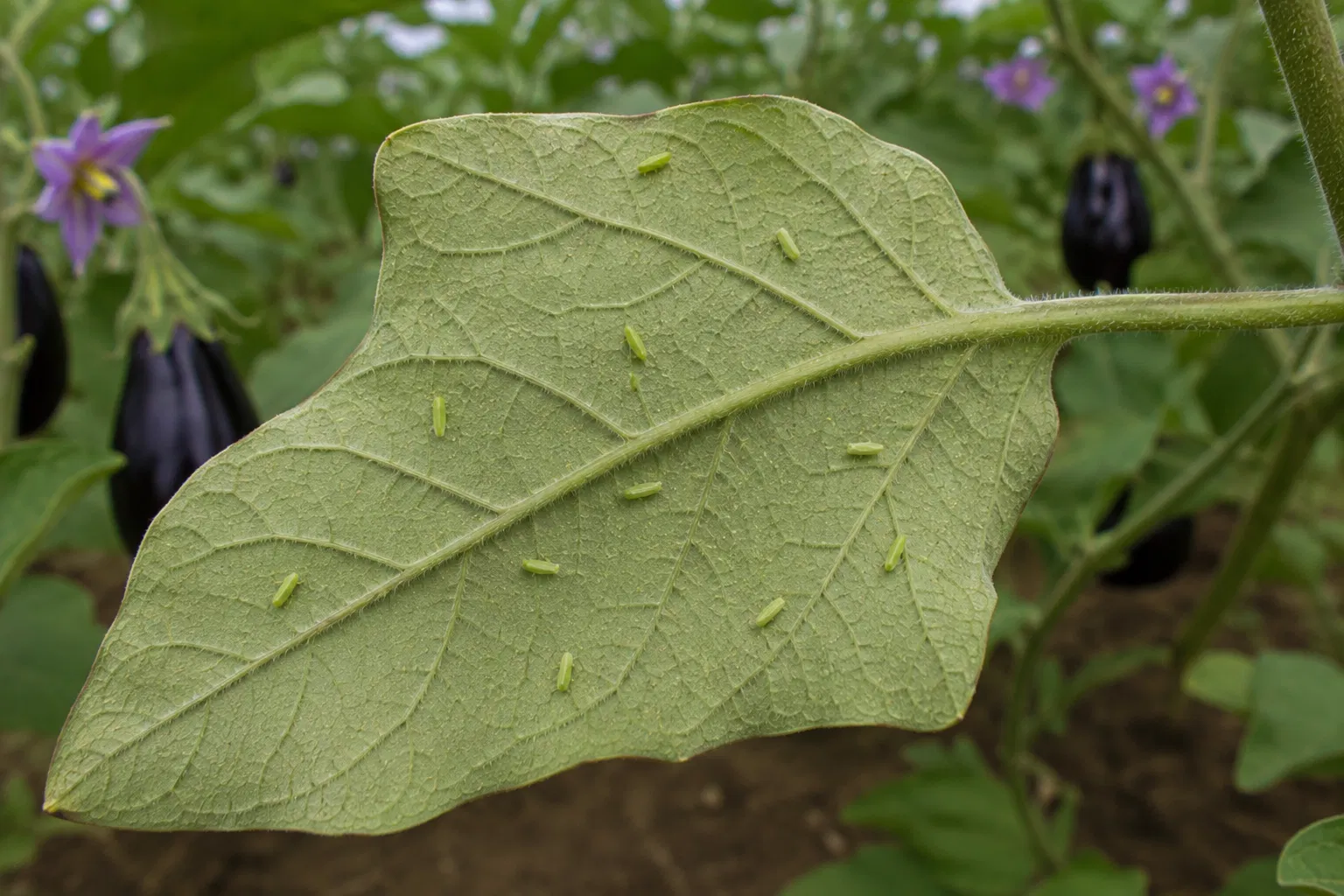
Leafhopper control in brinjal is one of the most important pest-management tasks for growers, since this sucking pest, commonly called jassid (Amrasca biguttula biguttula), can quietly drain a crop's vigour before symptoms are obvious. Left unchecked, leafhoppers cause curling, yellowing, and eventual browning of leaves, which cuts down photosynthesis and reduces both flowering and fruit set. Because jassid populations build up fast in warm, humid weather, timely and rotated brinjal pest management is essential to prevent resistance and keep the crop healthy through the season.
1. Fluxametamide 10% w/w EC
Fluxametamide is a newer-generation isoxazoline insecticide that works by disrupting GABA and glutamate-gated chloride channels in the insect's nervous system. This disturbs normal nerve signalling, so affected leafhoppers lose coordinated movement and feeding ability soon after contact. It moves translaminarly within the leaf tissue, which means it reaches jassids feeding on the underside of leaves even when spray coverage on top is stronger. Its activity also holds up well against light rain, giving it a reasonably steady window of protection once applied.
Product Recommendations
2. Fluxametamide 3.8% w/w + Pyridaben 9.5% w/w SC
This combination brings together two different modes of action in one spray. Fluxametamide continues to act on GABA and glutamate-gated chloride channels, while pyridaben works as a mitochondrial electron transport inhibitor that blocks the pest's cellular respiration, giving a fast knockdown effect. Together they cover a wider spectrum, including leafhoppers, thrips, and mites, which is useful when more than one sucking pest is active at once. The formulation also has translaminar movement, helping it reach hoppers tucked away on the leaf underside.
Product Recommendations
3. Verticillium lecanii
Verticillium lecanii is a naturally occurring entomopathogenic fungus used as a biological insecticide against sucking pests like jassids, aphids, and whiteflies. When its spores land on a leafhopper's body, they germinate and grow through the insect's outer cuticle, gradually colonising the body and depleting its nutrients until the pest dies. Because it works through direct infection rather than a chemical toxin, it fits well into IPM and organic-leaning brinjal programmes and is gentler on natural predators. It performs best when applied early, at the first sign of hopper activity, and paired with the cultural practices above for steady, season-long control.
Product Recommendations
Disclaimer: Always confirm current label registration, approved dosage, water volume, and pre-harvest interval (PHI) for your state before using any product — labels are periodically revised by regulatory authorities.
This guide is a general advisory. Do your own research and verification before using any product. Always confirm suitability for your crop stage, region, and field conditions before making any purchase, spray, or crop-management decision.