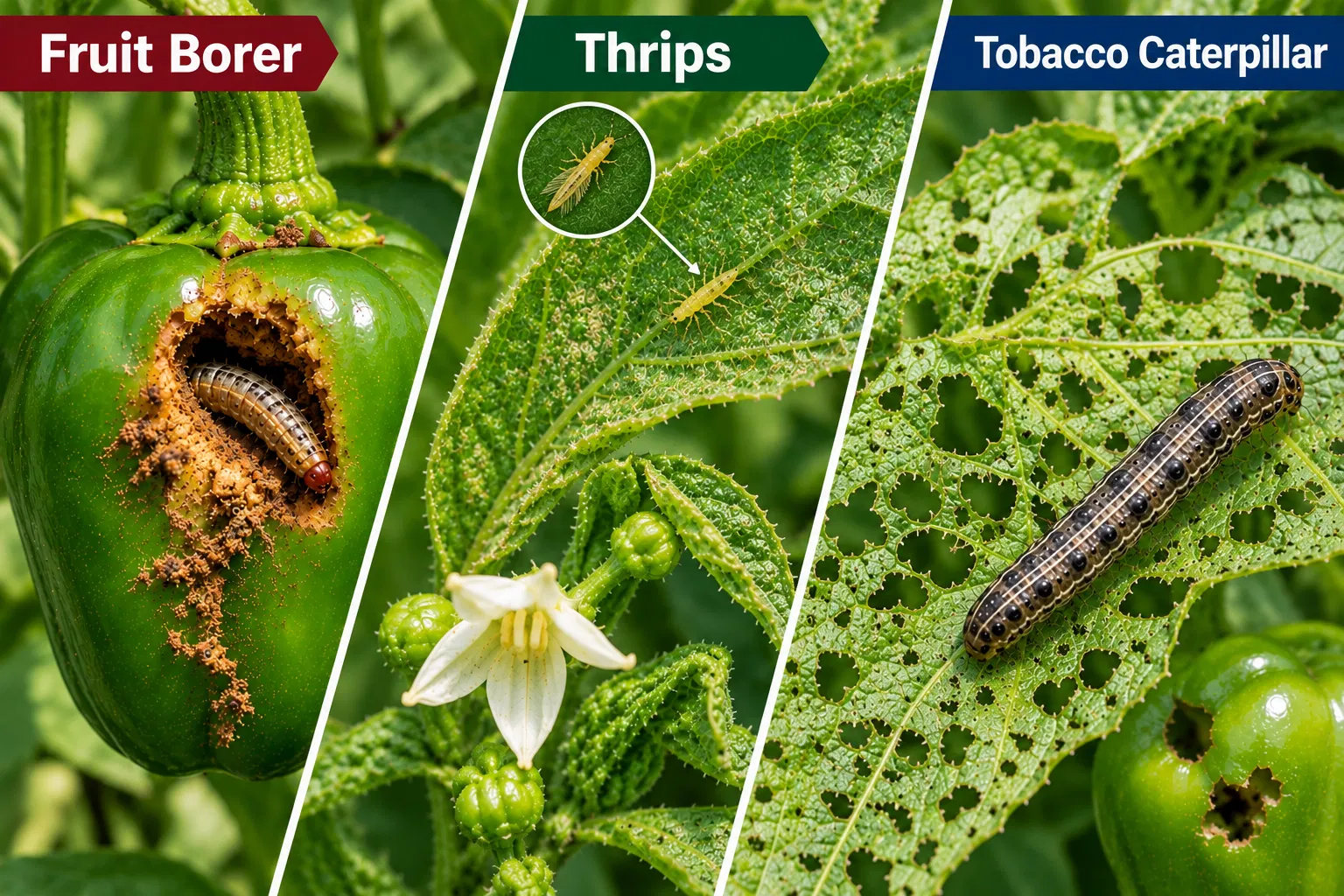
Capsicum is a high-value crop, but its tender leaves, flowers, and developing fruit make it an attractive target for a range of sucking and chewing insects. Left unmanaged, these pests can scar the fruit, weaken the plant, and cut sharply into both yield and market grade.
Why Capsicum Attracts These Pests
- Warm, humid weather during flowering and fruit set, when pest activity peaks
- Dense, overcrowded canopy that limits airflow and hides pests from view
- Excess nitrogen application, which produces soft, more attractive growth
- Continuous capsicum or related solanaceous cropping without rotation
- Overuse of broad-spectrum insecticides, which wipes out natural predators like ladybird beetles and parasitic wasps
1. Fruit Borer (Helicoverpa armigera)
How to Spot It
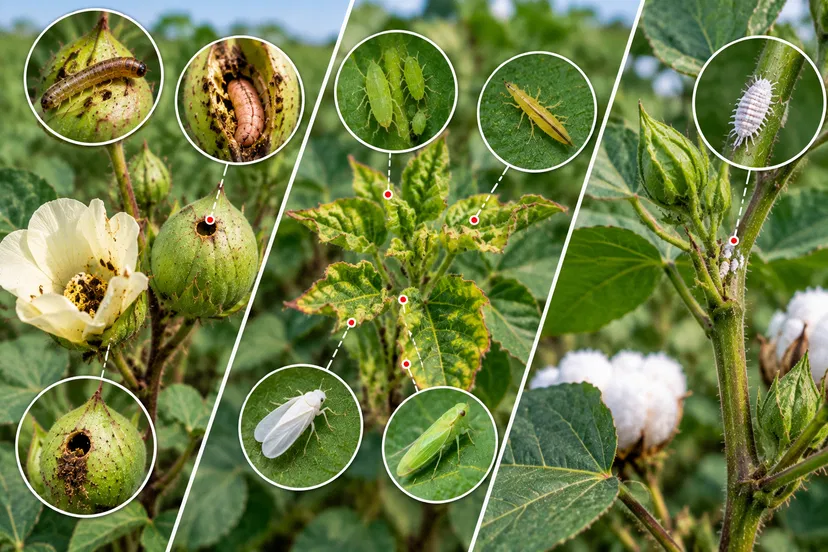
Look for circular entry holes on the fruit surface, often with frass (larval excreta) visible near the opening. Affected fruit may rot internally or drop prematurely, and pale green to brown caterpillars with dark markings can sometimes be found inside damaged fruit or on the plant.
Solutions to Control It
| Product | How It Works |
|---|---|
| FMC Benevia Insecticide (Cyantraniliprole 10.26% OD) | A diamide insecticide that disrupts the pest's muscle function, stopping feeding within hours and leading to paralysis and death. It moves systemically within the plant, protecting new growth even after the spray has been applied. |
| Tapas Cotton Bollworm Pheromone Lure (Helicoverpa armigera pheromone) | Releases a synthetic version of the female moth's sex pheromone to draw male fruit borer moths into a funnel trap, helping track moth activity and reduce mating success before eggs are laid. |
2. Thrips (Scirtothrips dorsalis)
How to Spot It
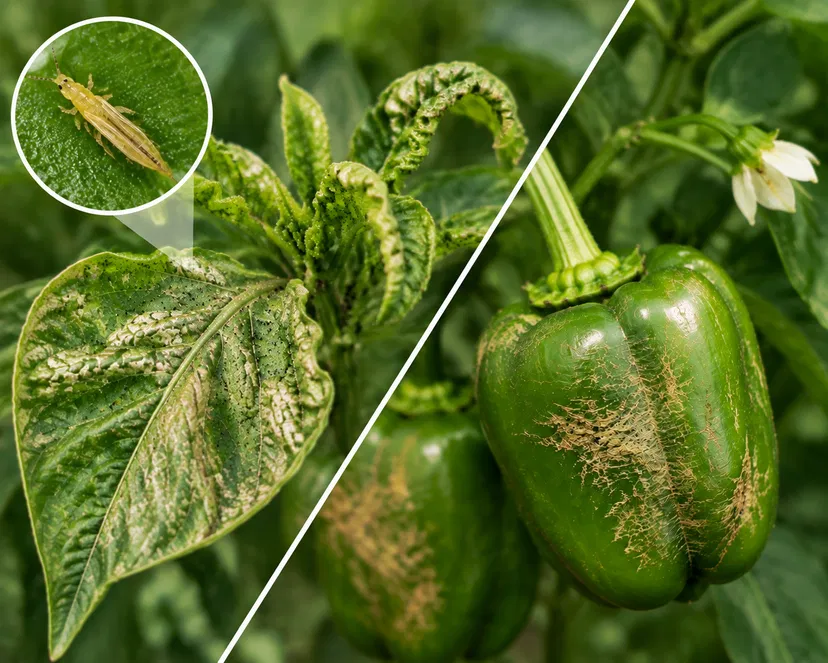
Look for tiny, slender, yellowish insects on the underside of leaves and hiding inside flowers. Affected leaves curl and take on a silvery or bronze sheen, and young fruit develops rough, corky scarring on the skin.
Solutions to Control It
| Product | How It Works |
|---|---|
| FMC Benevia Insecticide (Cyantraniliprole 10.26% OD) | The same systemic action that controls chewing pests also works against thrips, disrupting their nerve and muscle function on contact and through feeding, which keeps new leaf and flower growth protected as the plant develops. |
| Tapas Blue Sticky Trap (22 x 28 cm) (Blue sticky trap) | Uses a blue colour band that is more attractive to thrips than yellow, capturing adults on contact and giving an early warning of buildup before damage shows up on leaves and fruit. |
3. Tobacco Caterpillar (Spodoptera litura)
How to Spot It
Look for clusters of small caterpillars skeletonizing leaves in patches, especially in the early stages of infestation. As larvae mature, they scatter across the plant and may bore into fruit, leaving irregular holes and visible frass near the entry point.
Solutions to Control It
| Product | How It Works |
|---|---|
| FMC Benevia Insecticide (Cyantraniliprole 10.26% OD) | Acts on the larva's muscle function rather than its nervous system alone, so it remains effective even against tobacco caterpillar populations that have built up resistance to older chemistries, and holds up well under field conditions once applied. |
| SK Agrotech Spodoptera Litura Pheromone Lure & Funnel Trap (Spodoptera litura pheromone) | Uses a species-specific pheromone to attract and capture male tobacco caterpillar moths, making it a useful tool for monitoring moth pressure and timing sprays more precisely. |
Cultural Practices to Keep Pest Pressure Down
- Monitor the crop closely from flowering onward, when all three pests become most active
- Remove and destroy damaged or dropped fruit promptly to prevent larvae from completing their life cycle in the field
- Keep field borders and bunds free of weeds that can host these pests between seasons
- Rotate with a non-host crop where pest pressure has been high in previous seasons
Always confirm the current label registration, approved dosage, and pre-harvest interval (PHI) for your state before using any product, as labels are periodically revised by regulatory authorities.
This is general advisory content. Please do your own research and verify with a local agronomist or dealer before making any purchase, spray, or crop-management decision.