Swiss chard is one of the most rewarding leafy crops to grow in the garden. It is colorful, productive, and packed with nutrients, making it a favorite for home growers and market gardeners alike. Whether you are planting it in raised beds, containers, or open fields, Swiss chard cultivation offers reliable harvests and excellent versatility in the kitchen.
If you want a crop that thrives in cool weather, tolerates heat better than many greens, and keeps producing for months, Swiss chard deserves a place in your garden. With the right planting methods, soil conditions, and harvest practices, you can enjoy tender leaves and crisp stalks from early season through late fall.
What Makes Swiss Chard a Valuable Crop?
Swiss chard is a nutrient-rich leafy vegetable known for its broad, glossy leaves and thick, colorful stems. It belongs to the beet family and is grown for both its leaves and petioles. Unlike many greens that bolt quickly in warm weather, Swiss chard remains productive over a long period, especially when harvested properly.
Its appeal goes beyond the garden. Swiss chard is high in vitamins A, C, and K, as well as minerals like magnesium and potassium. That makes it an excellent choice for growers focused on healthy eating, specialty produce, or fresh market sales.
Best Growing Conditions for Swiss Chard
Successful Swiss chard cultivation starts with understanding the crop's preferred growing environment. While it is adaptable, it performs best under certain conditions.
Climate and Temperature
Swiss chard grows well in cool to moderate temperatures, typically between 50°F and 75°F. It can handle light frost and often continues producing in mild winter climates. In warmer regions, it benefits from partial shade during the hottest part of the day.
Soil Requirements
This leafy crop prefers:
- Well-drained, fertile soil
- Organic matter-rich beds
- A slightly acidic to neutral pH, around 6.0 to 7.0
- Consistent moisture without waterlogging
Adding compost before planting improves soil structure and supports strong leaf growth. Because Swiss chard is a heavy feeder, nutrient-rich soil makes a noticeable difference in yield and leaf quality.
Sunlight Needs
Swiss chard grows best in full sun, but it also tolerates partial shade. In hotter climates, a location with morning sun and afternoon shade can reduce stress and help prevent bitter leaves.
How to Plant Swiss Chard
Swiss chard can be grown directly from seed, and in many cases, direct sowing is the easiest and most effective method. It germinates best when soil temperatures are warm enough to support steady emergence.
Direct Sowing Seeds
Plant seeds about 1/2 inch deep and 2 to 4 inches apart in rows spaced 12 to 18 inches apart. Once seedlings are established, thin them to 6 to 12 inches apart depending on the size you want at harvest. Wider spacing encourages larger plants with fuller leaves.
Starting Indoors
If you want an early start, begin seeds indoors 4 to 6 weeks before the last expected frost. Transplant carefully once seedlings have several true leaves. Swiss chard transplants well if handled gently, making it a useful option for succession planning.
Container Growing
Swiss chard also performs beautifully in containers. Choose pots at least 12 inches deep with good drainage. Use high-quality potting mix and keep the soil evenly moist. Container-grown chard is ideal for patios, balconies, and small gardens.
Watering and Fertilizing for Strong Growth
Consistent care is essential for tender, flavorful leaves. Swiss chard prefers steady moisture, especially during germination and early growth stages.
Watering Tips
- Water deeply once or twice a week, depending on rainfall and temperature
- Keep soil evenly moist, not soggy
- Mulch around plants to retain moisture and suppress weeds
Irregular watering can lead to tough leaves or slower growth. A regular schedule helps maintain quality and supports continuous harvests.
Fertilizing Guide
Before planting, work compost or a balanced organic fertilizer into the soil. During the growing season, side-dress plants with compost or apply a mild nitrogen-rich fertilizer if growth slows. Too much fertilizer can produce overly soft growth, so moderation is key.
Tip: Healthy Swiss chard plants need rich soil, steady moisture, and regular harvesting to stay productive for a long time.
Pest and Disease Management
Swiss chard is relatively hardy, but it can still face problems from pests and diseases. Early attention keeps the crop healthy and productive.
Common Pests
- Leaf miners: These insects tunnel inside leaves, leaving visible trails
- Aphids: Small sap-sucking insects that gather on tender growth
- Flea beetles: Tiny pests that create small holes in leaves
Use floating row covers early in the season, inspect plants regularly, and remove heavily damaged leaves. Encouraging beneficial insects can also help keep pest pressure low.
Common Diseases
Swiss chard may experience fungal issues like downy mildew or leaf spot in humid conditions. To reduce disease risk, avoid overhead watering, provide good airflow, and remove plant debris after harvest. Crop rotation is also helpful if you grow leafy greens every season.
Harvesting Swiss Chard
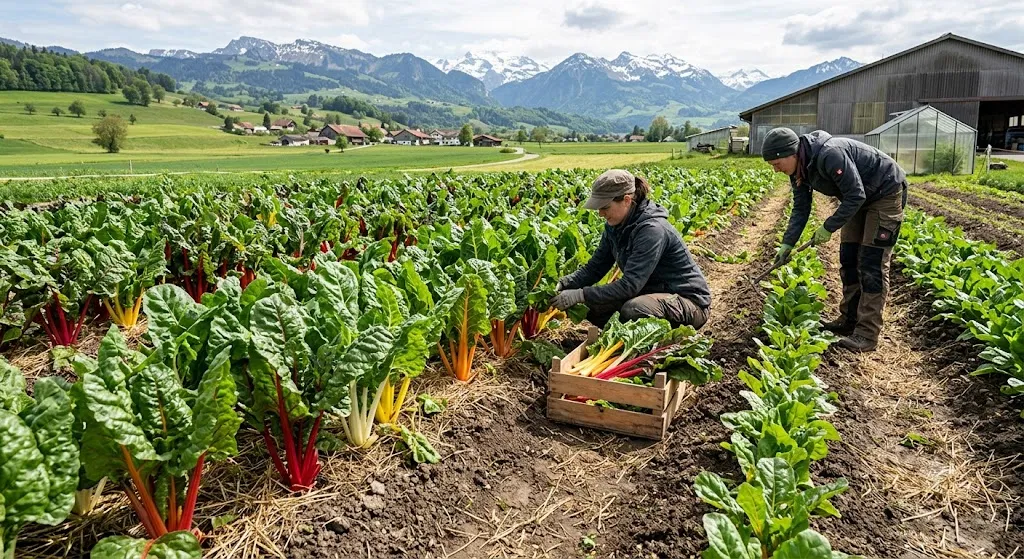
One of the best things about Swiss chard cultivation is its cut-and-come-again harvest style. You do not need to pull the whole plant at once. Instead, you can harvest outer leaves and allow the center to keep producing.
When to Harvest
Begin harvesting when leaves are young and tender, usually 30 to 60 days after planting, depending on variety and weather. Younger leaves have a milder flavor, while larger leaves are more robust and better suited for cooking.
How to Harvest
- Choose the outer leaves first
- Use clean scissors or a knife to cut leaves near the base
- Leave the center growth intact
- Harvest regularly to encourage new growth
Frequent harvesting prevents plants from becoming overly mature and helps extend the production season. If you want baby greens, you can begin cutting much earlier.
Popular Swiss Chard Varieties
Different varieties offer unique colors, textures, and growth habits. Choosing the right type can enhance both garden appearance and market appeal.
- Bright Lights: A colorful mix of red, yellow, orange, pink, and white stems
- Fordhook Giant: Large, dark green leaves with thick white stalks
- Ruby Red: Known for deep red stems and attractive foliage
- Lucullus: A reliable, heat-tolerant variety with broad leaves
For home gardens, colorful types add visual interest. For production gardens, dependable uniform varieties may be more practical.
Why Grow Swiss Chard in Your Garden?
Swiss chard is an excellent crop for beginners and experienced gardeners alike. It is easy to grow, highly productive, and offers a long harvest window. It also fits well into seasonal planting plans because it can be grown in spring, fall, and even winter in mild climates.
Beyond its practical benefits, Swiss chard brings beauty to the garden. The vibrant stems and lush green leaves make it both ornamental and edible. That combination is hard to beat.
Final Thoughts on Swiss Chard Cultivation
Swiss chard cultivation is a smart choice for anyone looking to grow a nutritious, dependable leafy crop. With fertile soil, steady watering, and regular harvesting, you can enjoy a continuous supply of fresh greens for months. Whether planted in a backyard bed or a container on the patio, Swiss chard rewards even modest effort with impressive results.
If you want a leafy vegetable that is healthy, colorful, and easy to manage, start growing Swiss chard this season. Once you see how quickly it produces, it may become one of your favorite crops year after year.