Indian farmers are under growing pressure to produce more food with fewer resources, changing weather, rising input costs, and declining soil fertility. In this situation, sustainable farming practices are no longer optional—they are essential for long-term farm success. By adopting eco-friendly methods, farmers can improve soil health, reduce dependency on chemicals, save water, and increase farm income over time.
This guide explores practical sustainable farming practices for Indian farmers that are affordable, effective, and suitable for different regions and crop systems. Whether you grow cereals, vegetables, fruits, pulses, or commercial crops, these methods can help create a more resilient and profitable farm.
Why Sustainable Farming Matters in India
Indian agriculture depends heavily on natural resources, especially land and water. Overuse of chemical fertilizers, excessive irrigation, and continuous monocropping have led to soil degradation, groundwater depletion, and lower crop resilience. Sustainable farming focuses on working with nature instead of against it.
The key benefits include:
- Improved soil fertility through organic matter and better nutrient cycling
- Lower input costs by reducing dependence on expensive fertilizers and pesticides
- Better water efficiency in drought-prone and water-stressed regions
- Reduced pest and disease pressure through balanced ecosystem management
- More stable yields over the long term
- Higher market value for sustainably grown produce
1. Improve Soil Health with Organic Matter
Healthy soil is the foundation of sustainable agriculture. Indian farmers can improve soil structure and fertility by adding organic matter regularly. This supports beneficial microbes, increases water retention, and helps crops access nutrients more efficiently.
Practical ways to build soil health
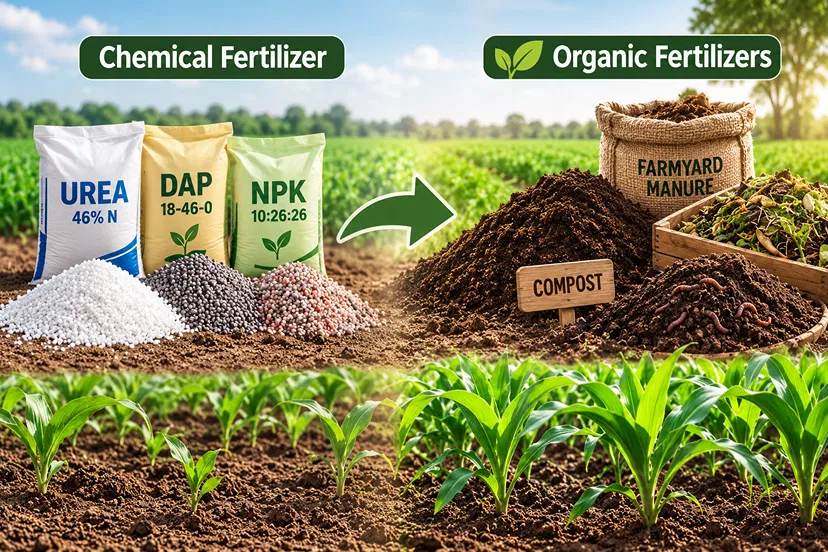
- Apply farmyard manure and compost before sowing
- Use vermicompost for nutrient-rich soil conditioning
- Incorporate crop residues instead of burning them
- Grow green manure crops like dhaincha and sunn hemp
- Rotate crops to avoid nutrient exhaustion
Soil testing should be done at least once every season or before major planting. This helps farmers apply the right nutrients in the right amount.
2. Practice Crop Rotation and Diversification
Growing the same crop repeatedly on the same land can reduce soil fertility and increase pest and disease problems. Crop rotation is one of the simplest and most effective sustainable farming practices for Indian farmers.
For example, rotating cereals with legumes helps restore nitrogen in the soil naturally. Diversification also reduces risk because if one crop fails due to pests, weather, or price drops, other crops can still provide income.
Examples of useful crop rotations
- Rice–wheat–mung bean
- Maize–cowpea–mustard
- Cotton–chickpea–millet
- Vegetable rotation with leafy, fruiting, and root crops
Intercropping is also valuable. Farmers can grow two compatible crops together, such as maize with legumes, to improve land use and reduce weed growth.
3. Use Water-Saving Irrigation Methods
Water scarcity is one of the biggest challenges in Indian farming. Traditional flood irrigation often wastes water and increases salinity or nutrient loss. Efficient irrigation methods can save water while improving crop performance.
Recommended irrigation practices
- Drip irrigation for fruits, vegetables, and cash crops
- Sprinkler irrigation for pulses, oilseeds, and row crops
- Mulching to reduce evaporation from the soil surface
- Scheduling irrigation based on crop stage and weather conditions
- Rainwater harvesting through farm ponds and recharge pits
Drip irrigation is especially useful in dry areas and can significantly reduce water use. It also allows farmers to apply fertilizers more efficiently through fertigation.
4. Reduce Chemical Dependence with Integrated Pest Management
Heavy pesticide use can harm beneficial insects, pollute the environment, and create pest resistance. Integrated Pest Management (IPM) is a smarter and more sustainable approach.
IPM combines different methods to manage pests effectively while minimizing chemical use.
Core IPM strategies
- Monitor fields regularly for early pest detection
- Use resistant crop varieties where available
- Encourage natural predators like ladybirds and parasitoid insects
- Set up pheromone traps and sticky traps
- Apply biopesticides such as neem-based products and biofungicides
- Use chemicals only when necessary and in recommended doses
This method protects both crop quality and farm health while lowering long-term costs.
5. Adopt Organic and Natural Inputs Where Possible
Many Indian farmers are already turning to organic and natural inputs to reduce costs and improve sustainability. While full organic conversion may take time, even partial adoption can make a big difference.
Useful natural inputs include:
- Neem cake for pest and soil health support
- Jeevamrut and panchagavya for microbial activity
- Biofertilizers such as Rhizobium, Azotobacter, and phosphate-solubilizing bacteria
- Compost teas and microbial solutions
These inputs can support nutrient availability and improve soil biology, especially when used consistently.
6. Mulch and Conserve the Soil
Mulching is a simple but powerful technique in sustainable farming. By covering the soil with organic material such as straw, leaves, or crop residues, farmers can conserve moisture, suppress weeds, and protect the soil from erosion.
Benefits of mulching include:
- Less water evaporation
- Reduced weed growth
- Better soil temperature control
- Improved microbial activity
- Lower soil erosion during heavy rains
In rainfed areas and vegetable cultivation, mulching can significantly improve crop performance and reduce labor needs.
7. Integrate Trees and Livestock into Farming Systems
Agroforestry and mixed farming are valuable sustainable models for Indian agriculture. Trees can improve biodiversity, reduce wind erosion, provide shade, and create additional income from timber, fruit, fodder, or fuelwood.
Similarly, integrating livestock helps farmers recycle manure back into the farm system and diversify income streams. Dairy animals, goats, poultry, and local breeds can all play a role in a balanced farm ecosystem.
"The most resilient farms are not built on one crop or one income source—they are built on balance, diversity, and smart resource use."
8. Choose Climate-Resilient Crop Varieties
With unpredictable monsoons, heat stress, and irregular rainfall becoming more common, climate-resilient seeds are increasingly important. Farmers should choose varieties that are drought-tolerant, disease-resistant, and suited to local conditions.
Working with local agricultural extension offices, Krishi Vigyan Kendras, and seed suppliers can help identify the right varieties for each season and region. Improved seeds can reduce risk and improve productivity without increasing environmental pressure.
9. Manage Farm Waste Responsibly
Burning crop residue is harmful to soil health, air quality, and human health. Instead, farm waste should be reused or recycled within the farm system whenever possible.
Better alternatives to burning
- Composting straw and residues
- Using residues as animal bedding
- Converting waste into mulch
- Feeding suitable fodder to livestock
- Making biomass-based compost pits
Responsible waste management supports both sustainable agriculture and cleaner rural environments.
10. Start Small and Scale Gradually
Sustainable farming does not require a complete transformation overnight. The best approach is to start with a few practical changes and expand gradually based on results.
A farmer may begin with:
- soil testing and compost application
- drip irrigation on part of the land
- one crop rotation cycle
- basic IPM practices
- mulching in high-value crops
Over time, these small improvements can create major gains in soil health, water savings, and profitability.
Conclusion
Sustainable farming practices for Indian farmers are about protecting the land while improving income and resilience. From building healthy soil and saving water to reducing chemical dependence and diversifying crops, every step counts. The goal is not just better harvests today, but stronger farms for the future.
If you are a farmer, agri-entrepreneur, or agriculture stakeholder, now is the right time to adopt sustainable methods that fit your land, climate, and budget. Start with one change, measure the results, and keep building from there. A more productive and sustainable farm begins with practical action.