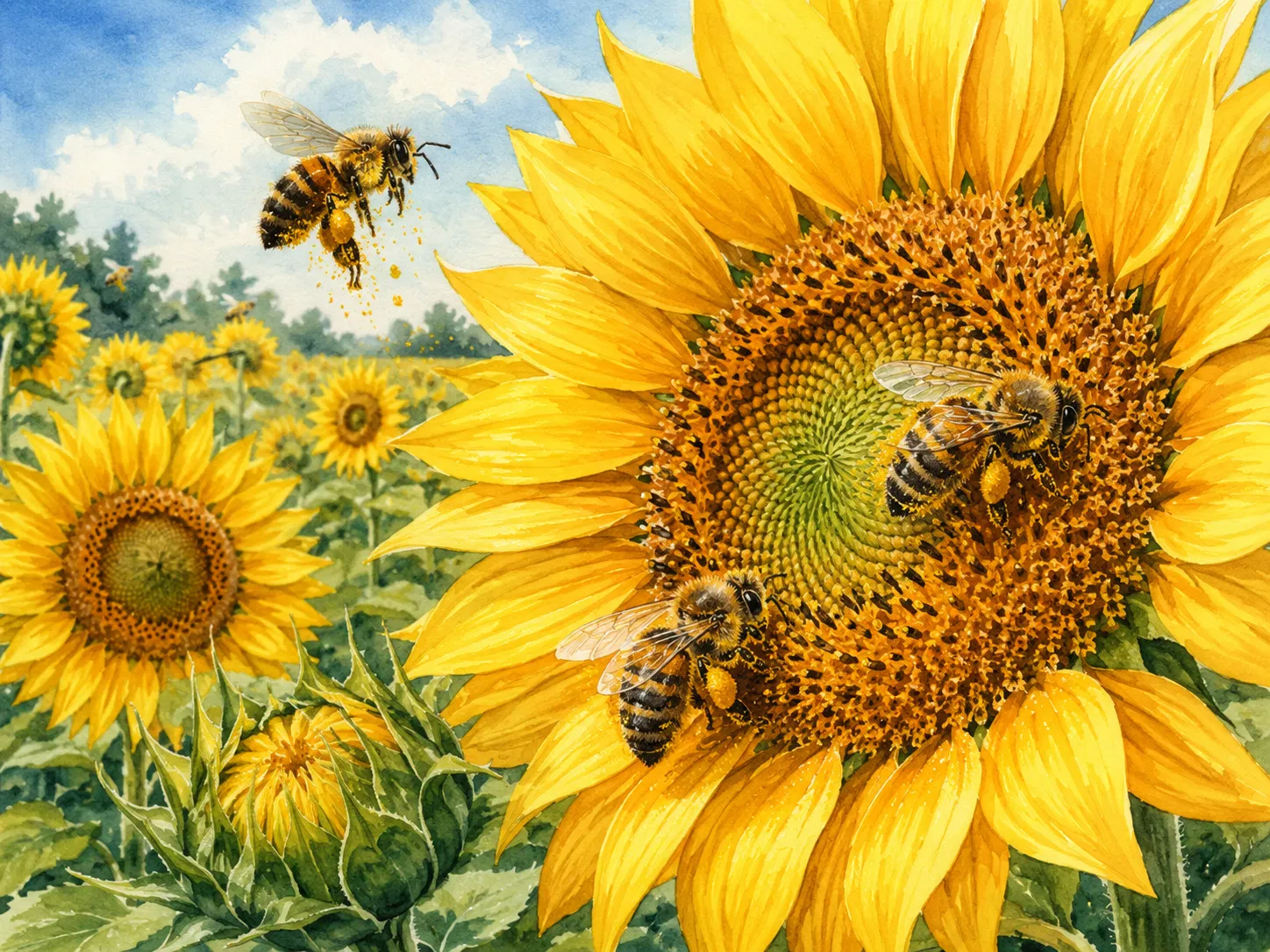
Sunflowers look simple from a distance, but behind every large, vibrant head is a pollination process that can make or break your harvest. If you want bigger seed sets, more uniform heads, and better overall yield, bees are one of the most powerful allies in the field. In sunflower pollination, their role is not just helpful—it can be the difference between average and exceptional results.
Why Sunflower Pollination Matters
Sunflowers are highly dependent on effective pollination to produce full heads and high-quality seeds. While some sunflower varieties can self-pollinate to a degree, cross-pollination often leads to stronger seed set and improved yield. That is where bees come in.
When bees visit sunflower blooms, they transfer pollen between florets and across plants, increasing the chances that each flower in the head develops into a mature seed. The more complete the pollination, the fuller the seed head and the higher the harvest potential.
How Bees Boost Sunflower Yield
Bees are efficient pollinators because they visit many flowers in a short time and move pollen naturally as they collect nectar and pollen. Their activity directly affects sunflower yield in several ways:
- Improved seed set: More florets are successfully fertilized, producing more seeds per head.
- Better seed uniformity: Pollinated heads tend to mature more evenly, which helps at harvest.
- Higher oil content in some varieties: Strong pollination can support better seed development and quality.
- Reduced empty spaces: Well-pollinated heads have fewer missing seeds and more consistent fill.
In practical terms, bee activity can lead to larger, heavier sunflower heads and more marketable output. For commercial growers and home gardeners alike, that adds up to real value.
Why Bees Are Better Than Wind Alone
Although wind can move some pollen, sunflower pollination is much more reliable when insects are involved. Sunflower florets are arranged in a dense, circular head, and bees can move from floret to floret with precision. This makes them especially effective at ensuring pollen reaches the right place.
Unlike wind, bees actively work the flower head and repeatedly contact pollen-bearing structures. That repeated movement increases the odds of successful fertilization across the entire bloom.
Key insight: The more bee visits a sunflower receives, the better the chances of full seed development and stronger yield.
The Best Bees for Sunflower Pollination
Several bee species can help pollinate sunflowers, but some are more effective than others depending on your region and crop conditions.
Honey Bees
Honey bees are among the most common sunflower pollinators. They are abundant, predictable, and capable of covering large areas efficiently. Their steady foraging behavior makes them valuable in commercial sunflower fields.
Bumble Bees
Bumble bees are excellent pollinators because they are larger, more robust, and often work in cooler or cloudier conditions when honey bees may be less active. Their size helps them brush against more florets as they move through the head.
Native Solitary Bees
Native bees can also contribute significantly to pollination. Species such as mason bees and leafcutter bees may not be as numerous as honey bees, but they often provide high-quality pollination in local environments.
What Makes Sunflowers Attractive to Bees
Bees are drawn to sunflowers for several reasons. The flowers offer accessible pollen and nectar, and their large, bright heads act like a visual signal. Sunflowers also bloom in a way that supports repeated bee visits, which strengthens pollination over time.
Healthy sunflower fields tend to attract more bee traffic when they are planted in sunny locations with minimal disturbance. Diversity in nearby flowering plants can also support stronger bee populations throughout the growing season.
How to Encourage More Bee Activity in Sunflower Fields
If you want better sunflower pollination, the goal is to create conditions that attract and support bees. Small changes can make a major difference.
- Plant in full sun: Bees are more active in warm, sunny conditions, and sunflowers perform best there too.
- Avoid insecticide use during bloom: Spraying while flowers are open can reduce bee visits and harm pollinators.
- Provide nearby habitat: Hedges, wildflowers, and nesting areas help support pollinator populations.
- Grow bee-friendly companion plants: Continuous blooms before and after sunflower flowering can keep bees nearby.
- Use diverse pollinator support strategies: A mix of native plants, clean water, and pesticide caution improves pollinator health.
Even in a small garden, these steps can increase bee visits and improve the overall performance of your sunflower crop.
Signs Your Sunflowers Are Getting Good Pollination
It is not hard to tell when sunflower pollination is working well. A well-pollinated sunflower head usually develops into a fuller, more uniform circle of seeds. The florets mature more evenly, and the head appears dense rather than patchy.
Look for these signs:
- Fewer empty spaces between seeds
- More uniform seed size
- Even maturity across the flower head
- Improved overall head weight
If the center of the head has many gaps or the seeds look sparse, pollination may have been incomplete. Bee activity is often the most direct factor to improve in that case.
Common Factors That Reduce Sunflower Pollination
Even if bees are present, pollination can still suffer when conditions are poor. Understanding the main barriers can help you protect your yield.
Weather Stress
Cold, rainy, or very windy weather can keep bees from foraging effectively. During these periods, sunflower pollination slows down, especially if bloom time is short.
Pesticide Exposure
Insecticides applied during flowering can discourage bee visits or reduce bee populations. Timing and product choice matter greatly if pollinators are part of your yield strategy.
Low Pollinator Diversity
Relying on only one bee species can be risky. A healthy mix of pollinators improves resilience and ensures flowers receive visits under a wider range of conditions.
Poor Field Habitat
Large monocultures without nearby habitat may attract fewer bees over time. Supporting pollinators beyond the sunflower bloom period helps maintain stronger populations.
Sunflower Pollination Tips for Better Yield
If your goal is maximum seed production, focus on both the plant and the pollinators. Good management creates a strong partnership between flowers and bees.
- Stagger planting times to extend bloom availability.
- Choose varieties known for good seed fill and strong pollinator attraction.
- Monitor bloom stage closely so flowers are protected during peak bee activity.
- Reduce competition from weeds that may interfere with bee movement or plant vigor.
- Keep water sources nearby to support pollinator visits in hot weather.
These practices help create the best possible environment for pollination success and a stronger final crop.
Conclusion: Bees Are a Yield Advantage
When it comes to sunflower pollination, bees do far more than visit pretty flowers. They improve seed set, increase head uniformity, and help deliver the kind of yield growers want. Whether you are managing a large field or a backyard patch, supporting bees is one of the smartest ways to improve sunflower performance.
If you want better sunflower yield and healthier seed heads, start with pollinator-friendly practices today. Encourage bees, protect blooms, and give your sunflowers the best chance to reach their full potential.