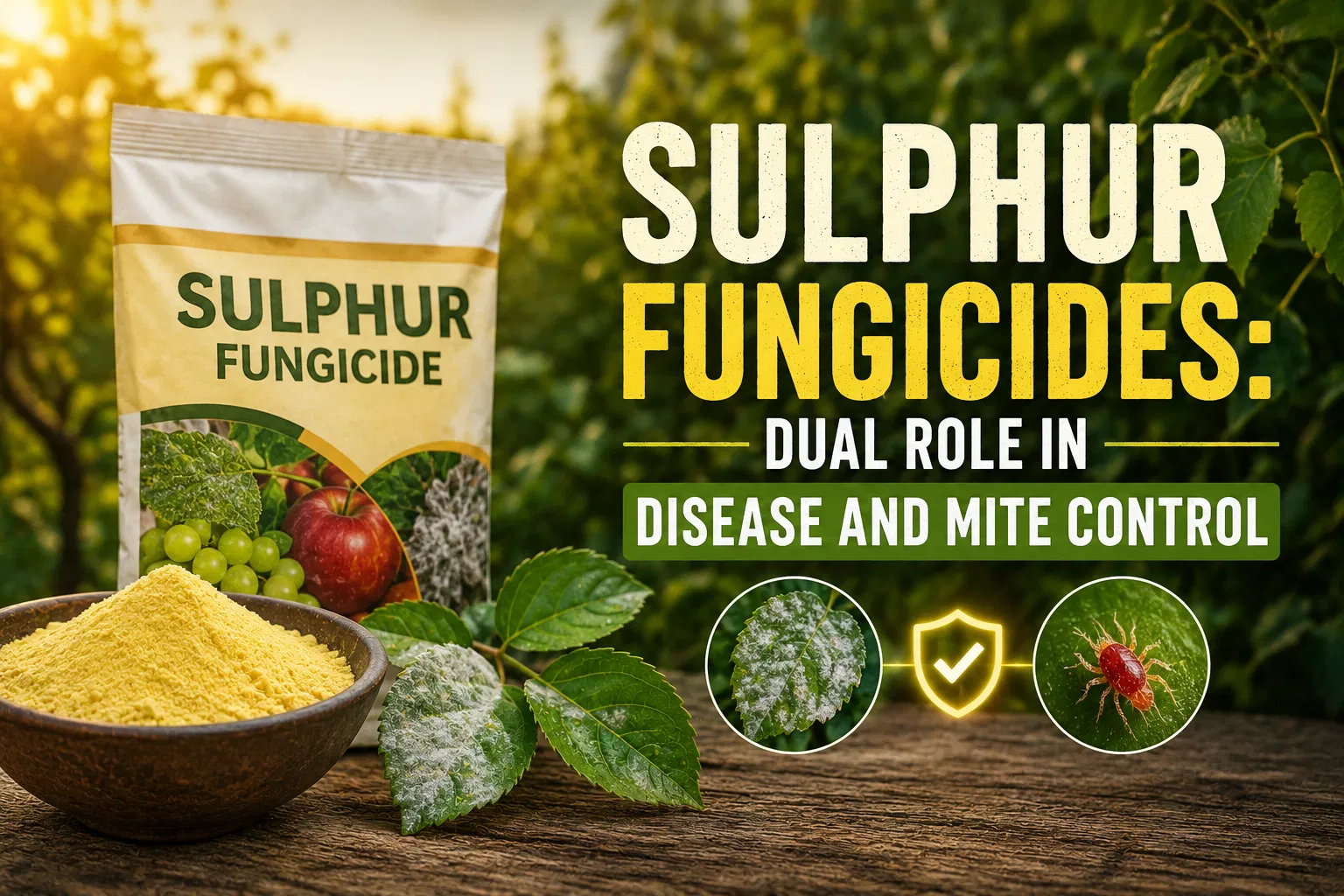
When growers look for a reliable, affordable, and time-tested crop protection tool, sulphur fungicides often rise to the top. Known for their ability to suppress a wide range of fungal diseases, sulphur products also offer an added advantage that many growers value: they can help control mites. That dual role makes sulphur fungicides a practical choice in many integrated pest management programs.
Used correctly, sulphur fungicides can support healthier plants, better yields, and lower pest pressure. But like any crop protection product, they work best when you understand how they function, when to apply them, and where their limitations lie. In this guide, we'll explore the dual role of sulphur fungicides in disease and mite control and why they remain an important tool in modern agriculture.
What Are Sulphur Fungicides?
Sulphur fungicides are agricultural products formulated with elemental sulphur or sulphur-based compounds. They are primarily used to prevent and manage fungal diseases, especially those that thrive in warm, dry conditions. For decades, growers have relied on sulphur as a trusted fungicide for crops such as grapes, vegetables, fruits, and ornamentals.
Unlike many modern systemic fungicides, sulphur fungicides are generally protective rather than curative. This means they work best before or at the early stages of infection. They create conditions on the plant surface that make it difficult for fungal spores to germinate and spread.
How Sulphur Fungicides Control Fungal Diseases
Sulphur works by disrupting fungal metabolism and inhibiting spore germination. Once applied, it forms a protective barrier on plant surfaces that helps prevent infection. This makes it especially useful against diseases that infect through the leaf surface.
Common fungal problems controlled by sulphur fungicides include:
- Powdery mildew
- Rusts
- Scab in some crops
- Leaf spots in select plant systems
- Certain mildew-related disorders
Powdery mildew control is where sulphur fungicides are especially well known. In many crops, sulphur remains one of the most cost-effective options for keeping this disease in check. Because powdery mildew often spreads rapidly under favorable weather conditions, preventive sprays can make a major difference.
Key insight: Sulphur fungicides are most effective when used before disease pressure becomes severe. Early, consistent protection is often better than waiting for symptoms to spread.
The Mite Control Benefit of Sulphur Fungicides
One of the most valuable advantages of sulphur fungicides is their impact on mites. While they are not classified as dedicated miticides, sulphur products can suppress certain mite populations, especially spider mites and eriophyid mites in some crops.
This is important because mites can become major pests in dry, hot conditions—the same conditions that often favor powdery mildew. Sulphur fungicides can help address both problems at once, reducing the need for multiple separate sprays.
The mite-suppressing effect is typically strongest when sulphur is used regularly and preventively. It can reduce feeding damage, slow population growth, and help keep outbreaks from escalating. For growers trying to limit chemical inputs, this dual-purpose action is a major advantage.
Why the Dual Role Matters in Integrated Pest Management
Integrated pest management, or IPM, focuses on using a combination of cultural, biological, and chemical methods to keep pests and diseases below damaging levels. Sulphur fungicides fit well into this approach because they can help manage two common threats at the same time.
Here's why that matters:
- Fewer applications may be needed when one product helps with both disease and mite pressure.
- Cost efficiency improves because growers may reduce the number of separate treatments.
- Resistance management is supported by rotating sulphur with other control tools.
- Crop protection becomes more balanced across changing weather and pest conditions.
For growers looking to maintain long-term productivity, sulphur fungicides provide a practical solution that can complement broader crop protection strategies.
Best Crops for Sulphur Fungicide Use
Sulphur fungicides are commonly used on a wide range of crops, though suitability depends on crop sensitivity, climate, and label directions. They are especially popular in:
- Grapes
- Tomatoes
- Cucurbits
- Apples and pears
- Berries
- Ornamentals
- Some field crops and specialty crops
In grapes, sulphur is often used as a standard powdery mildew management tool. In cucurbits and tomatoes, it can help reduce fungal pressure while also discouraging mite buildup. In ornamental production, its broad utility makes it a valuable option for keeping foliage clean and marketable.
Application Tips for Better Results
To get the most from sulphur fungicides, timing and coverage are critical. Since these products work protectively, even application across the plant canopy is essential.
Follow these best practices:
- Apply before disease symptoms become widespread.
- Ensure thorough coverage of leaves, stems, and fruit where needed.
- Use according to crop-specific label instructions.
- Avoid application during extreme heat to reduce the risk of phytotoxicity.
- Rotate with other fungicide modes of action when appropriate.
Temperature matters, too. Sulphur can sometimes cause plant injury if applied under very hot conditions, especially on sensitive crops. Checking weather conditions before spraying helps protect crop quality and performance.
Limitations and Precautions
Although sulphur fungicides are valuable, they are not the perfect solution for every situation. Their effectiveness can decline under heavy disease pressure, and they may not provide strong curative action once infection is established.
Growers should also watch for compatibility issues. Sulphur may interact poorly with certain oils or other products, depending on the crop and timing. In addition, some plant varieties are more sensitive to sulphur than others, so it is important to read product labels carefully and test small areas when appropriate.
Important considerations include:
- Potential crop injury in hot weather
- Reduced performance if applied too late
- Label restrictions for specific crops
- Possible incompatibility with other sprays
Sulphur Fungicides in Sustainable Agriculture
Sulphur fungicides continue to be relevant in sustainable and conventional agriculture because they offer broad utility without relying solely on highly specialized products. Their long history of use, relatively low cost, and dual action against disease and mites make them a smart fit for many production systems.
For growers aiming to reduce pressure from powdery mildew and mites while keeping programs simple, sulphur remains a dependable option. When used as part of a well-planned IPM strategy, it can help preserve yield quality and reduce the risk of pest outbreaks.
Conclusion
Sulphur fungicides offer more than disease control. Their dual role in managing fungal diseases and suppressing mite populations makes them a valuable, versatile tool in crop protection. When applied early, used correctly, and integrated into a broader management plan, they can help growers protect plants more efficiently and cost-effectively.
If you want a crop protection solution that delivers proven disease suppression with added mite control benefits, sulphur fungicides deserve a place in your strategy. Review crop labels, monitor field conditions, and use them thoughtfully to get the best possible results.