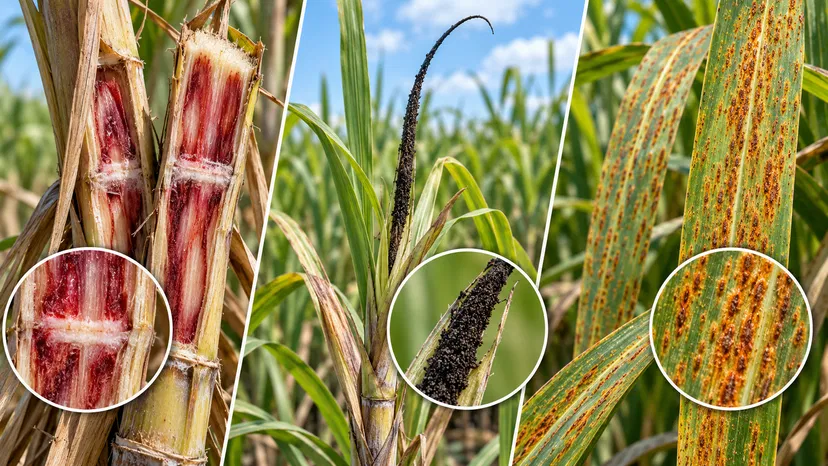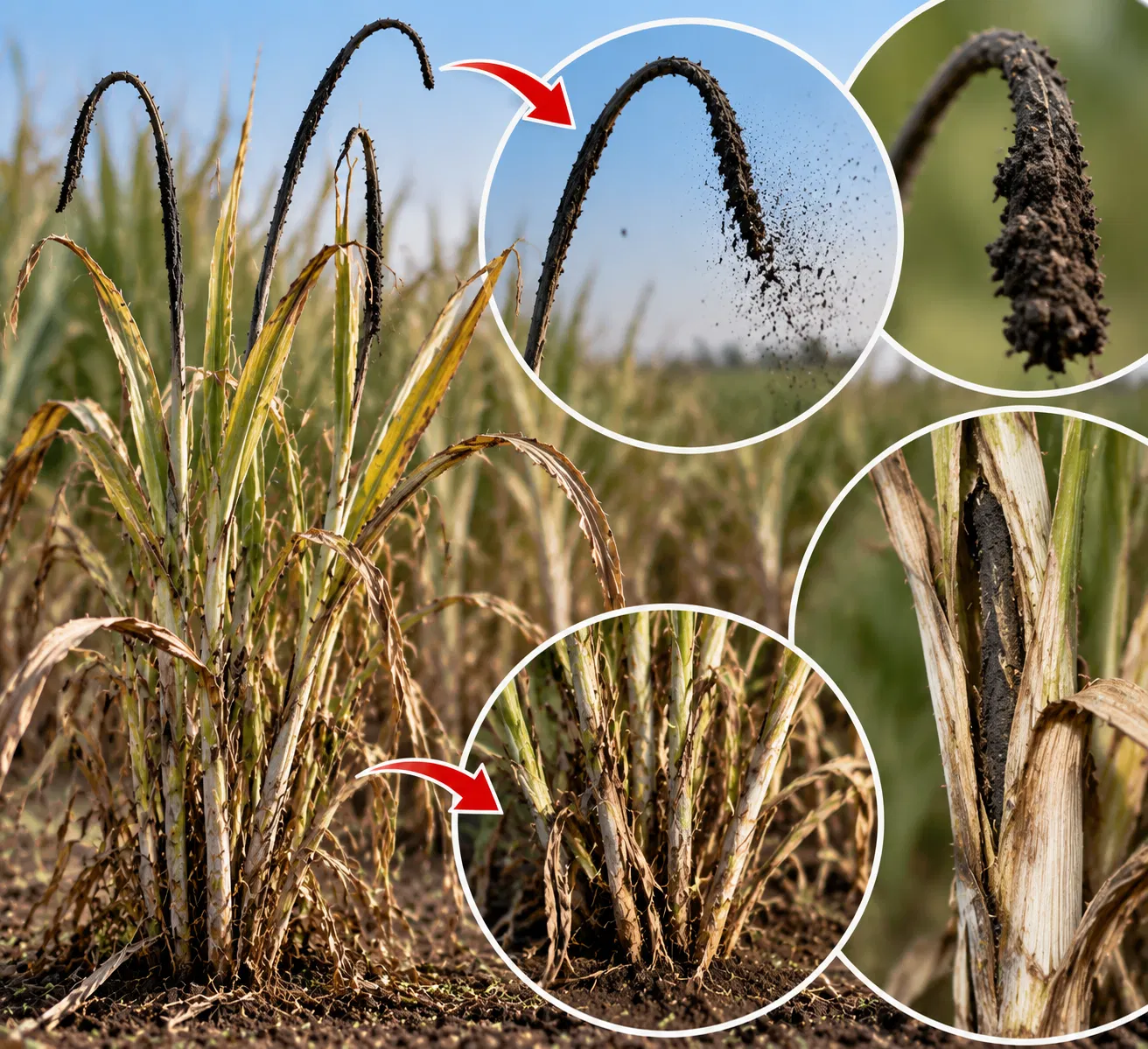
You'll know sugarcane smut the moment you see it. A long, black, whip-like growth shoots straight up from the top of the cane, sometimes even taller than the plant. Once that whip appears, that particular stalk cannot be saved.
How to Recognize It
- A thin, curved, black or dark grey "whip" growing from the growing point of the cane
- Affected plants look thin, stunted, and grassy compared to healthy ones nearby
- Tillering increases, but the extra shoots are usually weak and unproductive
- The whip releases a fine black powder (spores) that spreads to neighbouring plants in the wind
Why It Spreads
- Planting setts cut from an already-infected field
- Growing ratoon crops repeatedly on the same land without a break
- Susceptible varieties grown year after year
- Dry spells followed by moisture, which favour spore germination
- Wind carrying black spores from an infected whip to healthy plants nearby
The Fungicide That Works
Azoxystrobin 18.2% + Difenoconazole 11.4% SC is what most growers and agronomists reach for. It hits the fungus two ways at once: Azoxystrobin blocks the fungus's ability to breathe and produce energy, while Difenoconazole stops it from building its cell wall properly. Together, that's why it holds up even when the disease pressure is heavy. Dip your setts in it before planting, or spray it the moment you see symptoms in a standing crop.
Product Recommendation
Don't Stop at the Spray
- The moment you spot a whip, cover it with a bag before cutting it out, so spores don't scatter across the field
- Burn the removed stalks well away from the field rather than leaving them on the ground
- Switch to a smut-resistant variety if it keeps showing up on the same land season after season
- Give the field a break from cane with rice or another crop for a season or two
- Use only certified, disease-free setts for planting
Note: One infected plant left standing can spread spores to the whole field, so pulling it out early is often more useful than any spray.
Disclaimer: Always confirm current label registration, approved dosage, water volume, and pre-harvest interval (PHI) for your state before using any product, since labels are periodically revised by regulatory authorities.
This guide is a general advisory. Do your own research and verification before using any product. Always confirm suitability for your crop stage, region, and field conditions before making any purchase, spray, or crop-management decision.