Not all garden pests attack plants in the same way. Some pierce leaves and stems to drink sap, while others chew through foliage, buds, and fruit. Knowing the difference between sucking pests and chewing pests is the first step toward choosing the right treatment and protecting your plants faster.
In this guide, you'll learn how to identify each type, recognize the damage they cause, and use the most effective pest control methods for long-term results.
What Are Sucking Pests?
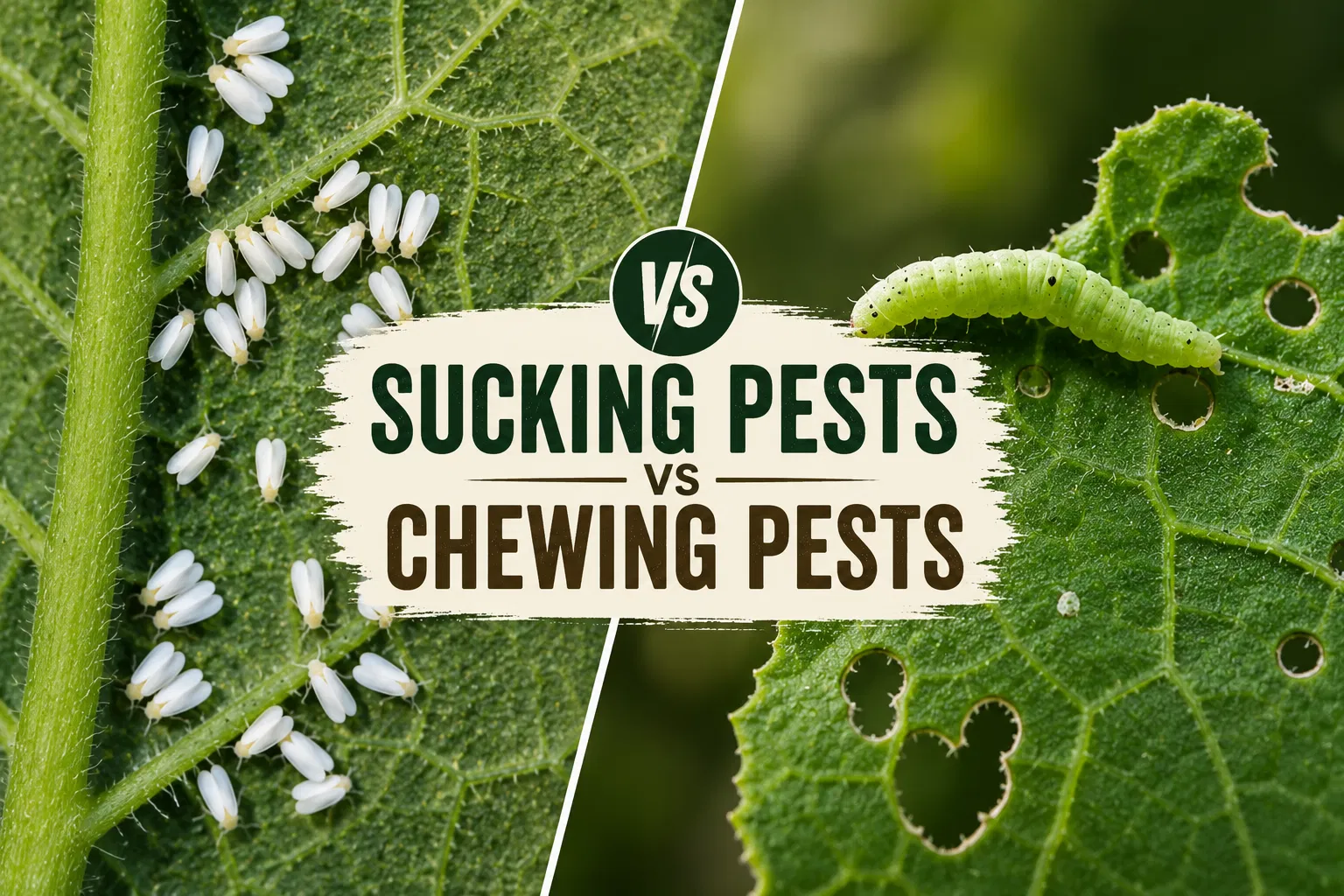
Sucking pests are insects and similar organisms that feed by piercing plant tissue and extracting sap. They often use needle-like mouthparts to tap into leaves, stems, buds, or roots.
Common sucking pests include:
- Aphids
- Whiteflies
- Scale insects
- Mealybugs
- Leafhoppers
- Spider mites
- Thrips
Because they feed on plant fluids, sucking pests can weaken plants over time, stunt growth, and spread diseases.
What Are Chewing Pests?
Chewing pests feed by biting off pieces of leaves, stems, flowers, roots, or fruits. Instead of piercing and sucking, they physically remove plant tissue with strong mouthparts.
Common chewing pests include:
- Caterpillars
- Beetles
- Grasshoppers
- Slugs
- Snails
- Cutworms
- Earwigs
These pests often cause visible holes, ragged edges, or complete defoliation when infestations are severe.
Key Differences Between Sucking and Chewing Pests
Understanding the difference between sucking pests vs chewing pests helps you identify the pest problem correctly and choose a targeted control method.
1. Feeding Method
- Sucking pests pierce plant tissue and extract sap.
- Chewing pests eat visible parts of the plant tissue.
2. Type of Damage
- Sucking pests often cause leaf curling, yellowing, stippling, sticky residue, and plant weakness.
- Chewing pests leave holes, skeletonized leaves, chewed stems, and damaged fruit or roots.
3. Visibility of Symptoms
- Sucking pest damage may start subtly and worsen gradually.
- Chewing pest damage is usually easier to spot because the loss of plant tissue is obvious.
4. Disease Spread
- Sucking pests are more likely to transmit viruses and other plant diseases.
- Chewing pests usually cause direct physical damage rather than disease transmission.
Signs of Sucking Pest Damage
If your plant looks stressed but you can't see obvious holes, a sucking pest may be the culprit. Watch for these signs:
- Yellowing leaves
- Curled or distorted foliage
- Sticky honeydew on leaves or surfaces below the plant
- Black sooty mold growing on sticky residue
- Stunted growth
- Leaf stippling or tiny pale dots
- Wilting despite adequate watering
Tip: Check the undersides of leaves and tender new growth, where many sucking pests hide.
Signs of Chewing Pest Damage
Chewing pests usually leave more obvious clues behind. Look for:
- Irregular holes in leaves
- Ragged or torn leaf edges
- Skeletonized leaves with only veins remaining
- Missing flower petals or buds
- Chewed stems or seedlings cut at soil level
- Damage to fruits and vegetables
- Droppings or frass near the plant
Many chewing pests are active at night or early morning, so the insects may be hard to catch in the act.
Best Control Methods for Sucking Pests
Effective control starts with identifying the pest correctly. Because sucking pests feed differently, treatments must target their behavior and life cycle.
1. Use a Strong Water Spray
A firm stream of water can knock aphids, whiteflies, and mites off plants. Repeat regularly to reduce populations without harming the plant.
2. Apply Insecticidal Soap or Horticultural Oil
These options work well against soft-bodied sucking pests. They coat the insects and disrupt feeding, especially when applied thoroughly to leaf undersides and stems.
3. Encourage Beneficial Insects
Ladybugs, lacewings, parasitic wasps, and hoverflies can help control aphids and other sucking pests naturally.
4. Remove Heavily Infested Plant Parts
If a section of the plant is badly affected, pruning it can slow the spread and reduce pest pressure.
5. Monitor for Disease
Since sucking pests often spread viruses, remove diseased plants promptly to protect nearby crops.
Best Control Methods for Chewing Pests
Chewing pests often require a different approach, especially when damage is visible but insects are hidden during the day.
1. Hand-Pick When Possible
Larger pests such as caterpillars, beetles, slugs, and snails can often be removed by hand, especially in small gardens.
2. Use Physical Barriers
Row covers, mesh screens, collars around seedlings, and copper barriers for slugs can reduce damage before it starts.
3. Apply Bacillus thuringiensis (Bt)
Bt is especially effective against caterpillars and works best when applied early and exactly as directed.
4. Use Traps and Baits
Beer traps, slug bait, or pheromone traps can help manage some chewing pests when used strategically.
5. Remove Hideouts
Eliminate debris, weeds, and dense ground cover where chewing pests may shelter during the day.
How to Choose the Right Pest Control Strategy
The best pest control plan depends on the type of pest and the plant you're protecting. Ask yourself:
- Are there holes, or is the plant simply yellowing and weak?
- Are the pests visible on the plant surface or hidden beneath leaves?
- Is the damage concentrated on new growth or older foliage?
- Are seedlings, flowers, or fruit being targeted?
If the symptoms are subtle, look closely at leaf undersides, stems, and soil level. The sooner you identify the pest type, the easier it is to stop the damage.
Prevention Tips for Long-Term Pest Control
Healthy plants are less vulnerable to both sucking pests and chewing pests. Prevention is often more effective than treatment after major damage begins.
- Inspect plants regularly for early signs of infestation
- Keep weeds under control
- Avoid over-fertilizing with nitrogen, which can attract soft-bodied pests
- Water consistently to reduce plant stress
- Rotate crops when growing vegetables
- Support beneficial insects with diverse plantings
- Clean up fallen leaves and plant debris
Bottom line: Sucking pests drain plants from the inside, while chewing pests destroy plant tissue from the outside. Identify the damage pattern first, then choose a control method that matches the pest's feeding style.
Conclusion
When it comes to sucking pests vs chewing pests, the biggest difference is how they feed and the kind of damage they leave behind. Sucking pests weaken plants by feeding on sap and can spread disease, while chewing pests create visible holes and tissue loss.
By learning the signs, checking plants regularly, and using targeted control methods, you can protect your garden more effectively and prevent small pest problems from turning into major infestations.
Act early, stay observant, and match the treatment to the pest for the best results.