If tiny flying pests are taking over your plants, sticky traps can be one of the easiest and most effective tools you can use. Whiteflies, aphids, and thrips may be small, but they can cause big problems in gardens, greenhouses, and indoor plant spaces. Sticky traps help you catch these pests early, reduce their numbers, and monitor infestations before they spread out of control.
Whether you grow vegetables, houseplants, ornamentals, or greenhouse crops, sticky traps offer a low-cost, chemical-free way to support your pest control strategy. In this guide, we'll look at how sticky traps work, which pests they target best, and how to use them correctly for better results.
What Are Sticky Traps?
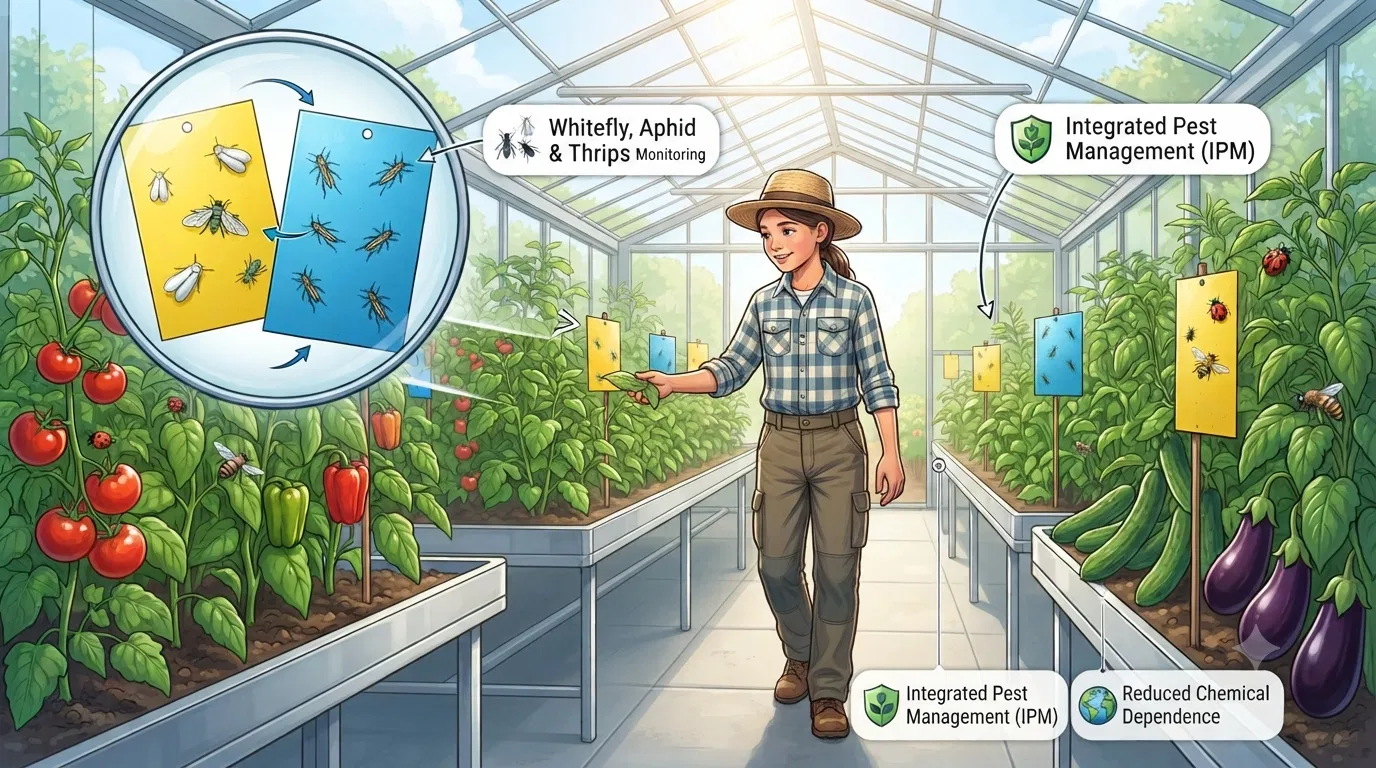
Sticky traps are brightly colored cards or panels coated with a strong adhesive that catches flying insects when they land. They are commonly used for pest monitoring and control in indoor growing areas, gardens, and greenhouses.
The two most common colors are:
- Yellow sticky traps for whiteflies, aphids, fungus gnats, and some other flying insects
- Blue sticky traps for thrips, which are especially attracted to blue tones
These traps do not kill all pests in a large infestation on their own, but they are extremely useful as part of an integrated pest management plan.
Why Sticky Traps Work for Whitefly, Aphid, and Thrips Control
Many pest insects are drawn to specific colors, especially yellow and blue. Sticky traps use this natural attraction to lure pests onto a sticky surface where they become trapped. Over time, this reduces adult pest populations and helps prevent egg-laying and further spread.
Key benefit: Sticky traps help you detect pest problems early, often before visible plant damage becomes severe.
For whiteflies, aphids, and thrips, this early warning system is especially valuable because these pests reproduce quickly. Catching adults before they multiply can save time, plants, and money.
Which Pests Do Sticky Traps Target Best?
Whiteflies
Whiteflies are tiny, winged insects that gather on the undersides of leaves and fly up in clouds when disturbed. They feed by sucking sap from plants, which can weaken growth and cause yellowing leaves. Yellow sticky traps are highly effective at attracting adult whiteflies and reducing their numbers.
Aphids
Aphids are soft-bodied pests that often cluster on new growth, buds, and leaf undersides. They can appear in green, black, yellow, or other colors. Yellow sticky traps help capture winged aphids, especially when infestations begin to spread from plant to plant.
Thrips
Thrips are slender, fast-moving insects that damage flowers, leaves, and developing fruit. They can be harder to notice than whiteflies and aphids, but blue sticky traps are particularly useful for attracting adult thrips. These traps are one of the best monitoring tools for early thrips detection.
How to Use Sticky Traps Correctly
Correct placement matters just as much as the trap itself. If traps are positioned poorly, they may catch fewer pests and miss early signs of trouble.
Placement Tips
- Place traps near plant canopy level where flying pests are most active
- Use more traps in heavily infested areas
- Position traps around entry points such as doors, vents, and windows
- Hang traps evenly throughout the growing space for consistent coverage
- Keep traps visible and unobstructed so pests can find them easily
For indoor plants, one or two traps may be enough for a small area. In greenhouses or larger gardens, use multiple traps to improve monitoring and control.
How High Should They Be?
Sticky traps should generally be placed at the same height as the plant tops or slightly above them. As plants grow, move the traps upward to stay aligned with new growth and pest activity.
Choosing the Right Color Trap
The trap color should match the pest you are trying to control.
- Yellow traps: Best for whiteflies and aphids
- Blue traps: Best for thrips
If you are dealing with multiple pests at once, using both yellow and blue sticky traps can improve overall coverage. Many growers use a combination to monitor different insect types in the same space.
How Sticky Traps Fit Into Integrated Pest Management
Sticky traps are most effective when combined with other pest control methods. They should not be your only defense, especially during serious infestations. Instead, use them as part of a broader integrated pest management strategy.
That strategy may include:
- Regular plant inspections
- Removing heavily infested leaves
- Improving air circulation
- Controlling weeds and plant debris
- Using beneficial insects where appropriate
- Applying insecticidal soap or horticultural oil when needed
Sticky traps help you track pest pressure and determine whether your control methods are working. If trap counts stay high, it may be time to take additional action.
Common Mistakes to Avoid
Even though sticky traps are simple to use, a few mistakes can reduce their effectiveness.
Using Too Few Traps
One trap in a large area will not capture many pests. Increase trap numbers for bigger spaces or higher pest pressure.
Placing Traps Too Low or Too High
Pests are most active near plant foliage. If the trap is too far from the canopy, fewer insects will be caught.
Letting Traps Become Covered
Once a trap is full of insects, dust, or debris, it becomes less effective. Replace traps regularly.
Relying on Sticky Traps Alone
Sticky traps help reduce adults, but they do not eliminate eggs, larvae, or nymphs hidden on plants. Use them alongside other pest management methods for the best results.
When to Replace Sticky Traps
Sticky traps should be replaced when they are full, dusty, or no longer sticky. In active pest situations, this may be every one to two weeks. In lower-pressure environments, they may last longer, but regular inspection is still important.
Check traps at least once a week to monitor pest activity. A sudden increase in captured insects often means the population is growing and more control measures may be needed.
Benefits of Using Sticky Traps
Sticky traps offer several practical advantages for home gardeners and commercial growers alike.
- Affordable: Low-cost compared to many other control options
- Easy to use: No spraying or mixing required
- Non-toxic: Suitable for use in many indoor growing spaces
- Useful for monitoring: Helps detect pests early
- Works continuously: Provides 24/7 pest capture
Because they are simple and versatile, sticky traps are often one of the first tools growers use when pest pressure begins to rise.
Final Thoughts
Sticky traps for whitefly, aphid, and thrips control are a smart, practical addition to any pest management plan. They help catch adult insects, reduce populations, and reveal hidden infestations before they become severe. With the right color, placement, and maintenance, sticky traps can make a noticeable difference in plant health.
If you want a simple way to stay ahead of flying pests, start using sticky traps regularly and combine them with other control methods for the strongest results. The earlier you act, the easier it is to protect your plants and keep them thriving.