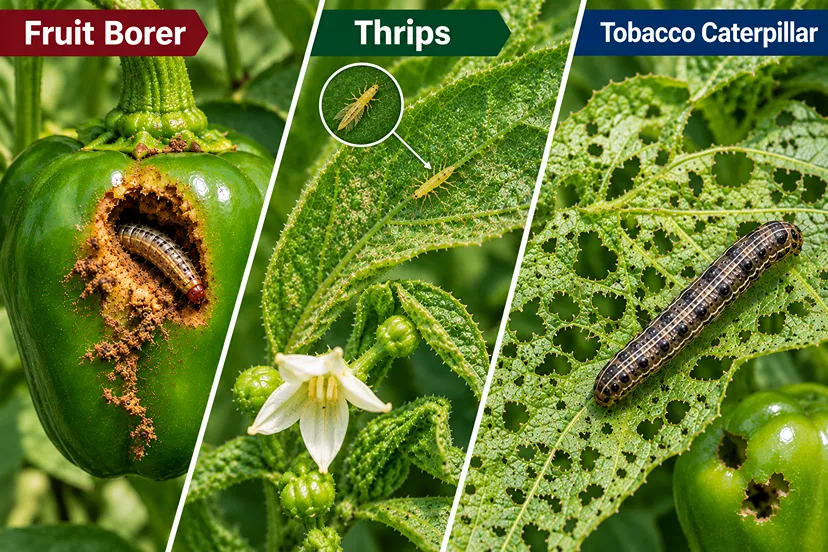
Thrips are tiny, fast-moving insects that scrape and feed on capsicum leaves, flowers, and young fruit. A light attack is easy to overlook, but once numbers build up, they leave the crop looking silvery and stressed, and can pull down both yield and fruit quality if left unchecked.
Symptoms
- Silvery or bronze streaks on leaves where thrips have fed
- Upward curling and puckering of young leaves
- Black specks of thrips droppings on the leaf underside
- Scarring and rough patches on fruit surface
- Flower drop and poor fruit set in heavy infestations
Causes
- Hot, dry weather, which speeds up thrips breeding
- Nearby infested crops or weeds acting as a source
- Dense planting with limited airflow
- Overuse of broad-spectrum sprays that wipe out natural predators
How to Identify
Thrips are slender, pale yellow to brown insects, barely visible without close inspection. They hide inside curled leaves, in flower buds, and along leaf veins, feeding by scraping the surface and sucking up the released sap. Because they move quickly and drop off when disturbed, shaking a flower over a white sheet of paper is an easy way to check for them.
Control Methods
Chemical Control
Cyantraniliprole 10.26% OD is a confirmed option for thrips in capsicum. It moves through the plant and disrupts feeding soon after contact, and also helps with tobacco caterpillar and fruit borer in the same spray.
Products recommendation
Cultural Control
- Avoid excess nitrogen, which encourages tender growth thrips prefer
- Remove weeds around the field that host thrips
- Maintain proper plant spacing for better airflow
- Rotate with a non-host crop where infestation has been heavy
Mechanical Control
- Use blue sticky traps, which specifically attract thrips: Tapas Blue Sticky Trap
- Shake flowers over a white sheet to check for thrips regularly
- Remove and destroy heavily infested flowers and shoot tips early on
Conclusion
Thrips are easy to miss until the damage is already visible, so regular checking of flowers and young leaves goes a long way. A mix of monitoring, cultural upkeep, and the right spray keeps capsicum plants healthy through the season.
Disclaimer: Always confirm current label registration, approved dosage, water volume, and pre-harvest interval (PHI) for your state before using any product, since labels are periodically revised by regulatory authorities.
This guide is a general advisory. Do your own research and verification before using any product. Always confirm suitability for your crop stage, region, and field conditions before making any purchase, spray, or crop-management decision.