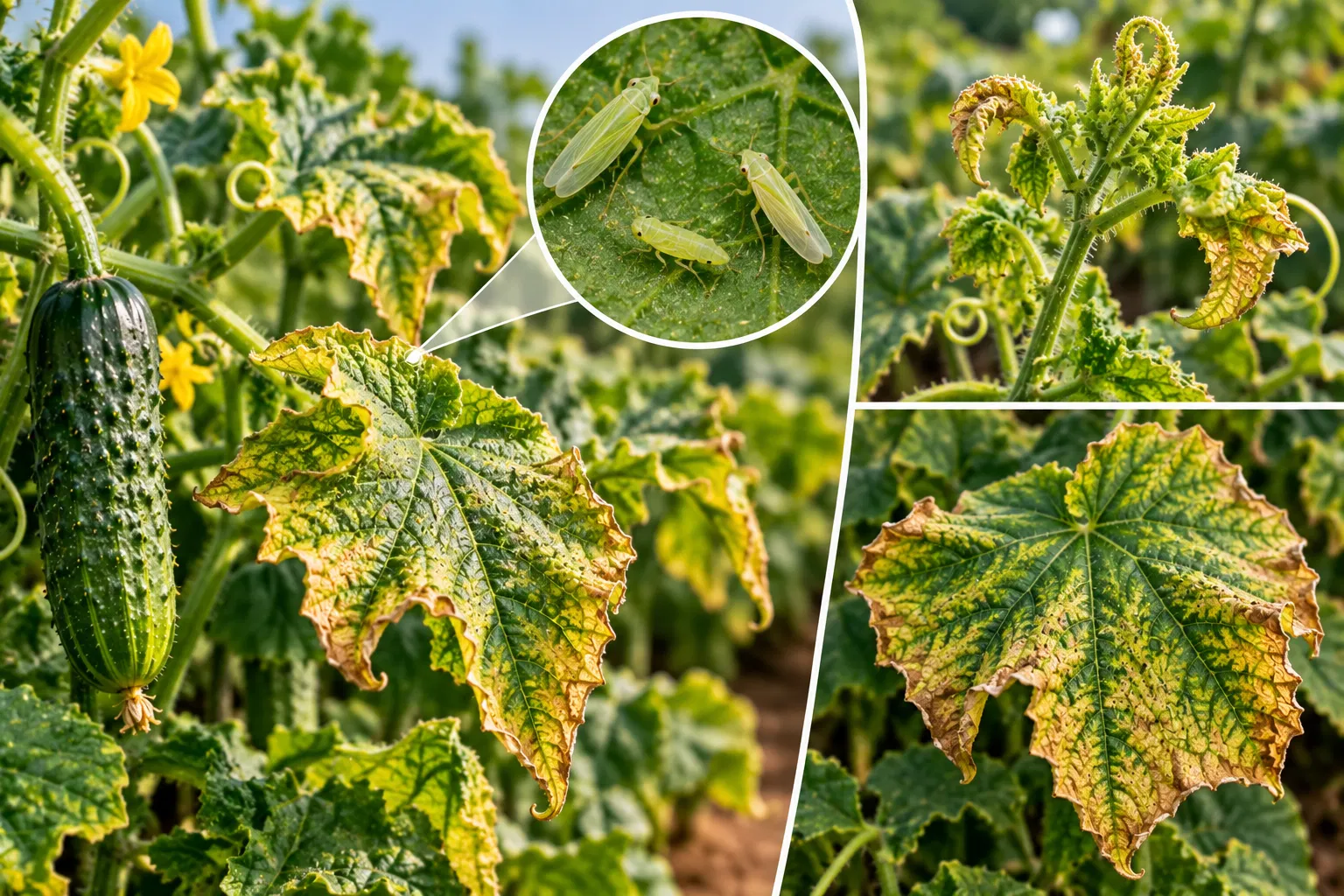
Jassids feed on the underside of cucumber leaves, and by the time the vine shows visible damage, the population has usually already built up. Left uncontrolled, they stunt vine growth and cut into fruit set, so spraying the right insecticide as soon as they're spotted is what protects the yield.
How to Identify Jassids in the Field
Jassids are small, wedge-shaped, greenish-yellow hoppers that move sideways or hop away quickly when a leaf is disturbed. Look for a yellowing along the leaf margins that spreads inward, curling and a bronze or scorched look on affected leaves, and stunted vine growth in a heavily infested patch. Both nymphs and adults feed by sucking sap from the underside of the leaf, so turning leaves over is the quickest way to confirm an infestation.
1. Imidacloprid 70% WG
A systemic neonicotinoid that's absorbed quickly into the plant and moves to untreated growth, giving fast knockdown of jassids along with longer-lasting residual protection against the next wave.
Product Recommendations
- Bayer Admire Insecticide
- Sumitomo Dzire Insecticide
- Dhanuka Ad-Fyre Insecticide
- EBS Imidapro Insecticide
- Katyayani IMD-70 Insecticide
2. Dimpropyridaz 120 g/l SL
A newer-generation insecticide with a mode of action distinct from the neonicotinoids, giving strong control of jassids where resistance to older chemistries has become a concern, along with a favourable safety profile for beneficial insects.
Product Recommendations
Cultural and Mechanical Control Measures
- Use yellow sticky traps along the field border to monitor and reduce adult populations
- Avoid excess nitrogen application, which encourages the soft new growth jassids prefer
- Keep field borders and bunds free of weeds that host jassids between cropping cycles
- Inspect the underside of leaves regularly from early vine growth onward, since damage often starts before it's visible from above
- Rotate cucumber with a non-host crop where jassid pressure has been high in previous seasons
Disclaimer: Always confirm current label registration, approved dosage, water volume, and pre-harvest interval (PHI) for your state before using any product, since labels are periodically revised by regulatory authorities.
This guide is a general advisory. Do your own research and verification before using any product. Always confirm suitability for your crop stage, region, and field conditions before making any purchase, spray, or crop-management decision.