Water is one of the most important inputs in farming, but it is also one of the most unpredictable. When rainfall is scarce or irrigation costs rise, crop production can quickly become a challenge. That is why rainwater harvesting for agriculture has become a practical, cost-effective strategy for farmers who want to secure water, improve soil health, and protect yields.
By collecting and storing rainwater for later use, farmers can reduce dependence on groundwater, lower irrigation expenses, and make better use of a resource that would otherwise run off the land. Whether you manage a small farm, a greenhouse, or a larger agricultural operation, rainwater harvesting can play a major role in long-term resilience.
What Is Rainwater Harvesting in Agriculture?
Rainwater harvesting is the process of capturing rainfall from rooftops, farm structures, fields, or other surfaces and storing it for future agricultural use. The collected water can be used for irrigation, livestock, cleaning equipment, or even emergency water supplies in dry periods.
In agriculture, this practice is especially valuable because it helps farmers store water when it is available and use it when crops need it most. Instead of allowing rain to drain away, it becomes a managed resource.
Why Rainwater Harvesting Matters for Farmers
Modern farming faces increasing pressure from drought, erratic weather patterns, and rising water costs. Rainwater harvesting provides a practical way to improve water security while supporting more sustainable farming practices.
Here are some of the key benefits:
- Reduces irrigation dependency by supplementing traditional water sources.
- Lowers water costs and reduces pumping expenses.
- Improves crop resilience during dry spells and unpredictable weather.
- Supports soil moisture management when paired with efficient irrigation.
- Helps recharge groundwater in some systems through infiltration methods.
- Promotes sustainability by making better use of natural rainfall.
For many farms, rainwater harvesting is not just an environmental choice; it is an economic one. Saving water can directly support profit margins and reduce operational risk.
Common Rainwater Harvesting Systems for Agriculture
There are several ways to collect and use rainwater on a farm. The best system depends on farm size, rainfall patterns, land conditions, and water demand.
1. Rooftop Rainwater Harvesting
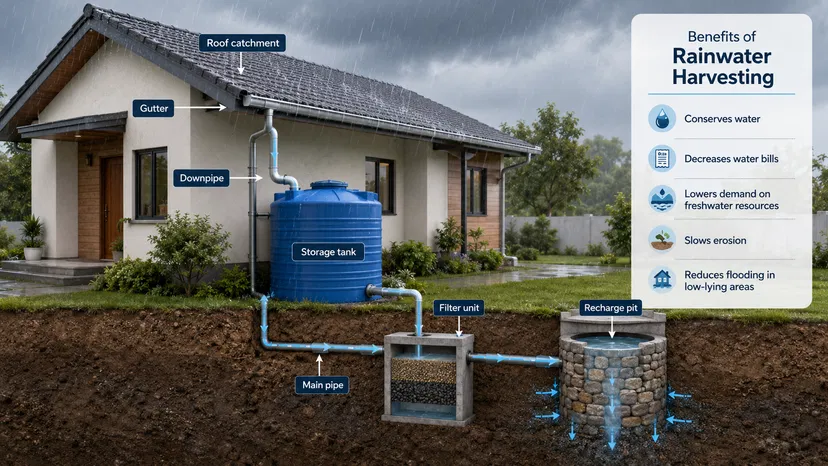
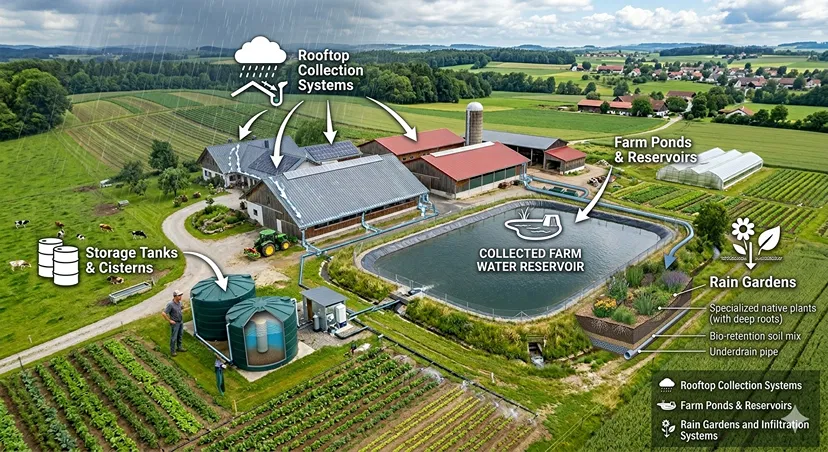
This method collects rainwater from the roofs of barns, sheds, storage buildings, and greenhouses. Gutters and downpipes direct the water into tanks, barrels, or underground reservoirs.
It is one of the simplest and cleanest collection methods because roof runoff is easier to filter than field runoff.
2. Farm Pond Storage
Farm ponds collect runoff from surrounding land and store large volumes of water for irrigation or livestock. When properly designed, they can provide a reliable source during dry periods.
These ponds are especially useful in areas with seasonal rainfall, where capturing excess water during wet months is critical.
3. Surface Runoff Harvesting
This system captures rainwater flowing across fields, roads, or natural slopes and channels it into storage structures. Contour bunds, trenches, swales, and check dams may be used to slow runoff and increase capture.
Surface runoff harvesting can also help reduce erosion and improve water infiltration into the soil.
4. In-Field Water Conservation Structures
Some farms use small earthworks or landscape features to hold rainwater where it falls. These structures help water soak into the soil rather than leaving the field too quickly.
Examples include:
- Contour ridges
- Terraces
- Infiltration basins
- Mulched planting basins
How Rainwater Harvesting Supports Crop Production
Consistent water supply is essential for healthy plant growth. Rainwater harvesting helps farmers better manage water during each stage of the crop cycle.
With a dependable rainwater storage system, farmers can:
- Irrigate seedlings during establishment
- Maintain soil moisture during flowering and fruiting
- Protect crops from short-term drought stress
- Improve fertilizer efficiency by reducing water loss
- Support high-value crops that require regular watering
In addition, rainwater is often lower in salts and minerals than some groundwater sources, which can be beneficial for sensitive crops and soil quality over time.
Design Considerations for an Effective System
A successful rainwater harvesting system requires more than just a tank or pond. It should be designed to match rainfall patterns, crop demand, and available land.
Assess Rainfall and Water Demand
Start by understanding how much rain your farm receives annually and seasonally. Then estimate how much water your crops, livestock, or cleaning operations require. This helps determine the size of storage needed.
Choose the Right Collection Area
The amount of water collected depends on the surface area and quality of the catchment. Roofs are ideal for cleaner water, while field runoff can provide larger volumes but may require more filtration.
Plan Storage Capacity
Storage tanks, lined ponds, and reservoirs should be sized according to rainfall variability and crop needs. Too little storage limits usefulness, while oversized systems may increase costs unnecessarily.
Use Filtration and First-Flush Devices
Debris, bird droppings, soil, and other contaminants can reduce water quality. Simple filters, screens, and first-flush diverters improve water safety and protect irrigation equipment.
Prevent Evaporation and Contamination
Covered tanks, shaded reservoirs, and sealed systems help reduce water loss and keep the water cleaner. Regular maintenance also prevents mosquito breeding and algae growth.
"The best rainwater harvesting system is the one that fits the farm's climate, crops, and management capacity."
Best Practices for Using Harvested Rainwater
Once rainwater is collected, it should be used efficiently to maximize value. Smart irrigation methods can extend every drop.
- Drip irrigation delivers water directly to plant roots with minimal waste.
- Mulching helps retain soil moisture and reduce evaporation.
- Scheduling irrigation based on crop stage and weather conditions improves efficiency.
- Monitoring soil moisture helps avoid overwatering or underwatering.
- Maintaining storage systems ensures water remains available when needed.
Combining rainwater harvesting with conservation practices creates a stronger and more reliable farm water strategy.
Economic and Environmental Advantages
Rainwater harvesting for agriculture offers both financial and ecological benefits. On the economic side, farmers can reduce pumping costs, extend irrigation supply, and lessen the impact of drought-related losses. On the environmental side, harvesting rainfall reduces runoff, erosion, and pressure on local water tables.
This approach also supports climate-smart agriculture by helping farms adapt to changing weather patterns. In many regions, it can improve long-term productivity while conserving natural resources for future use.
Challenges to Keep in Mind
While rainwater harvesting is highly beneficial, it does come with challenges. Initial setup costs, maintenance needs, and storage limitations may affect adoption. Water quality must also be monitored carefully if the water will be used for sensitive crops or livestock.
Still, these challenges are manageable with proper planning. Farmers who invest in a well-designed system often see strong returns in reliability, resilience, and water savings.
Conclusion
Rainwater harvesting is one of the most practical ways to strengthen agricultural water management. It helps farmers capture a free natural resource, reduce dependence on uncertain water supplies, and improve crop performance in both wet and dry seasons.
From rooftop collection to farm ponds and runoff capture, the right system can make a measurable difference in productivity and sustainability. If you are looking for a smarter way to protect your farm from water shortages, rainwater harvesting is a proven step in the right direction.
Start planning your rainwater harvesting system today and turn seasonal rainfall into a reliable asset for your agricultural future.