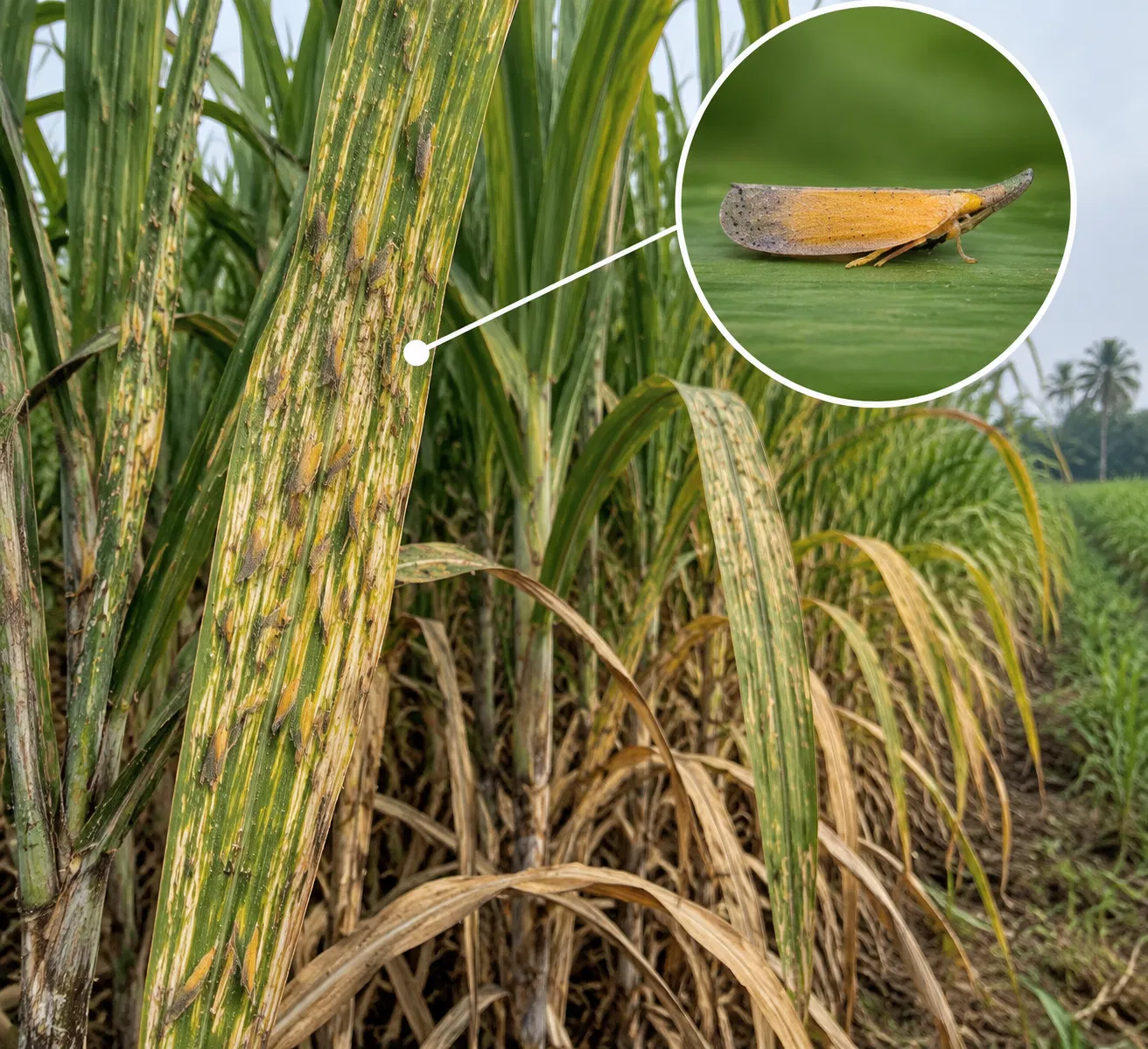
Pyrilla is a sap-sucking pest that sits on sugarcane leaves in large numbers and drains them of nutrients. It doesn't just weaken the plant, it also leaves behind a mess that invites more trouble, cutting into both cane weight and sugar content.
How to Spot Pyrilla
- Yellow-brown insects clustered on the underside of leaves
- Sticky honeydew coating the leaves
- Black sooty mould growing over the honeydew
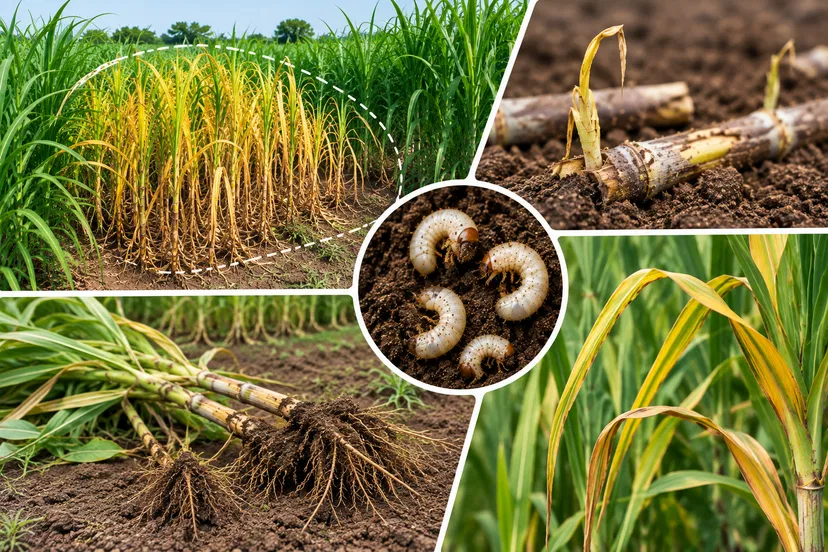
- Leaves drying up from the tip, giving the field a scorched look
- Reduced cane growth and lower juice quality in heavy attacks
Why It Spreads
- Dense, overcrowded cane rows with poor airflow
- Continuous sugarcane cropping without a break
- Warm, humid weather during the growing season
- Neglected field bunds and grassy borders where Pyrilla hides
Solution to Control Pyrilla
Acephate 50% + imidacloprid 1.80% SP
A confirmed chemical option for Pyrilla in sugarcane. Acephate moves through the plant and kills on contact, while Imidacloprid adds longer-lasting systemic protection. As a bonus, it also helps with termite, white grub, and early shoot borer, common problems in the same field.
Products Recommendation
Other Practices to Manage Pyrilla
- Keep field bunds and borders free of grass, where Pyrilla often hides
- Detrash the crop regularly to improve airflow and light penetration
- Avoid excess nitrogen, it encourages the soft growth Pyrilla prefers
- Monitor the underside of leaves regularly for early egg clusters
- Avoid waterlogging and keep field drainage in good condition
Note: Spray as soon as clusters appear on the underside of leaves, before honeydew and sooty mould build up. Clearing grassy bunds around the field also helps cut down where Pyrilla hides between attacks.
Disclaimer: Always confirm current label registration, approved dosage, water volume, and pre-harvest interval (PHI) for your state before using any product, since labels are periodically revised by regulatory authorities.
This guide is a general advisory. Do your own research and verification before using any product. Always confirm suitability for your crop stage, region, and field conditions before making any purchase, spray, or crop-management decision.