
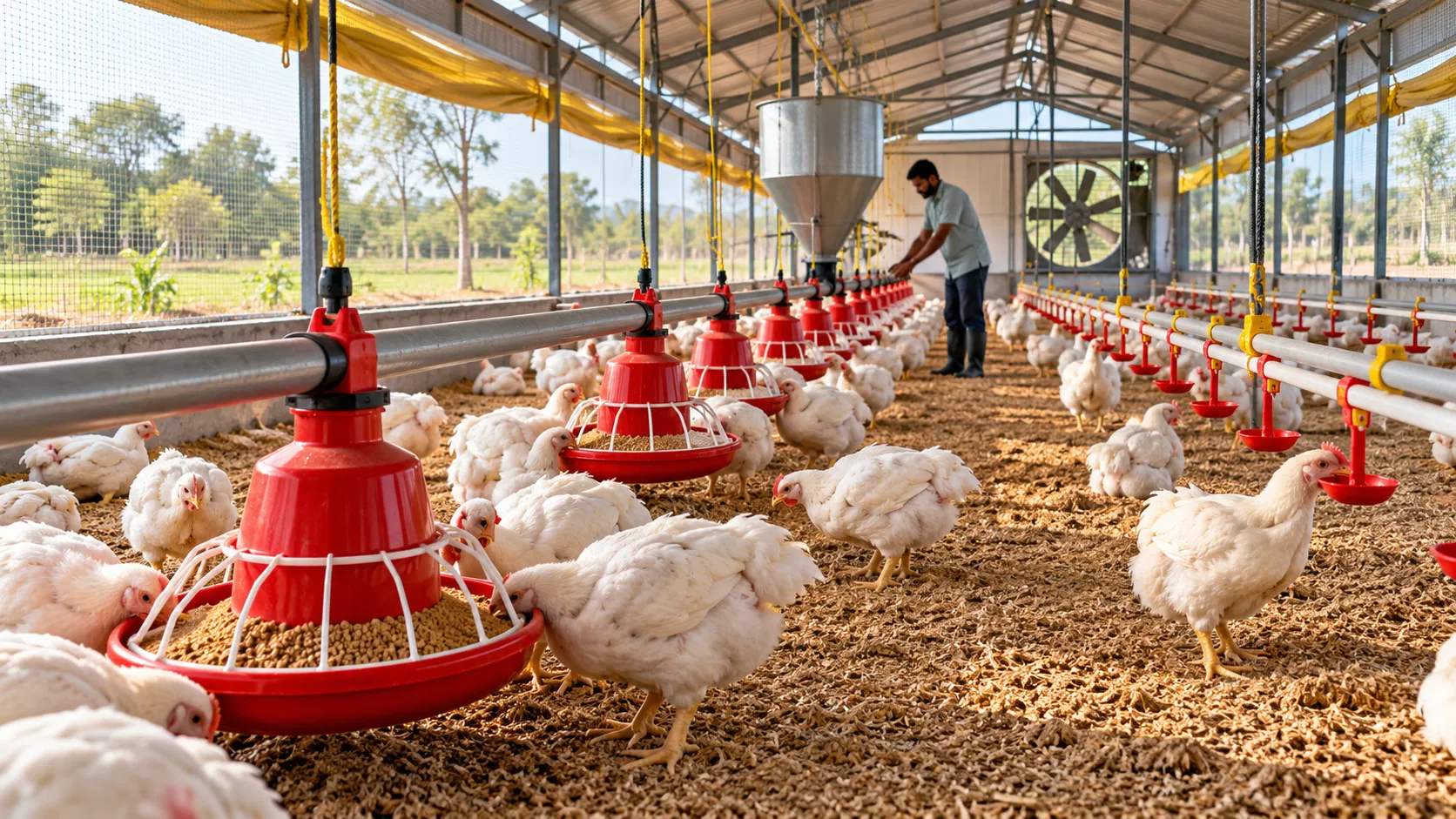
Good birds alone do not make a good poultry farm. The right tools can decide how much feed is wasted, how clean the water stays, how fast the chicks grow and how much time you spend on daily work. Whether you are setting up your first shed or adding birds to an existing one, knowing which poultry farming equipment you need, and how many pieces of each, can help you avoid extra spending and keep the flock healthy.
Why the Right Poultry Equipment Matters
- Less feed waste: well-designed feeders may reduce spillage, which can lower the feed cost
- Cleaner water: good drinkers help keep water free from litter and droppings
- Even growth: when every bird gets enough feed and water, the flock generally grows more evenly
- Better hygiene: smooth, easy-to-wash equipment can make cleaning faster and may help reduce disease
- Saved time and labour: handy tools make daily feeding, watering and cleaning easier
Essential Poultry Farming Equipment List
1. Brooder and heat source
Day-old chicks cannot keep themselves warm, so they need a brooder with a steady heat source for the first few weeks. Gas brooders, electric brooders or bulbs are commonly used. The heat is usually kept high in the first week and lowered a little every week. Watch the chicks: if they huddle under the heat and chirp loudly, they may be cold, and if they spread out and pant, they may be too warm.
2. Chick feeders and feed trays
Young chicks eat best from shallow, easy-to-reach feeders. A chick feeder with a wide pan lets many chicks eat together, while a chick feed tray is often used on the first day to help chicks find feed quickly. Using a tray with a raised ridge may also help reduce feed waste.
3. Chick drinkers
Chicks need clean, cool water within easy reach from the very first hour. A chick drinker with a shallow water ring, placed on a stand or on the floor, are generally used for the first weeks. Chicks may drown or get wet in deep open vessels, so choose a drinker made for chicks.
4. Adult feeders
As birds grow, they need bigger feeders that hold more feed and can be hung or placed at the height of the birds' backs. An adult feeder with a large cone and pan may reduce the number of refills and help many birds eat at the same time.
5. Adult drinkers
Larger birds drink more, especially in hot weather. A large poultry drinker with a wide bowl helps reduce frequent refilling, and a drinker with a handle is easier to carry and clean. Cleaning the drinkers daily generally keeps the water fresher.
6. Litter material and litter tools
Dry bedding such as rice husk, sawdust or wood shavings is spread on the floor to absorb moisture. A rake or fork helps to turn and loosen the litter regularly. Wet litter may spread disease and harm the birds' feet, so remove wet patches quickly.
7. Lighting and ventilation
Bulbs or tube lights give the light the birds need for feeding, and fans, curtains or exhaust fans help keep air moving in the shed. Good airflow may reduce heat stress, dust and ammonia smell.
8. Nest boxes and perches (for layers)
Laying hens need nest boxes for laying eggs and perches for resting. Keep the perches higher than the nest boxes, and put clean, dry nesting material in the boxes so that the eggs stay clean.
9. Weighing scale and thermometer
A scale lets you check the weight of the birds against the expected weight for their age, and a thermometer helps you keep the shed temperature right, especially in the brooding period.
10. Cleaning and biosecurity tools
Brushes, sprayers, footbaths, disinfectants and clean boots or sandals help stop disease entering the shed. Wash and disinfect all feeders and drinkers between batches.
How Many Feeders and Drinkers Do You Need
The number depends on the age and number of birds, and the pack details usually mention how many birds each piece can serve. As a general guide:
- Give each bird enough room at the feeder and drinker so that weaker birds are not pushed away
- Increase the feeder and drinker space as the birds grow, because adult birds need much more than chicks
- Spread the feeders and drinkers evenly in the shed, so that birds do not have to walk far
- Keep feeders and drinkers apart from each other to reduce wet feed
- Adjust the height as birds grow, so that the edge stays around the level of the birds' backs
How to Choose Poultry Equipment
1. Match the equipment to the age of the birds
Chicks, growers and adult birds need different sizes. Using chick equipment for adult birds, or the reverse, may lead to waste and uneven growth.
2. Look for strong, easy-to-clean material
Smooth, sturdy plastic that does not crack in the sun and can be washed easily is generally a good choice. Fewer joints and corners mean fewer places for dirt to collect.
3. Check the capacity
Choose a feeder and drinker with enough capacity for your flock size, so that you do not need to refill them many times a day.
4. Choose designs that reduce waste
Feeders with a cone or a lip that keeps feed inside the pan, and drinkers with a narrow water ring, may help reduce spillage and keep the litter dry.
5. Think about the stand and handle
A stand that can be placed in more than one way, as on a turbo feeder with a 2 way stand, and a handle that makes a larger 8 litre drinker easy to carry, can make daily work much easier.
6. Plan for cleaning
Choose equipment that can be taken apart and washed easily, since regular cleaning is important for the health of the flock.
Tips for Using Poultry Equipment Well
- Place the feeders and drinkers at the height of the birds' backs and raise them as the birds grow
- Clean the drinkers daily and refill them with fresh water
- Do not overfill the feeders, as it may lead to spoiled feed
- Keep the litter dry by fixing leaking drinkers quickly
- Disinfect all equipment between batches and let it dry in the sun
- Check the equipment regularly for cracks and damage, and replace broken pieces
Product Recommendation
Chick feeders and trays
Adult feeders
Drinkers
- Meenakshi Chick Drinker
- Meenakshi 4 Ltr Poultry Drinker With Handle
- Meenakshi 8 Ltr Poultry Drinker With Handle
- Meenakshi Nova Drinker Poultry Equipment
Conclusion
The right poultry farming equipment can make bird rearing simpler, cleaner and more profitable. A reliable brooder for the chicks, feeders and drinkers sized for each stage, dry litter, good airflow and basic cleaning tools can form a strong base for any poultry farm. Choosing equipment that suits the age and number of birds, and keeping it clean and in good condition, can help farmers reduce feed waste, support healthy growth and save daily effort.
Frequently Asked Questions
1. What equipment is needed to start a poultry farm?
A brooder, chick and adult feeders, chick and adult drinkers, litter material, lighting, ventilation and basic cleaning tools are generally needed. Layer farms also need nest boxes and perches.
2. How many birds can one feeder or drinker serve?
It depends on the size and design, so check the details on the pack. Many chick feeders and drinkers are made for about 50 to 60 birds each.
3. Are the feeders for chicks and adult birds the same?
No, chicks need shallow, low feeders and adult birds need larger ones. Using the right size for each stage may reduce feed waste.
4. Why are drinkers with a narrow water ring better?
They may keep the water cleaner and the litter drier, since birds cannot step into the water or spill it easily.
5. How often should poultry feeders and drinkers be cleaned?
Drinkers are best cleaned and refilled daily, and feeders should be cleaned regularly and disinfected between batches.
6. How do I raise the feeder height as the birds grow?
Keep the edge of the feeder or drinker around the level of the birds' backs, and raise it a little as they grow to reduce spillage.
Also Read
- Poultry Farming Guide: Start and Grow a Profitable Business
- Poultry Feed Guide: Starter, Grower and Layer Feeds Explained
Disclaimer: The number and type of poultry equipment needed can vary with the breed, age, flock size, shed design and local climate. Check the capacity and size details of each product before use, and keep all equipment clean. This guide is a general advisory, so confirm your farm set-up with a local veterinarian or poultry expert.