When crops do not receive enough potassium, the damage often appears where farmers notice it most: in the fruit. Smaller size, weak colour, poor taste, lower sugar content, and reduced shelf life are common effects of potassium deficiency in crops. Because potassium plays an essential role in water movement, enzyme activation, and fruit development, even a moderate shortage can reduce yield and market value.
For farmers seeking larger, better-quality harvests, understanding potassium deficiency is essential. Potassium does more than support general plant growth—it directly influences how fruits fill, mature, develop colour, and retain quality after harvest.
What Potassium Does in Crop Plants
Potassium is one of the three primary nutrients plants require in large quantities, along with nitrogen and phosphorus. Unlike nitrogen, potassium does not become part of the plant's structural tissues. Instead, it acts as a regulator that supports several important physiological processes.
In fruiting crops, potassium supports:
- Water regulation and cell expansion
- Sugar movement from leaves to developing fruits
- Enzyme activation for growth and metabolism
- Improved tolerance to heat and drought stress
- Better fruit colour, flavour, firmness, and shelf life
Because of these functions, potassium deficiency often becomes more noticeable during flowering, fruit development, and fruit-filling stages. A crop may initially appear healthy, but fruit size and quality can decline as nutrient demand increases.
How Potassium Deficiency Affects Fruit Size
Fruit size is one of the first yield characteristics affected by insufficient potassium. Potassium helps transport water and sugars into developing fruit cells. Without an adequate supply, cells cannot expand properly, preventing fruits from reaching their full size potential.
Common effects include:
- Smaller and lighter fruits
- Poor cell expansion and reduced fruit volume
- Uneven fruit size within the same crop
- Lower marketable yield
- Reduced fruit weight at harvest
In crops such as tomato, chilli, citrus, grapes, apples, and strawberries, potassium deficiency can significantly reduce fruit uniformity. Even where fruit set is satisfactory, inadequate potassium may limit final fruit size and reduce profitability.
Key insight: Potassium deficiency may not only reduce the number of marketable fruits—it can also reduce the value of every fruit harvested.
How Potassium Deficiency Lowers Fruit Quality
Fruit quality depends on several environmental and nutritional factors, but potassium is among the most important. When potassium supply is insufficient, plants struggle to move sugars, regulate water, and complete the ripening process.
1. Poor Flavour and Lower Sugar Content
Potassium supports the movement of sugars produced in leaves to developing fruits. Deficient crops may produce fruits with lower soluble solids, reduced sweetness, and poor flavour.
2. Weak Colour Development
Many fruits require sufficient potassium for uniform ripening and pigment formation. Potassium-deficient plants may produce pale fruits, uneven colouring, or produce that fails to achieve the expected market colour.
3. Reduced Firmness and Shelf Life
Potassium helps maintain cell pressure and tissue strength. When potassium levels are low, fruits may soften quickly, bruise easily, and deteriorate faster during transportation and storage.
4. Lower Dry Matter and Poor Internal Quality
In crops such as potatoes, tomatoes, melons, and fruit trees, potassium influences dry-matter accumulation and internal texture. Deficiency may cause watery fruits, weak texture, and poor processing quality.
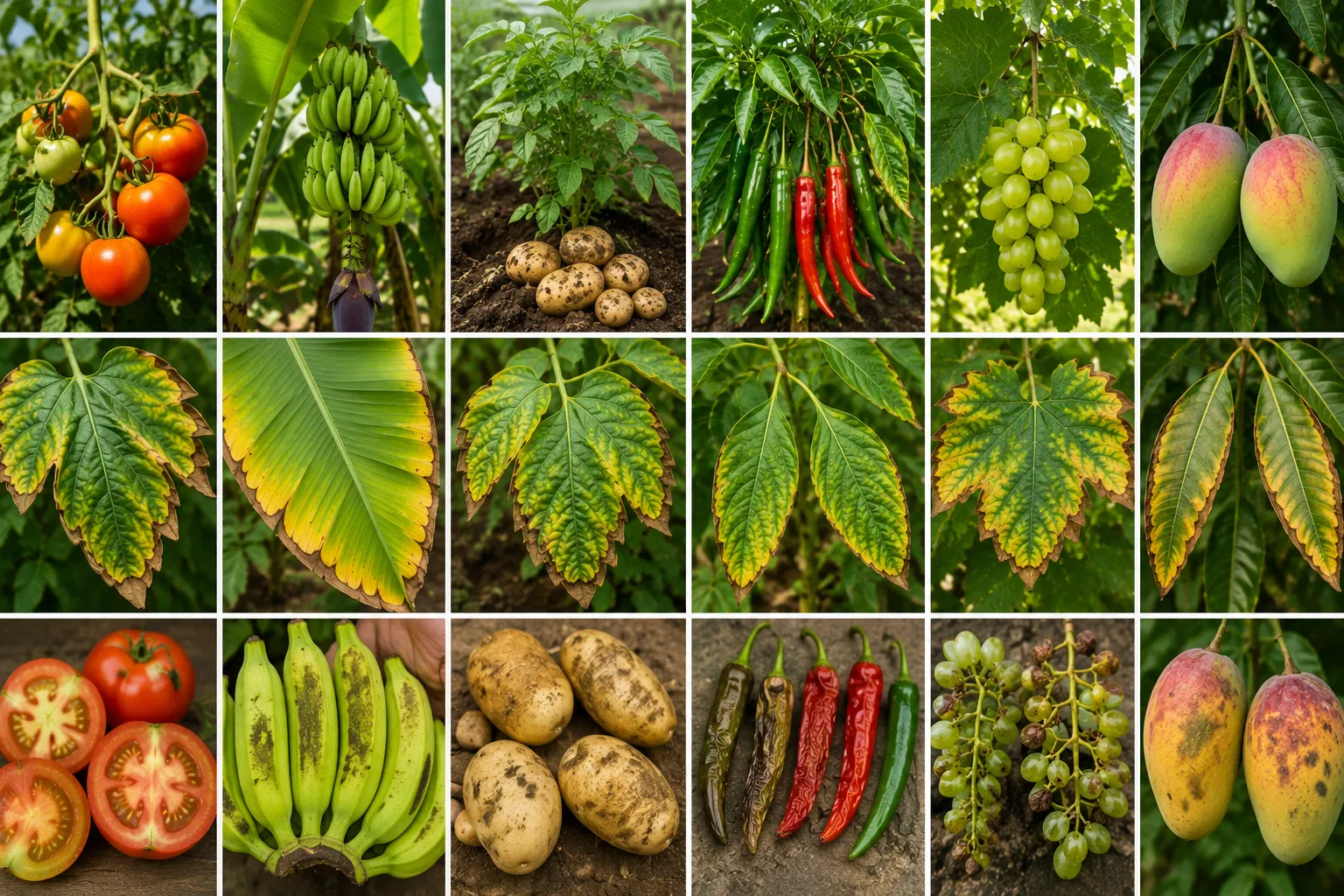
Visual Symptoms of Potassium Deficiency in Crops
Fruit-size and quality losses may occur only after the plant has experienced potassium stress for some time. Early diagnosis is therefore important.
Typical potassium deficiency symptoms include:
- Yellowing along leaf margins
- Brown or scorched leaf edges
- Symptoms appearing first on older leaves
- Weak stems and reduced plant vigour
- Delayed crop maturity
- Uneven fruit development
- Poor tolerance to drought or heat
Potassium is mobile within plants. When supplies are limited, the nutrient moves from older leaves to younger tissues and developing fruits. As a result, older leaves commonly display symptoms first.
Why Fruiting Crops Are Especially Sensitive
Fruit-bearing crops require large amounts of potassium during flowering, fruit set, and fruit filling. During these stages, plants must support vegetative growth while transporting carbohydrates and water to developing fruits.
High-demand crops are especially vulnerable when:
- Soils are sandy and prone to nutrient leaching
- Heavy rainfall moves potassium below the active root zone
- Fertilizer programmes are unbalanced
- Excess nitrogen is applied without adequate potassium
- Dry soil conditions limit nutrient uptake
- Root development is restricted by compaction or disease
Excessive nitrogen without sufficient potassium can produce lush foliage but weak fruit development. Balanced crop nutrition is therefore essential for improving both yield and quality.
Soil and Plant Factors That Contribute to Potassium Deficiency
Potassium deficiency may result from low soil potassium, but it can also occur when potassium is present and unavailable to plant roots.
- Low soil-test values: Insufficient available potassium in the root zone
- Heavy rainfall or irrigation: Nutrient leaching, particularly in sandy soils
- Soil compaction: Restricted root development and nutrient access
- Cold soil: Reduced root activity and nutrient absorption
- Excess calcium, magnesium, or ammonium: Competition with potassium uptake
- Drought stress: Reduced movement of potassium toward roots
- Damaged roots: Lower nutrient-absorption capacity
Soil testing and plant-tissue analysis can help determine whether symptoms result from an actual potassium shortage or another nutrient imbalance.
Best Ways to Prevent Potassium Deficiency
Prevention is generally more effective than attempting to restore fruit quality after deficiency symptoms become severe. A planned nutrition programme can help maintain potassium availability throughout the crop cycle.
- Test the soil regularly: Determine available potassium levels before planting and during crop rotation.
- Use plant-tissue testing: Confirm whether crops are absorbing sufficient potassium.
- Apply balanced fertilizers: Match potassium supply to crop demand, particularly during flowering and fruit development.
- Split applications where necessary: Use smaller, timely applications in soils prone to leaching.
- Manage irrigation carefully: Avoid excessive irrigation and prevent severe moisture stress.
- Maintain a balanced nitrogen-to-potassium ratio: Excess nitrogen can increase deficiency risk and weaken fruit quality.
Correcting Potassium Deficiency During the Growing Season
When potassium deficiency symptoms appear, timely action is important. Foliar applications may provide temporary support, but severe or continuing deficiency generally requires correction through the soil or fertigation system.
The appropriate correction method depends on:
- Severity of the deficiency
- Crop type and growth stage
- Soil texture and pH
- Irrigation method
- Existing fertilizer programme
- Time remaining before harvest
In fruit crops approaching harvest, timely potassium correction may support final fruit filling and quality. However, treatment is generally more effective when deficiency is identified before fruit enlargement is severely affected.
Common Mistakes in Potassium Management
- Applying excessive nitrogen without balancing potassium
- Waiting for severe leaf symptoms before taking action
- Using fertilizer rates without soil-test information
- Ignoring potassium losses after heavy rainfall
- Allowing irregular irrigation during fruit development
- Assuming all fruit-quality problems are caused by pests or diseases
Conclusion: Potassium Is a Quality Nutrient
Potassium deficiency in crops is more than a general nutrition problem—it directly affects fruit size, sugar content, colour, firmness, shelf life, and overall market value. For farmers focused on profitable harvests, potassium management should remain a priority from planting through fruit maturation.
Regular soil testing, tissue analysis, balanced fertilization, and careful irrigation can prevent most potassium-related losses. When crops begin producing smaller fruits or declining quality, reviewing the potassium programme early can help protect both yield and marketability.