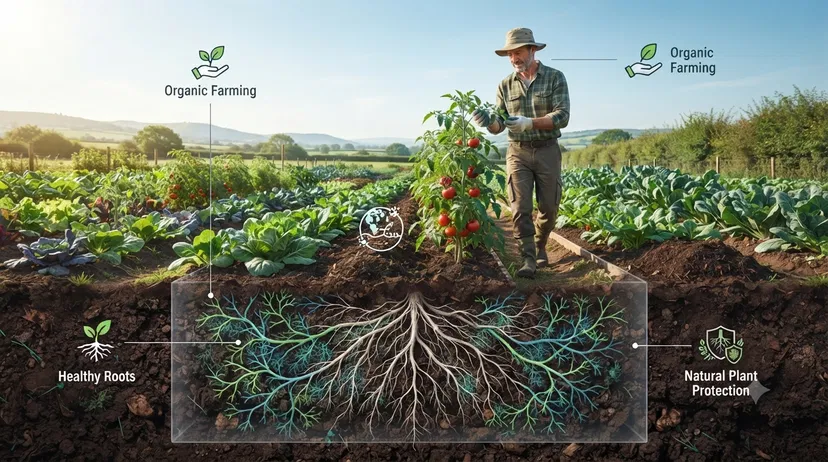
Sustainable farming starts with healthy soil, and healthy soil starts with the right nutrients. If you want stronger crops, better yields, and a more resilient farm, organic fertilizers are one of the smartest tools you can use. They feed the soil, support beneficial microbes, and help build long-term fertility without relying on synthetic inputs.
In this complete guide, you’ll learn what organic fertilizers are, why they matter, the most common types, and how to use them effectively for sustainable farming.
What Are Organic Fertilizers?
Organic fertilizers are natural soil amendments made from plant, animal, or mineral sources. Unlike synthetic fertilizers, which deliver nutrients in a highly concentrated form, organic fertilizers release nutrients more slowly as they break down in the soil.
This slow-release process helps reduce nutrient loss, improves soil structure, and supports a living ecosystem underground. In other words, organic fertilizers do more than feed plants—they improve the soil itself.
Why Organic Fertilizers Matter in Sustainable Farming
Sustainable farming depends on practices that protect the environment while maintaining productivity. Organic fertilizers fit perfectly into that model because they promote long-term soil health and reduce dependency on chemical inputs.
- Improve soil fertility by replenishing essential nutrients naturally
- Support microbial life that helps plants absorb nutrients
- Enhance soil structure for better aeration and water retention
- Reduce environmental impact by lowering runoff and chemical buildup
- Promote long-term productivity instead of short-term nutrient spikes
For farmers focused on regenerative agriculture, crop rotation, and soil stewardship, organic fertilizer is more than an input—it’s a foundational strategy.
Types of Organic Fertilizers
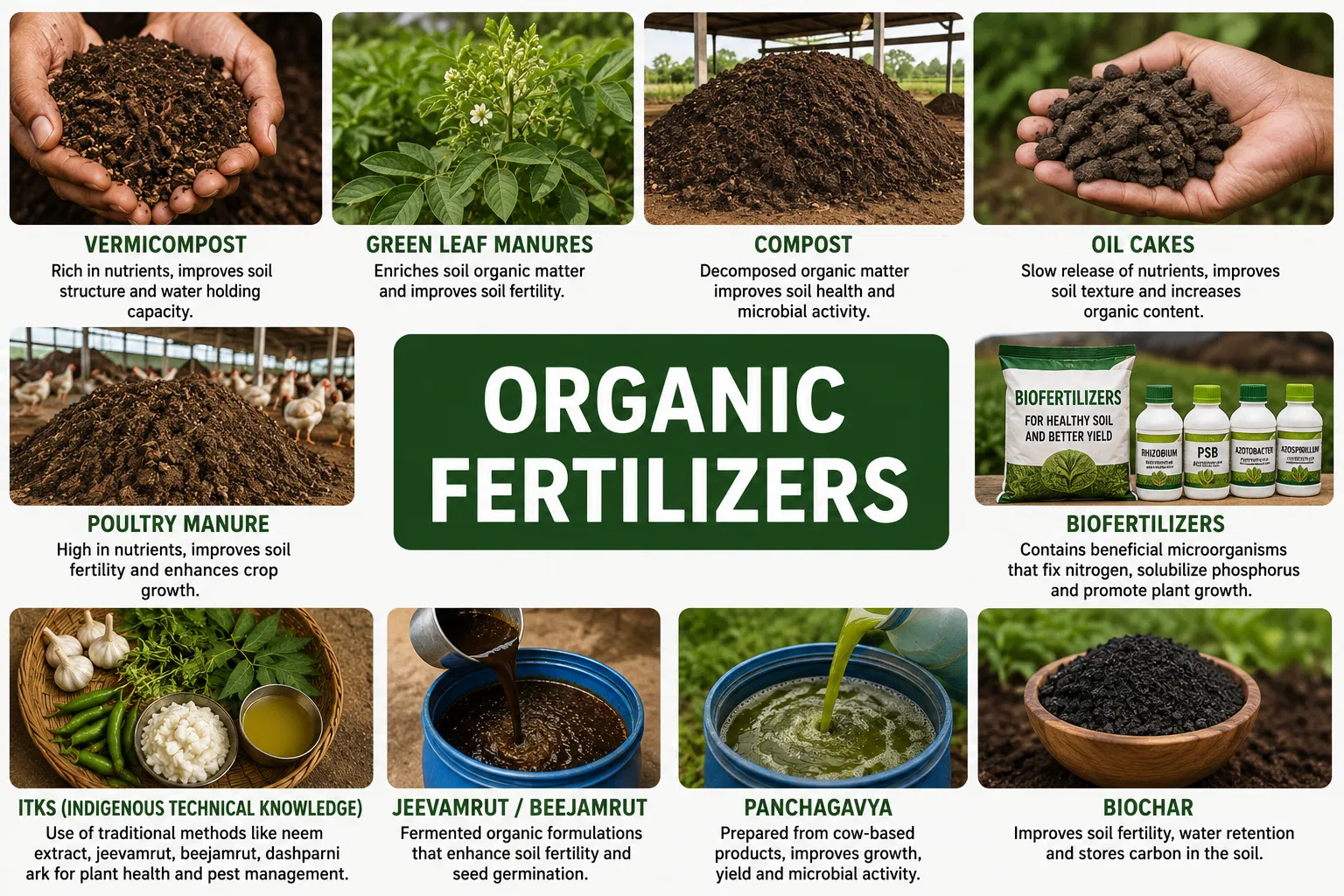
There are many kinds of organic fertilizers, each suited to different crops, soils, and growing conditions. Understanding the main options helps you choose the right one for your farm.
1. Compost
Compost is one of the most widely used organic fertilizers. It’s made from decomposed plant material, food scraps, and other organic matter. Compost improves soil texture, adds a broad range of nutrients, and increases beneficial microbial activity.
It’s especially valuable for poor soils because it boosts organic matter and helps retain moisture.
2. Manure
Animal manure from cows, chickens, horses, or sheep is rich in nutrients, especially nitrogen. However, it must be properly composted or aged before use to avoid pathogens and nutrient burn.
Well-rotted manure can dramatically improve fertility, particularly in vegetable production and field crops.
3. Bone Meal
Bone meal is a slow-release source of phosphorus and calcium. It supports root development, flowering, and fruiting. This makes it especially useful for crops like tomatoes, onions, bulbs, and fruit trees.
4. Fish Emulsion
Fish emulsion is a liquid fertilizer made from fish byproducts. It provides quick-acting nitrogen and trace minerals, making it a great option for boosting growth during early plant development.
Because it works quickly, it’s often used as a foliar spray or soil drench.
5. Blood Meal
Blood meal is a high-nitrogen fertilizer made from dried animal blood. It’s ideal for leafy crops that need a strong nitrogen boost, such as lettuce, spinach, and kale.
Because it is potent, it should be used carefully to avoid over-fertilization.
6. Green Manure
Green manure refers to cover crops grown specifically to be turned back into the soil. Common examples include clover, alfalfa, and legumes. These crops add organic matter, suppress weeds, and improve soil fertility—especially when nitrogen-fixing legumes are used.
7. Worm Castings
Worm castings are the nutrient-rich waste produced by earthworms. They are packed with beneficial microorganisms and plant-available nutrients. Worm castings are gentle, making them excellent for seedlings, container plants, and high-value crops.
Key Benefits of Organic Fertilizers
Organic fertilizers offer several advantages that go beyond basic plant nutrition.
Better Soil Health
Organic fertilizers increase soil organic matter, which improves structure, drainage, and water-holding capacity. Healthy soil is less likely to compact and more capable of supporting strong root systems.
Slow, Steady Nutrient Release
Because nutrients are released gradually, plants receive a more balanced supply over time. This helps reduce nutrient leaching and minimizes the risk of fertilizer burn.
Improved Microbial Activity
Soil microbes play a huge role in nutrient cycling. Organic fertilizers feed these microorganisms, which in turn help make nutrients available to plants.
Healthy soil is alive. The more you support its biology, the more productive and resilient your farm becomes.
Lower Environmental Impact
Organic fertilizers are generally safer for surrounding ecosystems when used correctly. They reduce the chances of chemical runoff into waterways and support more sustainable nutrient management.
Long-Term Cost Efficiency
While some organic fertilizers may seem more expensive upfront, they often improve soil over time, reducing the need for additional amendments and helping farms become more self-sustaining.
How to Use Organic Fertilizers Effectively
Using organic fertilizers the right way is just as important as choosing the right product. Soil testing, timing, and application method all matter.
- Test your soil first. Know your nutrient levels and pH before applying anything.
- Match the fertilizer to the crop. Leafy greens need more nitrogen, while fruiting crops need more phosphorus and potassium.
- Apply at the right time. Use slow-release amendments before planting and quick-release options during active growth.
- Incorporate into the soil. Many organic fertilizers work best when mixed into the topsoil or composted in place.
- Water properly. Moisture helps nutrients break down and move into the root zone.
Over-application can still cause problems, even with organic materials. Always follow recommended rates and observe how your crops respond.
Organic Fertilizers vs. Synthetic Fertilizers
Both organic and synthetic fertilizers can supply nutrients, but they function differently.
- Organic fertilizers improve soil health and release nutrients slowly
- Synthetic fertilizers deliver nutrients quickly but may not improve soil structure
- Organic inputs support long-term sustainability
- Synthetic inputs may provide rapid correction for deficiencies
For sustainable farming, organic fertilizers are often the preferred choice because they work with the soil ecosystem rather than against it. Some farmers even use an integrated approach, combining organic amendments with targeted soil management strategies.
Best Practices for Sustainable Fertility Management
Organic fertilizers work best as part of a bigger soil health plan. Here are a few practices that strengthen results:
- Rotate crops to balance nutrient demand and reduce pest pressure
- Use cover crops to protect and enrich the soil between harvests
- Add compost regularly to maintain organic matter
- Mulch around plants to conserve moisture and reduce erosion
- Monitor crop performance and adjust inputs based on seasonal needs
These practices help create a resilient system where nutrients cycle more efficiently and the soil becomes more productive year after year.
Common Mistakes to Avoid
Even with organic fertilizers, mistakes can reduce effectiveness or cause imbalances.
- Applying too much nitrogen and encouraging excessive leafy growth
- Using uncomposted manure too close to harvest
- Ignoring soil test results
- Expecting instant results from slow-release materials
- Overlooking the importance of organic matter and soil biology
The key is patience and consistency. Organic fertility is built over time, not in a single application.
Conclusion
Organic fertilizers are a powerful foundation for sustainable farming. They nourish crops, improve soil structure, support microbial life, and reduce environmental harm. When used correctly, they help farmers build resilient, productive systems that can thrive for the long term.
If you want healthier soil and stronger harvests, start with soil testing, choose the right organic fertilizer, and make soil health part of your daily farming strategy. Sustainable success begins below the surface.