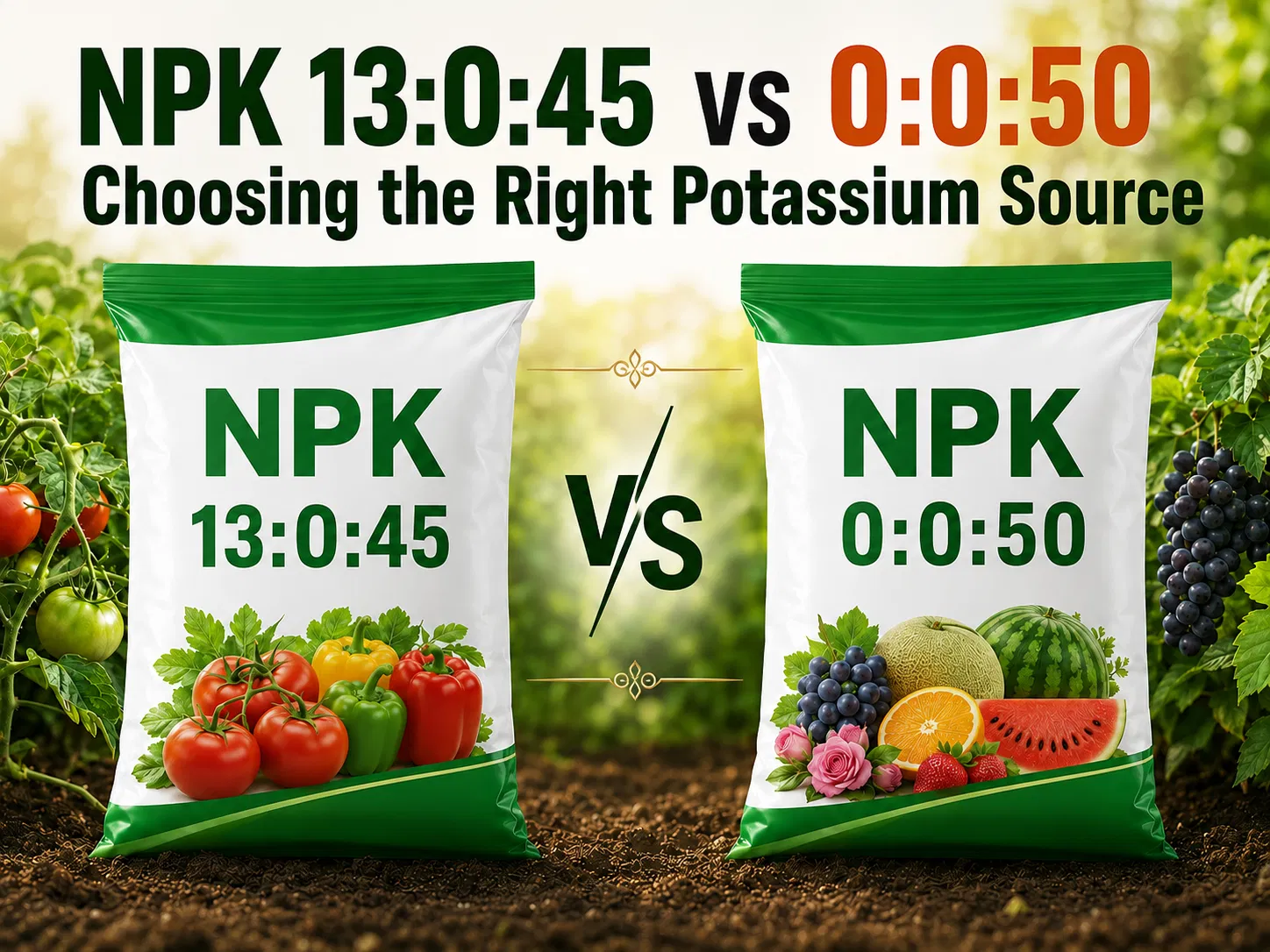
When crops need a strong potassium boost, choosing the right fertilizer can make a big difference in yield, quality, and plant health. Two of the most commonly compared options are NPK 13-0-45 and 0-0-50. At first glance, they may seem similar because both are potassium-based fertilizers, but their nutrient profiles, crop effects, and ideal uses are not the same.
If you are trying to decide between 13-0-45 vs 0-0-50, the key is understanding what each product brings to the field. One offers potassium plus nitrogen for vegetative support, while the other provides a more concentrated potassium source with no added nitrogen. The right choice depends on your crop stage, soil condition, and production goals.
What Is NPK 13-0-45?
NPK 13-0-45 is a fertilizer blend that contains 13% nitrogen, 0% phosphorus, and 45% potassium. It is typically used when crops need potassium along with a moderate nitrogen supply. This makes it useful for supporting active growth, leaf development, and overall plant vigor.
Because it includes nitrogen, 13-0-45 is often chosen during growth phases when plants still need to build biomass. It can be especially helpful in fertigation programs or balanced feeding schedules where potassium is important, but a small nitrogen contribution is still beneficial.
Key benefits of NPK 13-0-45
- Supplies potassium for fruiting, rooting, and stress tolerance
- Provides nitrogen to support leafy growth and canopy development
- Useful in crops that still require nutritional growth support
- Fits well into fertigation and controlled feeding programs
What Is 0-0-50?
0-0-50 is a straight potassium fertilizer containing 50% potassium and no nitrogen or phosphorus. It is a highly concentrated potassium source designed for situations where potassium is needed without adding extra nitrogen.
This makes 0-0-50 especially valuable during fruit filling, tuber bulking, flowering, and ripening stages, when too much nitrogen could reduce quality, delay maturity, or cause excessive vegetative growth.
Key benefits of 0-0-50
- Delivers a high concentration of potassium
- Does not add nitrogen or phosphorus
- Helps improve fruit quality, color, size, and shelf life
- Ideal for late-stage crop nutrition
NPK 13-0-45 vs 0-0-50: The Main Difference
The biggest difference between these two fertilizers is simple: 13-0-45 contains nitrogen, while 0-0-50 does not. That one difference changes how and when each product should be used.
13-0-45 offers a more balanced nutritional effect for crops that still need some vegetative support. In contrast, 0-0-50 is a more focused potassium source for crops that require potassium without pushing new leaf growth.
Choose 13-0-45 when you want potassium plus nitrogen. Choose 0-0-50 when you want potassium only.
How Potassium Affects Crop Performance
Potassium is one of the most important nutrients in crop production. It helps regulate water movement, supports enzyme activity, improves stress tolerance, and enhances fruit development. Crops with adequate potassium usually show stronger stems, better drought resistance, improved disease tolerance, and higher-quality produce.
Whether you choose 13-0-45 or 0-0-50, potassium plays a central role in:
- Fruit sizing and filling
- Root strength and nutrient uptake
- Better shelf life and transport quality
- Improved sugar movement and crop sweetness
- Enhanced tolerance to heat, drought, and stress
When to Use NPK 13-0-45
NPK 13-0-45 is best suited for crops that still need both growth support and potassium. It works well when the plant is in a vigorous vegetative stage or when a modest nitrogen input is still appropriate.
Best situations for 13-0-45
- Early to mid-growth stages
- Crops that need potassium and nitrogen together
- Leafy vegetables and actively growing plants
- Fertigation programs requiring balanced nutrition
- Situations where moderate canopy growth is still desired
Because it contains nitrogen, this product can help support growth while still addressing potassium demand. However, it may not be ideal late in the crop cycle if you want to avoid excessive vegetative growth.
When to Use 0-0-50
0-0-50 is the better choice when the crop needs a strong potassium supply without any additional nitrogen. It is often used in fruiting, ripening, and bulking stages, where quality matters more than leaf expansion.
Best situations for 0-0-50
- Flowering and fruit development
- Late-stage crop nutrition
- Potassium-deficient soils needing direct supplementation
- Crops sensitive to excess nitrogen
- Improving fruit quality, firmness, and color
For many high-value crops, 0-0-50 is preferred near harvest because it supports marketable quality without driving unwanted vegetative growth.
Which Fertilizer Is Better for Fruit Crops?
For fruit crops, the best option depends on the growth stage. During early growth, 13-0-45 may be useful because the crop still benefits from some nitrogen. But once flowering and fruit filling begin, 0-0-50 is often the stronger choice because it gives potassium without increasing nitrogen levels.
Fruit crops such as tomatoes, peppers, grapes, citrus, bananas, and melons often respond well to potassium management. In these crops, potassium contributes to:
- Better fruit size and uniformity
- Improved sweetness and color development
- Higher firmness and post-harvest life
- Reduced fruit cracking or poor filling
Which Fertilizer Is Better for Leafy Crops?
For leafy crops, 13-0-45 is often more useful because nitrogen is important for canopy and leaf expansion. Crops such as lettuce, spinach, cabbage, and similar leafy vegetables may benefit from the combined nitrogen and potassium supply.
However, even leafy crops need careful management. Too much nitrogen can lead to soft growth, lower quality, and weaker plant structure. The right rate and timing matter just as much as the product choice.
Factors to Consider Before Choosing
Before selecting between NPK 13-0-45 and 0-0-50, think about these key factors:
- Crop stage: Is the plant still growing vegetatively, or is it moving into flowering and fruiting?
- Soil test results: Does the soil already contain enough nitrogen and potassium?
- Crop type: Is it a leafy crop, fruit crop, tuber crop, or nursery plant?
- Irrigation method: Are you applying through fertigation, drench, or broadcast?
- Yield goal: Are you trying to build biomass or improve final quality?
Soil and tissue testing can make the decision much easier. A fertilizer that looks ideal on paper may not be the best fit if your crop already has enough nitrogen or if the timing is too late in the season.
Can You Use Both in One Program?
Yes, many growers use both fertilizers at different stages of the crop cycle. A common approach is to use 13-0-45 earlier in development and switch to 0-0-50 later when potassium demand rises and nitrogen should be reduced.
This staged strategy helps match nutrient supply to plant need. It can improve efficiency, reduce waste, and support better crop quality from start to finish.
Final Verdict: NPK 13-0-45 vs 0-0-50
If you need potassium plus a nitrogen boost, NPK 13-0-45 is the better choice. If you need a concentrated potassium source with no extra nitrogen, 0-0-50 is the smarter option.
In simple terms:
- 13-0-45 = potassium + nitrogen for active growth
- 0-0-50 = pure potassium support for fruiting, ripening, and quality
The best fertilizer is not the one with the highest numbers alone. It is the one that matches your crop stage, nutritional need, and production target. If you want stronger growth, choose 13-0-45. If you want cleaner potassium feeding with better final quality, choose 0-0-50.
Before applying either product, test your soil, assess your crop stage, and build a nutrient plan that fits your yield goals. That is the most reliable way to get the full benefit of potassium fertilization.