
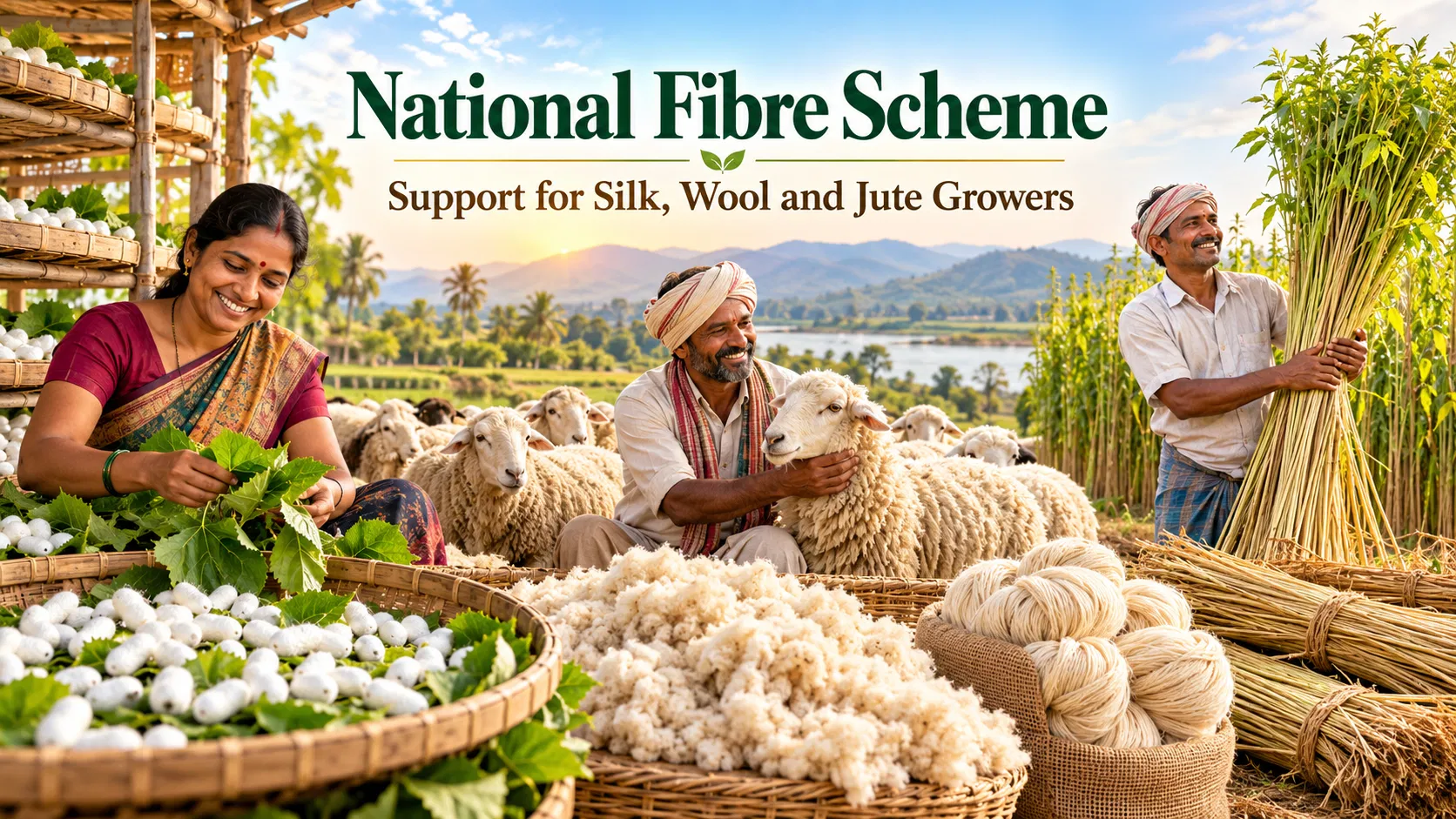
Silk, wool and jute are grown and reared by lakhs of farmers, but India still imports a large share of the fibre it needs. Growers often face poor seed, low yields and weak prices. The National Fibre Scheme, announced in the Union Budget 2026-27, aims to build self-reliance in fibres. This guide explains what the National Fibre Scheme is, the support it plans for silk, wool and jute growers, and what farmers can expect.
What Is the National Fibre Scheme?
The National Fibre Scheme is one part of the Integrated Programme for the Textile Sector announced in the Union Budget 2026-27. Its aim is self-reliance across fibres. According to the government, it aims to build self-reliance across the fibre spectrum by supporting natural fibres such as silk, wool and jute, alongside man-made fibres (MMF) and new-age fibres.
Objectives of the Scheme
- Strengthen domestic fibre availability
- Encourage innovation in advanced textile materials
- Reduce dependence on imported fibre
- Promote diversification beyond cotton
- Enhance India's capability in high-performance and specialised textiles
Planned Support for Silk, Wool and Jute Growers
The Budget announcement does not list grower-level benefits. The ministry's draft concept note outlines the following ideas, which may change when the scheme is finalised.
| Fibre | Planned Support for Growers |
| Silk | Quality silkworm seed, mulberry expansion, better chawki rearing, disease-resistant breeds, modern reeling and cluster-based production. Read more in the guides on silk farming and the Silk Samagra 2 scheme |
| Jute | Certified seed, mechanised sowing and harvesting, improved retting, and climate-resilient varieties |
| Wool | Scientific breeding, fodder development, better shearing and grading, and improved wool marketing. See the sheep farming guide for flock care |
Benefits for Farmers
- Better seed and breeds: Quality seed and breeds can help improve yield and fibre quality
- Better markets: Price support and aggregation platforms are being considered to reduce losses
- Women and groups: Women-led self-help groups may be part of silk production
- Training: District-level skilling centres and mobile training units are being considered
- Branding: Quality marks such as Silk Mark, Jute Mark India and Bharat Wool may help growers get better value
Things to Keep in Mind
- The final guidelines, outlay and eligibility are awaited, and grower benefits will be known only after the government notifies them
- Existing schemes for silk, jute and wool may be revised or renewed, so farmers can check what is open in their state now
- Support may differ from state to state, so confirm with the local textile, sericulture or animal husbandry office
Frequently Asked Questions
What is the National Fibre Scheme?
It is a scheme announced in the Union Budget 2026-27 to build self-reliance across the fibre spectrum, including silk, wool, jute, man-made and new-age fibres.
Which fibres does it cover?
It covers natural fibres such as silk, wool and jute, man-made fibres (MMF) and new-age fibres.
What is the aim of the scheme?
It aims to reduce import dependence, promote diversification beyond cotton and build India's capability in high-performance and specialised textiles.
How can silk growers benefit?
Silk growers may get support for quality silkworm seed, mulberry expansion, better rearing and modern reeling, as outlined in the ministry's concept note.
How can jute and wool growers benefit?
Jute growers may get certified seed and better retting methods, while sheep rearers may get support for breeding, fodder, grading and wool marketing.
Also Read
- Silk Samagra 2 Scheme: Government Support for Silk Farmers
- Complete Sericulture Guide: How Silk Farming Works, Benefits, and Best Practices
- Sheep Farming Guide: How to Raise Healthy, Productive Sheep Successfully
Disclaimer: The National Fibre Scheme is newly announced, and its guidelines and support may change. Please confirm the latest details with your state textile, sericulture or animal husbandry department.
The articles listed here are for general guidance. Do your own research and verification before any investment, loan or farming decision.