If you are trying to improve crop productivity while keeping fertilizer costs under control, the choice between nano urea and conventional urea matters more than ever. Both supply nitrogen, the nutrient crops need in large amounts, but they work very differently in the field. Understanding those differences can help farmers make smarter decisions about yield, efficiency, and long-term soil health.
In this practical comparison, we’ll look at how nano urea and conventional urea perform, where each one fits best, and what farmers should consider before switching.
What Is Conventional Urea?
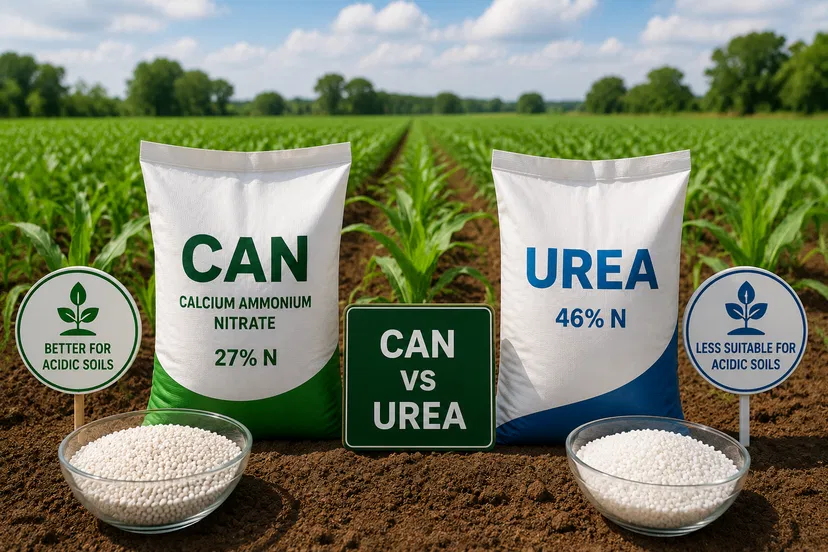
Conventional urea is the most widely used nitrogen fertilizer in agriculture. It contains a high concentration of nitrogen, usually around 46%, and is applied to soil to support crop growth, leafy development, and overall productivity.
Because it is affordable and easy to use, conventional urea has become a standard fertilizer for many crops. However, it also comes with a challenge: a significant portion of its nitrogen can be lost through volatilization, leaching, and runoff before plants fully absorb it.
What Is Nano Urea?
Nano urea is a newer liquid fertilizer designed to deliver nitrogen more efficiently. Instead of granular pellets, it comes in a nano-formulated spray that is applied directly to plant leaves.
The idea behind nano urea is simple: improve nitrogen uptake, reduce waste, and support crop growth with smaller doses. Because it is absorbed through the leaves, it bypasses some of the losses associated with soil-applied fertilizers.
Key idea: Conventional urea feeds the soil, while nano urea is designed to feed the plant more directly.
Nano Urea vs Conventional Urea: The Core Differences
1. Nutrient Delivery Method
Conventional urea is applied to the soil and must dissolve before plants can use it. During this process, nitrogen can be lost to the environment.
Nano urea is sprayed on leaves and absorbed through the plant canopy. This foliar application can improve nitrogen use efficiency in specific growth stages.
2. Fertilizer Efficiency
One of the main advantages of nano urea is its ability to deliver nitrogen in smaller quantities. It is marketed as a more efficient option because plants can absorb a higher share of the applied nutrient.
Conventional urea, while effective, often requires more careful management to reduce losses and maximize uptake.
3. Application Rate
- Conventional urea: Applied in larger quantities, often split into multiple doses depending on the crop.
- Nano urea: Applied in much smaller amounts, usually as a foliar spray during key crop stages.
4. Cost per Unit
At first glance, conventional urea may seem cheaper because it is sold in familiar bulk quantities and has been used for decades. But cost-effectiveness depends on how much of the nitrogen actually reaches the crop.
Nano urea may have a higher cost per bottle, but the lower dosage and improved uptake can make it attractive for farmers looking to reduce fertilizer use and improve efficiency.
Advantages of Conventional Urea
Conventional urea remains popular for good reasons. It offers several practical advantages in large-scale farming.
- Widely available: Easy to source in most agricultural regions.
- Affordable upfront: Lower initial purchase cost compared to many specialty fertilizers.
- High nitrogen content: Supports rapid vegetative growth.
- Simple application: Can be broadcast, side-dressed, or applied through irrigation systems.
For farmers who already have well-established fertilizer management practices, conventional urea remains a dependable nitrogen source.
Limitations of Conventional Urea
Despite its benefits, conventional urea has several drawbacks that affect both efficiency and sustainability.
- Nitrogen loss: A portion of the nutrient can be lost before plant uptake.
- Environmental impact: Runoff and emissions can contribute to pollution.
- Overapplication risk: Farmers may apply more than necessary to compensate for losses.
- Dependence on soil conditions: Performance varies with moisture, temperature, and timing.
These limitations can reduce the real return on investment, especially if fertilizer timing is not well managed.
Advantages of Nano Urea
Nano urea has gained attention because it promises better nitrogen efficiency and lower application volumes. For some farming systems, that can be a major advantage.
- Improved uptake: Designed for direct absorption through leaves.
- Lower dosage: Requires smaller quantities than soil-applied urea.
- Reduced losses: Helps minimize nitrogen wastage.
- Convenient foliar use: Can be applied during important growth stages.
In crops where foliar feeding is effective, nano urea can be a useful supplement or partial replacement for traditional nitrogen management.
Limitations of Nano Urea
Although nano urea offers promise, it is not a universal replacement for conventional fertilizer.
- Not a complete substitute: Many crops still need soil-applied nitrogen for full development.
- Application timing matters: Foliar sprays must be used at the right growth stage.
- Weather sensitivity: Rain, heat, or poor spray coverage can affect results.
- Field results may vary: Performance depends on crop type, soil fertility, and management practices.
For best results, nano urea often works as part of a broader nutrient strategy rather than as the only nitrogen source.
Which One Is Better for Crop Yield?
The answer depends on your crop, soil, and fertilizer strategy. Conventional urea can produce strong yields when used correctly, especially when applied in split doses and timed properly. It remains a reliable choice for supplying the bulk of a crop’s nitrogen requirement.
Nano urea may improve yield in certain situations by boosting nitrogen uptake and supporting plant growth during critical stages. However, it usually performs best as a supplement, not necessarily as a full replacement.
For many farmers, the most practical approach is not choosing one over the other, but using both strategically.
Which Is More Cost-Effective?
Cost-effectiveness is not just about the purchase price. It is about how much usable nitrogen the crop actually gets.
Conventional urea is cheaper per kilogram, but losses can reduce efficiency. Nano urea costs more per unit, but the low dose and improved absorption can reduce overall fertilizer use.
To judge cost efficiency, farmers should consider:
- Crop response to each fertilizer
- Local soil fertility
- Application labor and equipment costs
- Weather and irrigation conditions
- Expected yield improvement
In short, the cheaper fertilizer is not always the cheaper solution.
Best Use Cases for Each Fertilizer
Use Conventional Urea When:
- You need to supply the main nitrogen requirement of the crop
- You are managing large fields with established soil application methods
- You want a proven, widely available fertilizer option
Use Nano Urea When:
- You want to improve nitrogen use efficiency
- You need a foliar boost during critical growth stages
- You want to reduce dependence on heavy soil-applied nitrogen
Final Verdict: Nano Urea vs Conventional Urea
When comparing nano urea vs conventional urea, the best choice depends on your production goals. Conventional urea remains the backbone of nitrogen fertilization because it is accessible, familiar, and effective. Nano urea brings innovation by improving efficiency and reducing waste, but it works best as part of a balanced nutrient plan.
If your goal is maximum yield at scale, conventional urea will likely remain essential. If your goal is improved efficiency, lower nitrogen losses, and smarter foliar nutrition, nano urea can add real value.
Bottom line: the smartest farmers are not just choosing a fertilizer; they are choosing a strategy. Test, compare, and adjust based on your crop and local conditions to find the best return on investment.
Take action: evaluate your current nitrogen program, compare results across seasons, and consider where nano urea can complement your conventional urea use for better productivity and efficiency.