Plants need phosphorus to grow, but in many soils, this essential nutrient is hard to access. That’s where mycorrhiza comes in. This natural partnership between plant roots and beneficial fungi can dramatically improve phosphorus uptake, helping plants grow stronger, healthier, and more efficiently. Understanding how mycorrhiza and phosphorus uptake work together reveals one of nature’s smartest nutrient-sharing systems.
What Is Mycorrhiza?
Mycorrhiza is a symbiotic relationship between plant roots and fungi. The word itself comes from Greek, meaning “fungus root.” In this partnership, the fungus attaches to or enters the plant’s root system and extends far beyond it through tiny thread-like structures called hyphae.
These fungal threads act like an expanded root network, reaching into soil zones that roots alone cannot access. In return for helping the plant absorb water and nutrients, the fungus receives sugars produced by the plant through photosynthesis.
Why Phosphorus Matters for Plant Growth
Phosphorus is one of the three major nutrients plants need, along with nitrogen and potassium. It plays a critical role in several key plant functions:
- Energy transfer through ATP production
- Root development and early plant establishment
- Flowering and fruiting
- DNA and cell membrane formation
- Overall metabolic activity
Even when phosphorus is present in soil, plants often struggle to absorb it. That’s because phosphorus tends to bind tightly to soil particles or become locked in forms that roots cannot easily use. This makes phosphorus one of the most limiting nutrients in agriculture and gardening.
How Mycorrhiza Improves Phosphorus Uptake
Mycorrhizal fungi improve phosphorus uptake by extending the plant’s effective root system. Their hyphae are much thinner than roots, allowing them to slip into tiny soil pores and explore a much larger volume of soil.
This matters because phosphorus is usually immobile in soil. It does not move freely toward roots, so plants must grow roots directly into phosphorus-rich zones. Mycorrhiza solves this problem by acting as a nutrient bridge.
The fungi absorb phosphorus from the soil and transport it back to the plant root cells. This process gives the plant access to more phosphorus than it could obtain on its own, especially in nutrient-poor or compacted soils.
In simple terms: mycorrhizal fungi help plants “reach farther” for phosphorus and other nutrients that would otherwise stay out of reach.
The Science Behind the Symbiosis
The relationship between mycorrhiza and phosphorus uptake is a classic example of mutualism. Both organisms benefit:
- The plant gains better nutrient and water absorption.
- The fungus gets a steady supply of carbohydrates from the plant.
When phosphorus levels are low, plants often release chemical signals that attract mycorrhizal fungi. The fungi respond by colonizing the roots and forming structures that enhance nutrient exchange. In arbuscular mycorrhizal associations, the fungus forms specialized tree-like structures called arbuscules inside root cells, where phosphorus transfer is especially efficient.
This exchange is highly regulated. The plant does not simply give away sugars for free, and the fungus does not transfer nutrients without receiving benefits. The result is a finely tuned biological partnership shaped by millions of years of evolution.
Types of Mycorrhiza and Their Role in Phosphorus Uptake
There are several types of mycorrhiza, but two are especially important:
1. Arbuscular Mycorrhiza
Arbuscular mycorrhizal fungi are the most common and are found in many crops, grasses, vegetables, and trees. They are especially effective at improving phosphorus uptake in agricultural systems.
2. Ectomycorrhiza
Ectomycorrhizal fungi mainly associate with forest trees such as pine, oak, and birch. They form a sheath around roots and are also important for nutrient acquisition, including phosphorus, in forest ecosystems.
While both types help plants access nutrients, arbuscular mycorrhiza is particularly known for its major impact on phosphorus uptake in many food crops.
Benefits of Mycorrhiza for Plants
Phosphorus uptake is only part of the story. Mycorrhizal fungi offer several additional advantages that support plant health and productivity:
- Improved water absorption
- Better tolerance to drought
- Greater resistance to soil stress
- Enhanced uptake of micronutrients such as zinc and copper
- Improved soil structure through fungal networks
Because phosphorus is closely tied to root strength and energy production, better phosphorus uptake often leads to faster establishment, stronger growth, and higher yields.
Why Phosphorus Uptake Is Often Limited in Soil
Even fertile-looking soil may not provide plants with enough usable phosphorus. Several factors reduce availability:
- Soil pH imbalance can lock phosphorus into unavailable compounds
- High clay content can trap phosphorus molecules
- Low organic matter reduces nutrient cycling
- Overuse of fertilizers can disrupt mycorrhizal activity
- Soil disturbance such as excessive tillage can damage fungal networks
Because of these limitations, plants often benefit from biological helpers like mycorrhiza more than from simply adding more fertilizer.
Mycorrhiza in Agriculture and Gardening
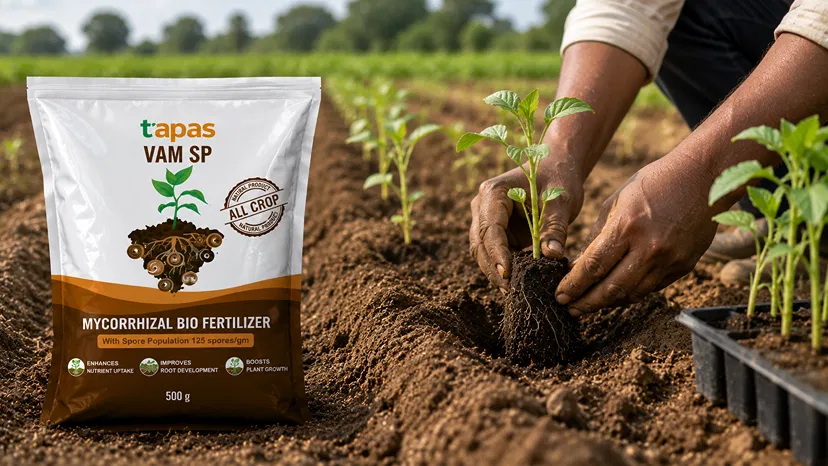
Farmers and gardeners increasingly use mycorrhizal fungi to improve phosphorus uptake naturally. In sustainable agriculture, this can reduce the need for heavy fertilizer inputs while supporting healthier soil ecosystems.
Mycorrhiza is especially useful when:
- Soils are low in available phosphorus
- Crops are grown in dry or compacted conditions
- Plants are being transplanted and need root support
- Gardeners want to improve long-term soil fertility
To encourage mycorrhizal activity, growers often focus on soil health practices such as reduced tillage, compost addition, crop diversity, and avoiding excessive phosphorus fertilization.
Can Too Much Phosphorus Reduce Mycorrhiza?
Yes. When phosphorus is abundant, plants may rely less on fungal partners. In some cases, high phosphorus fertilization can reduce mycorrhizal colonization because the plant no longer needs the fungi as much.
This can create a cycle where the natural fungal network weakens over time. For that reason, balanced fertilization is important. More phosphorus is not always better. In fact, excessive phosphorus can reduce the very symbiosis that helps plants absorb nutrients efficiently in the first place.
How Mycorrhiza Supports Sustainable Plant Nutrition
Mycorrhiza offers a more natural and efficient way to support phosphorus uptake. Instead of relying only on synthetic fertilizers, plants can partner with fungi that already exist in healthy soils.
This approach supports sustainable farming by:
- Reducing nutrient waste
- Improving fertilizer efficiency
- Enhancing soil biological activity
- Supporting long-term plant resilience
In the bigger picture, mycorrhizal fungi help create a healthier ecosystem underground. They connect plants to nutrients, water, and microbial life in ways that improve both productivity and soil vitality.
Conclusion
Mycorrhiza and phosphorus uptake are closely linked in one of nature’s most effective partnerships. By extending the root system, mycorrhizal fungi help plants access phosphorus that would otherwise remain unavailable in the soil. In exchange, plants provide the fungi with energy, creating a balanced and mutually beneficial relationship.
Whether you are a gardener, grower, or simply curious about how plants feed themselves, the science is clear: healthy mycorrhiza means better phosphorus uptake, stronger roots, and more resilient plants. Supporting this hidden fungal network is one of the smartest ways to improve plant nutrition naturally.
Final insight: If you want healthier plants and better nutrient efficiency, start by thinking below the surface—where mycorrhiza is quietly doing the real work.