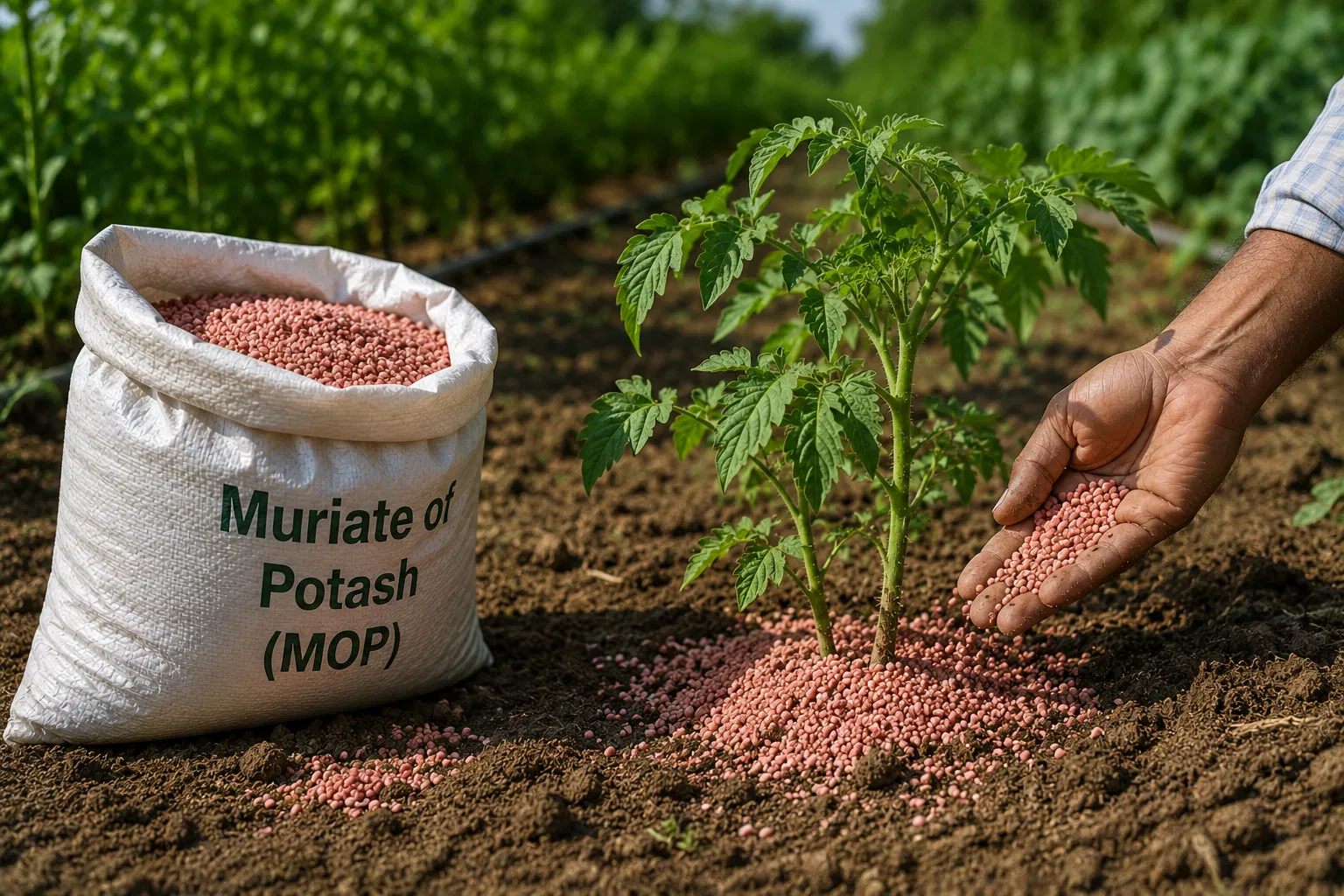
When crops need a dependable boost for strong growth, better yields, and improved resistance to stress, muriate of potash (MOP) is one of the most widely used potassium fertilizers in the world. Also known as potassium chloride, MOP is valued for its high potassium content and cost-effectiveness, making it a popular choice in agriculture, horticulture, and commercial farming.
But while MOP is powerful, it is not a fertilizer to use carelessly. The right dose depends on crop type, soil condition, irrigation method, and growth stage. Too little may limit yield potential, while too much can reduce nutrient balance and even damage sensitive crops.
What Is Muriate of Potash (MOP)?
Muriate of Potash is a potassium fertilizer composed mainly of potassium chloride (KCl). It typically contains about 60% to 62% potash (K2O), making it one of the most concentrated and economical sources of potassium available to farmers.
Potassium is an essential macronutrient that helps plants with:
- Water regulation
- Enzyme activation
- Photosynthesis efficiency
- Root development
- Fruit quality and size
- Resistance to drought, frost, and disease stress
Uses of Muriate of Potash
MOP is used across a wide range of crops because potassium is vital for plant health at nearly every stage of growth. Its most common applications include field crops, vegetables, fruits, and plantation crops.
1. Enhances Yield and Crop Quality
Potassium helps plants move sugars and nutrients efficiently. This directly supports better grain filling, larger fruits, improved tuber development, and stronger stalks. For many crops, adequate potassium is closely linked to higher yield and improved market quality.
2. Improves Stress Tolerance
Crops supplied with enough potassium are better able to handle stress from drought, heat, cold, and pests. Potassium helps regulate stomatal opening, which improves water use efficiency and reduces moisture loss.
3. Supports Strong Root and Stem Development
MOP is especially useful during vegetative growth and early reproductive stages. It encourages sturdy root systems and stronger stems, helping crops stand upright and absorb water and nutrients more effectively.
4. Boosts Fruit and Vegetable Development
For fruiting and tuber crops, potassium is essential for sweetness, color, firmness, size, and storage life. Crops like potatoes, tomatoes, bananas, citrus, sugarcane, and many vegetables respond well to balanced potassium nutrition.
5. Helps Correct Potassium Deficiency
When soil tests show low potassium levels, MOP is often the preferred corrective fertilizer. A potassium-deficient crop may show symptoms such as yellowing leaf margins, weak stems, poor flowering, and reduced fruit quality.
Recommended Dose of MOP
The correct dose of MOP varies depending on crop requirement, soil fertility, and method of application. A soil test is the best way to determine exact fertilizer needs. In general, the dose should be based on the crop’s potassium requirement and the nutrient status of the soil.
General Application Guidelines
- Field crops: Often applied during basal fertilization or split application depending on rainfall and crop duration.
- Vegetables: Applied in smaller doses, often split to reduce salt stress and improve uptake.
- Fruits and plantation crops: Typically applied around the root zone before active growth or fruiting.
- Fertigation: Can be used in soluble form where irrigation systems allow controlled feeding.
Typical Dose Range
Since crop needs vary widely, there is no single universal dose. However, farmers often apply MOP within a range that supplies the required potassium based on local recommendations. For example:
- Low-potassium soils: Higher doses may be needed to restore fertility.
- Medium-fertility soils: Moderate maintenance doses are often enough.
- High-potassium soils: Only small maintenance applications may be required.
For best results, MOP is usually applied along with nitrogen and phosphorus in a balanced fertilizer program. Potassium does not work in isolation; crops perform best when all major nutrients are supplied in the right ratio.
Best practice: Always follow soil test recommendations and local agronomic guidance before applying muriate of potash.
How to Apply MOP Correctly
Proper placement and timing are just as important as the dose. MOP can be applied by broadcasting, band placement, side dressing, or through fertigation, depending on the crop and irrigation system.
1. Basal Application
In many crops, MOP is applied before planting and incorporated into the soil. This ensures potassium is available early in root development.
2. Split Application
In sandy soils, high-rainfall areas, or long-duration crops, splitting the dose reduces nutrient loss and improves efficiency. This method is especially useful for vegetables and intensive horticulture.
3. Side Dressing
MOP can be applied alongside crop rows during growth stages when nutrient demand increases. Care should be taken to avoid direct contact with roots or stems.
4. Fertigation
Where irrigation systems allow, soluble potassium sources may be delivered through fertigation. This approach offers precise nutrient supply and better timing control.
Cautions and Precautions When Using MOP
Although MOP is highly effective, it is not suitable for every crop or condition. Its chloride content can be a concern in certain situations, especially for salt-sensitive plants.
1. Avoid Overuse
Applying too much MOP can create nutrient imbalance, especially by interfering with magnesium and calcium uptake. Excess potassium may also reduce crop quality in some cases.
2. Use Caution with Chloride-Sensitive Crops
Some crops do not tolerate chloride well. These may include certain fruits, tobacco, some vegetables, and greenhouse crops. In such cases, sulfate of potash (SOP) may be a better option.
3. Do Not Apply in Direct Contact With Seeds or Roots
MOP is a salt fertilizer and can cause burn if placed too close to seeds, seedlings, or delicate roots. Proper spacing and incorporation are important to prevent injury.
4. Watch for Salinity in Dry or Sandy Soils
In saline-prone areas or light soils, MOP may increase salt concentration around the root zone if overapplied. Irrigation management and split doses help reduce this risk.
5. Balance With Other Nutrients
Potassium works best as part of a complete fertility plan. If nitrogen, phosphorus, magnesium, sulfur, or micronutrients are deficient, crop response to MOP may be limited.
Signs Your Crop May Need Potash
Potassium deficiency can reduce both yield and quality. Common signs include:
- Yellowing or browning along leaf edges
- Weak stems and poor lodging resistance
- Slow growth and small leaves
- Poor fruit filling or low sugar content
- Reduced resistance to drought and disease
However, visual symptoms alone are not enough for accurate diagnosis. Soil testing and plant tissue analysis provide better guidance for fertilizer decisions.
MOP vs SOP: Which One Should You Choose?
MOP is usually the more economical potassium source, but it is not always the best option. The main difference is chloride content.
- MOP: Best for chloride-tolerant crops, field crops, and general agricultural use
- SOP: Preferred for chloride-sensitive crops and premium horticultural production
If crop sensitivity, soil salinity, or product quality is a concern, SOP may be worth the higher cost. Otherwise, MOP remains a practical and effective option for many farms.
Conclusion
Muriate of Potash is one of the most important potassium fertilizers in modern agriculture. It supports stronger roots, better stress tolerance, improved fruit quality, and higher yields when used correctly. The key is not just applying MOP, but applying it at the right dose, at the right time, and for the right crop.
Before using MOP, always consider your soil test results, crop sensitivity, and local recommendations. With smart management, muriate of potash can become a reliable part of a profitable and productive fertilizer program.
Final takeaway: Use MOP wisely, balance it with other nutrients, and choose the application method that best fits your crop and soil conditions for the best possible results.