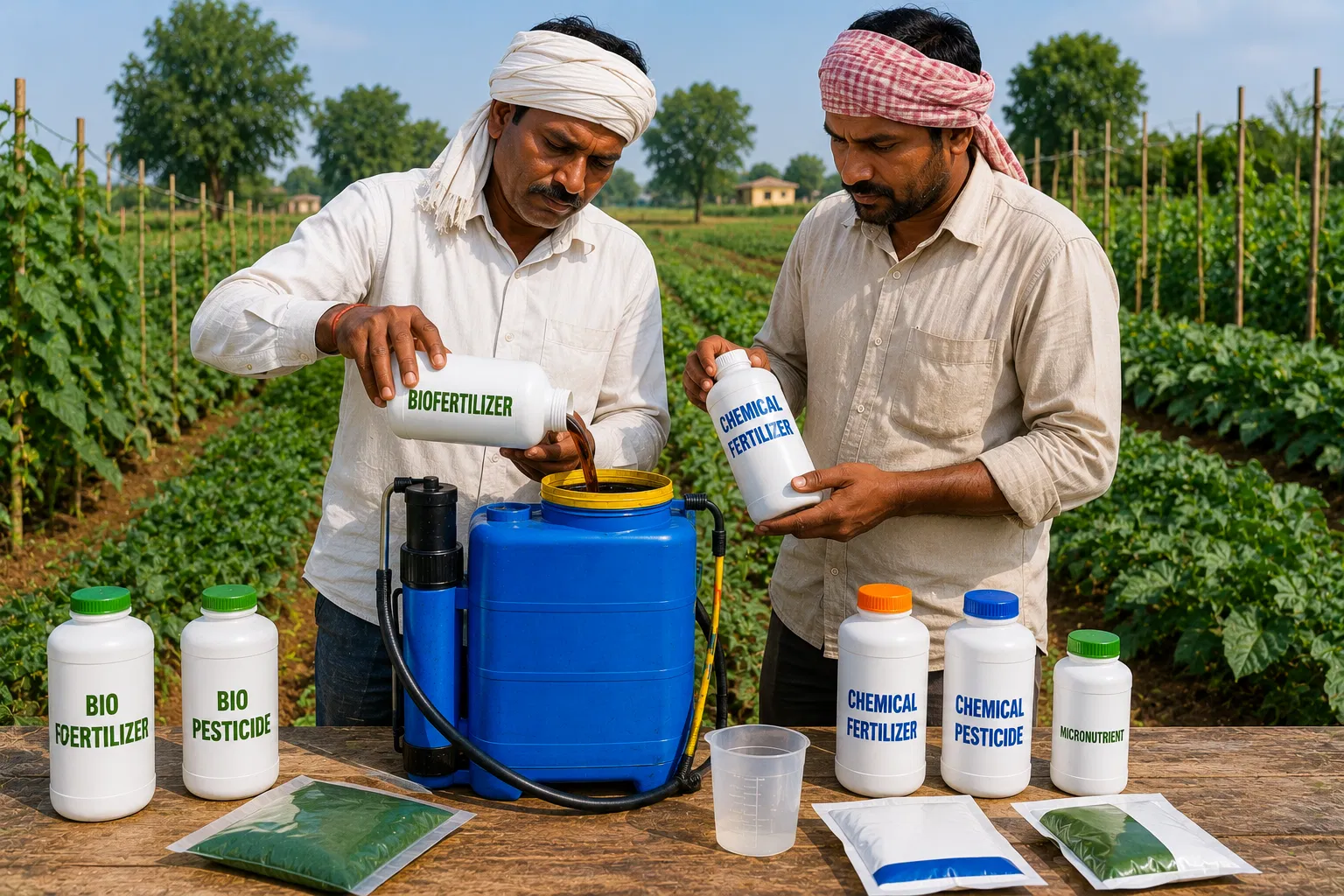
Biofertilizers contain living microorganisms, so they cannot be handled like ordinary chemical products. A tank mix or seed-treatment sequence that is harmless to a mineral nutrient may kill bacteria or fungi before they ever reach the crop. The safest approach is to understand compatibility, keep incompatible products separate, and follow the label for every input.
Reliable bio-fertilizers can support nutrient fixation, solubilisation, root growth, and soil biological activity. Their benefits depend on microbial survival, which means storage, water quality, timing, and chemical exposure all matter.
Why Chemical Inputs Can Reduce Biofertilizer Performance
Biofertilizers may contain Rhizobium, Azotobacter, Azospirillum, phosphate-solubilising bacteria, potassium-mobilising organisms, mycorrhizal fungi, or other beneficial microbes. Many chemical inputs are designed to suppress living organisms, alter pH, or create high salt concentrations. Direct contact can therefore damage the inoculant.
The main risks are:
- Fungicides or bactericides killing beneficial microorganisms
- Concentrated salts drawing water out of microbial cells
- Strongly acidic or alkaline solutions reducing viability
- Chlorinated or contaminated water harming live cultures
- Long tank-holding periods reducing microbial activity
Inputs That Commonly Need Separation
Fungicides and bactericides
These products are among the highest-risk partners because they are intended to control fungi or bacteria. Mycorrhizal inoculants, bacterial cultures, and microbial seed treatments should not be mixed directly with them unless the manufacturer specifically confirms compatibility.
Strong insecticide seed dressings
Some insecticidal seed products may be compatible with selected inoculants, while others may reduce microbial survival. Follow the recommended order for seed treatment. In many programs, the chemical coating is applied first, allowed to dry, and the biological inoculant is applied closest to sowing.
Concentrated soluble fertilizers
High-strength nutrient solutions can create osmotic stress. Avoid mixing concentrated fertilizers directly with microbial products unless the label provides a tested method and dilution.
Highly chlorinated water
Chlorine is used to suppress microorganisms in water systems, so it may also harm beneficial cultures. Use clean water within the product's recommended quality range. Where permitted, allow treated water to stand or use an approved dechlorination method before preparing the biological solution.
Strong acids, alkalis, and disinfectants
Tank cleaners, sanitisers, pH-adjusting acids, lime solutions, and strong alkaline materials may damage microbes. Rinse tanks and lines thoroughly before biological application.
Can Biofertilizers Be Used With Chemical Fertilizers?
Yes, they can be part of the same nutrient program, but that does not mean they should be mixed in one tank. Mineral nutrients may supply an immediate measured dose, while biofertilizers improve biological nutrient access. Apply each product using the method and timing recommended on its label.
For example, a crop may receive a basal nutrient application during land preparation and a microbial inoculant through seed coating, root dipping, or a separate soil application. Physical separation protects the organisms while allowing both inputs to contribute.
Safe Application Sequences
For treated seed
- Confirm that all products are registered or recommended for the crop.
- Check the compatibility instructions on both labels.
- Apply the chemical protectant first when that sequence is recommended.
- Allow the seed to dry in shade.
- Apply the microbial inoculant shortly before sowing.
- Sow promptly into moist soil.
For soil application
Mix the microbial product with cool, fully decomposed compost or farmyard manure when the label permits it. Do not use hot, fresh manure. Apply the mixture to moist soil and avoid immediate exposure to incompatible crop protection chemicals.
For fertigation
Use only formulations approved for irrigation systems. Clean the tank and lines, check water quality, and apply the biofertilizer in a separate irrigation event when compatibility is uncertain. Do not leave the diluted microbial solution standing for long periods.
Tank-Mixing Rules
- Never assume two products are compatible because both are labelled organic or biological.
- Do not rely on a jar test alone; physical mixing can look normal even when microbes are killed.
- Use only label-approved combinations.
- Prepare the solution immediately before use.
- Keep the tank shaded and avoid hot water.
- Do not add unapproved adjuvants.
How Much Separation Time Is Needed?
There is no universal interval. The correct separation depends on the microorganism, chemical active ingredient, crop, formulation, and application method. Product labels or local agronomic recommendations should provide the interval. When no tested guidance exists, use separate applications and consult the manufacturer or an agricultural professional.
Warning Signs of Poor Compatibility
Field symptoms do not always prove incompatibility, but possible signs include weak nodulation in legumes, poor root colonisation, lack of expected crop response, sediment formation, blocked filters, or severe reduction in microbial performance compared with untreated areas.
Keep records of the product batch, storage history, water source, mixing sequence, application date, and weather. These details help diagnose failures.
Common Mistakes to Avoid
- Mixing a fungicide directly with a fungal inoculant
- Using an expired microbial product
- Adding biofertilizer to a tank containing pesticide residue
- Using hot or highly chlorinated water
- Leaving treated seed in the sun
- Applying microbes to dry, waterlogged, or highly saline soil
- Reducing essential crop nutrition without soil testing
Final Thoughts
Biofertilizers and chemical inputs can support the same crop program, but careless mixing can destroy the living organisms. Keep high-risk chemicals separate, follow tested application sequences, protect microbes from heat and sunlight, and use clean equipment and suitable water.
The safest rule is simple: when compatibility is not clearly confirmed, do not mix. Apply the products separately and let each work under the conditions it needs.