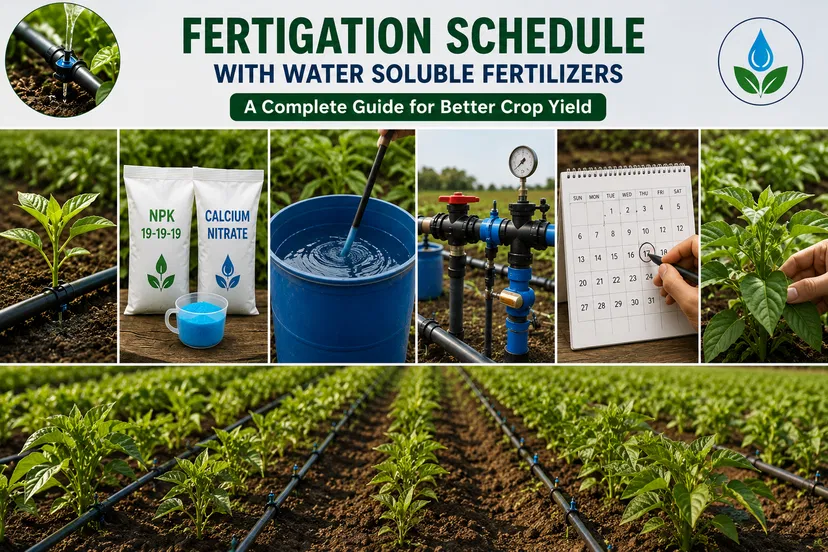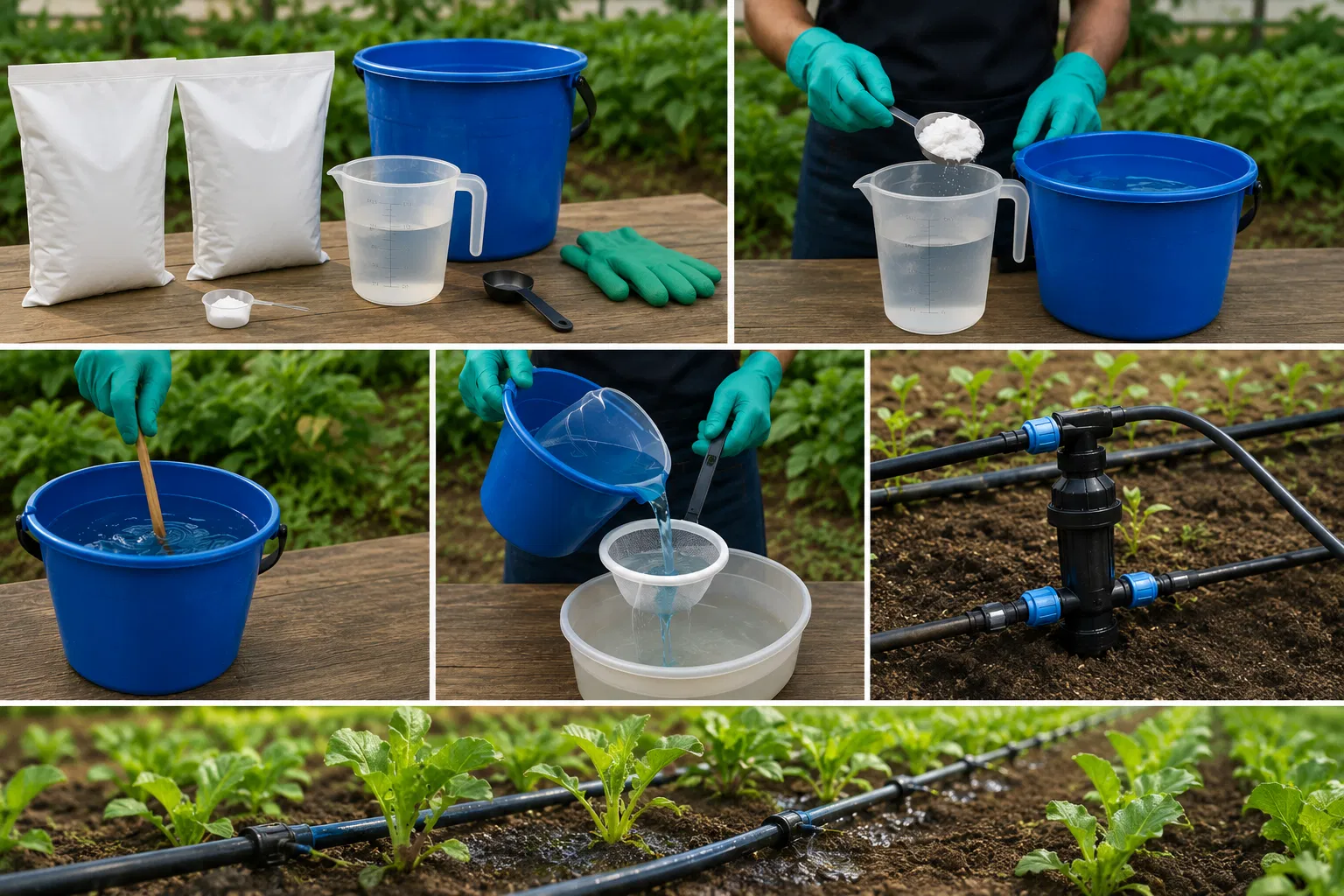
When used correctly, water-soluble fertilizers for drip irrigation can dramatically improve crop growth, nutrient efficiency, and yield. But mixing them the wrong way can clog emitters, waste nutrients, and reduce plant performance. If you want a cleaner system and better results, learning how to mix these fertilizers properly is essential.
In this guide, you’ll learn exactly how to prepare water-soluble fertilizers for drip systems, which mistakes to avoid, and how to keep your irrigation setup running smoothly.
What Are Water-Soluble Fertilizers?
Water-soluble fertilizers are nutrients formulated to dissolve completely in water. This makes them ideal for fertigation, the process of delivering fertilizer through an irrigation system. Because they travel with the water, plants receive nutrients faster and more evenly.
These fertilizers are commonly used in:
- Drip irrigation systems
- Greenhouses
- Vegetable production
- Orchards and vineyards
- Hydroponic setups
The main advantage is precision. You can feed crops exactly what they need, when they need it.
Why Proper Mixing Matters
Mixing water-soluble fertilizers correctly is not just about convenience. It affects fertilizer performance, system health, and crop response. Poor mixing can create sediment, chemical reactions, or uneven nutrient delivery.
Proper mixing helps you:
- Prevent clogging in emitters and lines
- Improve nutrient uptake
- Maintain uniform application
- Reduce fertilizer waste
- Protect pumps and injectors
Good fertigation starts with clean water, correct dilution, and compatible nutrient combinations.
Step 1: Check Your Water Quality
Before mixing any fertilizer, test your water. Water quality plays a major role in how well fertilizers dissolve and how safe they are for your irrigation system.
Pay attention to:
- pH level – affects nutrient availability and stability
- Hardness – high calcium or magnesium can cause precipitation
- EC or salinity – too much dissolved salt can stress plants
- Iron, bicarbonates, and other minerals – can react with certain fertilizers
If your water is hard or alkaline, you may need to acidify it or adjust your fertilizer choice to avoid clogging and nutrient lockout.
Step 2: Choose the Right Fertilizer
Not all fertilizers are suitable for drip irrigation. You need products specifically labeled as water-soluble and compatible with fertigation systems.
Common water-soluble fertilizer sources include:
- Urea for nitrogen
- Calcium nitrate for calcium and nitrogen
- Potassium nitrate for potassium and nitrogen
- Monoammonium phosphate (MAP) for phosphorus and nitrogen
- Magnesium sulfate for magnesium and sulfur
- Micronutrient blends for trace elements
Always check product labels for solubility, compatibility, and recommended application rates.
Step 3: Know Which Fertilizers Should Not Be Mixed
Some fertilizers react with each other and form insoluble compounds. These can settle out and block drip emitters.
Do not mix calcium products directly with phosphates or sulfates in the same tank unless the product label specifically allows it.
Common incompatible combinations include:
- Calcium nitrate + phosphate fertilizers
- Calcium nitrate + magnesium sulfate
- Iron fertilizers + high-pH solutions
- Concentrated stock solutions containing opposite ions that may precipitate
If you need to use incompatible nutrients, apply them in separate tanks or at different times through the irrigation cycle.
Step 4: Use the Correct Mixing Order
The order in which you mix fertilizers matters. A smart mixing sequence helps ingredients dissolve fully and reduces the risk of precipitation.
- Fill the mixing tank halfway with clean water.
- Start agitation or circulation if available.
- Add one fertilizer at a time, beginning with the most soluble product.
- Allow each product to dissolve completely before adding the next.
- Top up the tank with water to the final volume.
- Mix thoroughly before injecting into the drip system.
Never dump all fertilizers into a tank at once. Slow, controlled mixing is much safer and more effective.
Step 5: Make a Small Test Batch First
Before preparing a full tank, test a small batch to confirm compatibility. This simple step can save time, money, and equipment damage.
To test:
- Use a clear container or jar
- Mix the intended fertilizers in the same ratio you plan to use
- Shake or stir well
- Wait 15 to 30 minutes
- Check for cloudiness, flakes, sludge, or heat buildup
If the solution stays clear and stable, it is more likely to be safe for your irrigation system.
Step 6: Measure Accurately
Precision is crucial in fertigation. Too little fertilizer leads to deficiencies, while too much can burn roots or create salinity problems.
Use:
- A reliable scale for dry fertilizers
- Clean measuring containers
- Graduated tanks or markings
- EC meters and pH meters where needed
Follow crop-specific recommendations and adjust based on growth stage, soil conditions, and irrigation volume.
Step 7: Filter the Solution Before Injection
Even when fertilizers dissolve well, tiny particles can still remain in the solution. Filtering adds another layer of protection for your drip irrigation system.
Use proper filtration before the injectors and make sure your drip lines already have system filters installed. This is especially important when using custom blends or micronutrient products.
Step 8: Monitor pH and EC
For best results, check both pH and electrical conductivity after mixing. These values help you understand how the solution will behave and whether it fits the crop’s needs.
Why this matters:
- pH affects nutrient availability and chemical stability
- EC indicates total dissolved salts and fertilizer strength
Keeping the solution within the correct range helps plants absorb nutrients efficiently while reducing system issues.
Step 9: Inject at the Right Time
After mixing, apply the fertilizer solution during the irrigation cycle when water is flowing steadily. Many growers inject nutrients after the system has fully pressurized and before the end of the cycle.
A common approach is:
- Start with plain water to wet the soil
- Inject fertilizer during the middle portion of irrigation
- Flush the system with clean water at the end
This method helps move nutrients into the root zone and reduces residue in the lines.
Best Practices for Mixing Water-Soluble Fertilizers
To keep your fertigation program effective, follow these practical habits:
- Use clean tanks and tools every time
- Store fertilizers in a dry, cool place
- Keep products sealed to prevent moisture absorption
- Never mix concentrate with concentrate unless compatibility is confirmed
- Flush drip lines regularly
- Track application rates and crop response
Consistency is just as important as the fertilizer itself. A well-managed system delivers better results with less waste.
Common Mistakes to Avoid
Even experienced growers can make simple errors when preparing water-soluble fertilizers for drip irrigation. Avoid these common mistakes:
- Using fertilizers not designed for fertigation
- Skipping compatibility checks
- Mixing too quickly without full dissolution
- Ignoring water quality problems
- Failing to flush the system after injection
- Guessing application rates instead of measuring accurately
Each of these mistakes can reduce performance and increase maintenance costs.
Conclusion
Learning how to mix water-soluble fertilizers for drip irrigation is one of the most valuable skills in modern crop management. When you use the right products, mix them in the correct order, and pay attention to water quality and compatibility, you create a nutrient delivery system that supports healthier plants and stronger yields.
Take the time to mix carefully, test before applying, and monitor your system regularly. That simple discipline can make a major difference in both crop performance and irrigation efficiency.
For growers who want better results from fertigation, proper mixing is not optional—it is the foundation.