After a spell of rain, kharif crops often bounce back with fresh growth—but so do crop pests. Warm temperatures, high humidity, and soft new leaves create the perfect environment for insects to multiply fast. If farmers do not monitor fields closely after rainfall, a small pest problem can quickly become a major crop loss.
Understanding the common pests in kharif crops after rain is the first step toward timely control. From sucking insects to stem borers and leaf feeders, several pests become more active once moisture rises. Early detection, regular scouting, and prompt action can protect yield and reduce unnecessary pesticide use.
Why Pest Pressure Increases After Rain
Rain changes the field environment in ways that favor many pests. Moist soil and lush crop growth create ideal breeding conditions, while cloudy weather can also reduce the activity of natural predators. As a result, insects feed, reproduce, and spread more rapidly.
Key reasons pest outbreaks rise after rainfall include:
- Higher humidity supports egg hatching and insect survival.
- Fresh flush growth provides tender plant tissue for feeding.
- Poor drainage can weaken crops, making them more vulnerable.
- Dense crop canopy creates shelter for pests.
- Reduced sunlight can lower the activity of beneficial insects.
Common Kharif Pests Farmers Should Watch After Rain
1. Stem Borers
Stem borers are among the most damaging pests in kharif crops such as rice, maize, and sorghum. The larvae bore into stems and feed inside, causing dead hearts in young plants and white ears or panicles later in the season.
Signs to watch:
- Dead central shoot in young plants
- Small holes on stems
- Dry or broken tillers
- Uneven crop growth
After rain, stem borer activity can rise because soft plant tissue is easier to attack. Regular field inspection is essential, especially in areas with dense planting.
2. Brown Planthopper
The brown planthopper is a serious pest in paddy fields. It feeds by sucking sap from the base of rice plants, which weakens the crop and may lead to hopper burn in severe cases. Humid conditions after rain often increase its spread.
Signs to watch:
- Yellowing patches in the field
- Wilting plants despite adequate moisture
- Insects clustered near the lower stem
- Black sooty mold from honeydew buildup
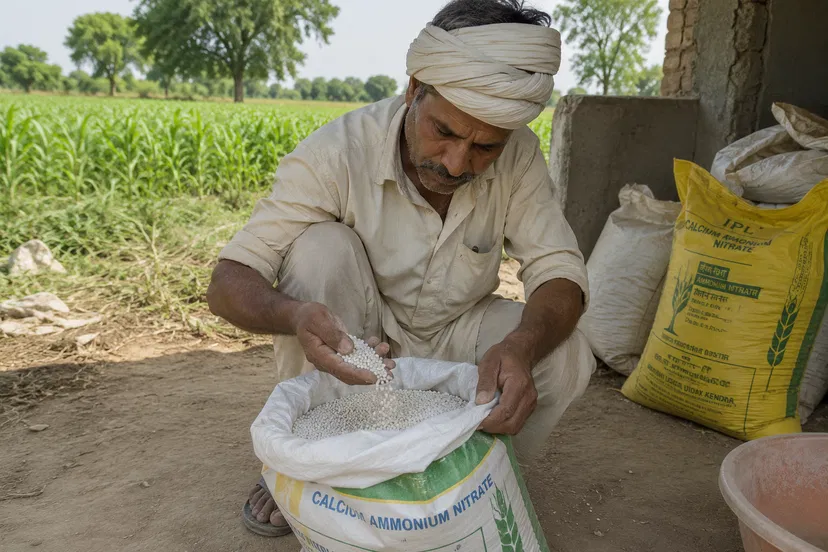
Farmers should avoid excessive nitrogen fertilizer, as it can attract planthoppers and make the crop more susceptible.
3. Leaf Folder
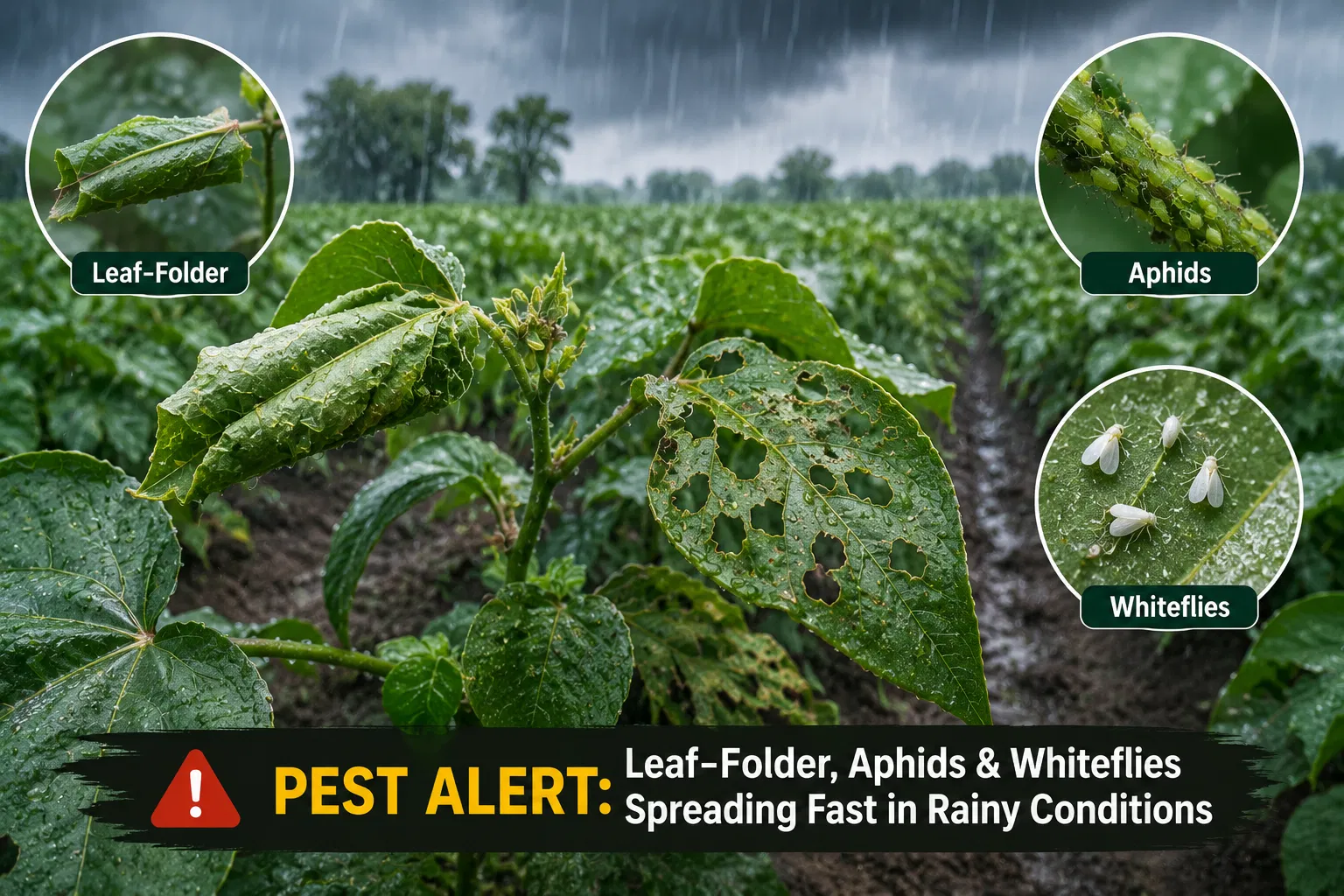
Leaf folders are common in rice fields after wet weather. The caterpillars fold leaves and feed inside, reducing the plant's ability to photosynthesize. While the damage may look minor at first, heavy infestation can reduce tillering and grain formation.
Signs to watch:
- Folded or rolled leaves
- Scraped green tissue inside the folds
- Whitish patches on leaves
- Reduced vigor in affected plants
Fields with thick, lush growth after rain are especially attractive to leaf folders.
4. Aphids
Aphids attack many kharif crops including cotton, pulses, vegetables, and oilseeds. They feed on plant sap and can transmit viral diseases. Their populations often increase rapidly in humid, moderate weather after rainfall.
Signs to watch:
- Curled or yellowing leaves
- Sticky honeydew on plants
- Ant activity around infested plants
- Stunted growth in young crops
Because aphids reproduce quickly, even a few colonies can become a large infestation in a short time.
5. Whiteflies
Whiteflies are a major pest in cotton, okra, soybean, and vegetable crops. They thrive in warm, moist conditions and often appear in large numbers after rain. Like aphids, they suck sap and may spread plant viruses.
Signs to watch:
- Small white insects flying when plants are disturbed
- Leaf yellowing and curling
- Sticky leaves due to honeydew
- Sooty mold growth on foliage
Whiteflies are especially troublesome in crops with excessive weed growth nearby, so field sanitation matters.
6. Thrips
Thrips are tiny but destructive pests that damage tender leaves, buds, and flowers. They are common in onion, chilli, cotton, and several vegetable crops. After rains, they can move quickly to new plant growth and cause serious stress in seedlings and flowering crops.
Signs to watch:
- Silvery streaks on leaves
- Leaf curling or bronzing
- Flower drop in sensitive crops
- Stunted new growth
Thrips are easy to miss unless farmers inspect plants closely, especially the undersides of leaves.
7. Cutworms
Cutworms are soil-dwelling caterpillars that attack seedlings at night. They cut young plants at the base, causing patchy stand loss in crops such as maize, soybean, vegetables, and groundnut. Moist soil after rain can create favorable conditions for cutworm activity.
Signs to watch:
- Seedlings cut near the soil surface
- Missing plants in rows
- Cutworm larvae curled in the soil during the day
- New damage appearing overnight
Young crops are most vulnerable, so early monitoring is critical.
8. Armyworms
Armyworms are fast-moving leaf feeders that can strip crops quickly if not controlled early. They often affect maize, sorghum, millet, and pasture crops. After rainfall, their population may increase when fields remain lush and weeds are abundant.
Signs to watch:
- Irregular holes in leaves
- Defoliation starting at leaf edges
- Clusters of caterpillars on plants
- Black droppings near feeding sites
Scouting field borders is important because armyworms often enter from surrounding vegetation.
How Farmers Can Spot Pest Problems Early
Regular scouting is the most effective way to reduce pest damage after rain. Farmers should inspect fields at least once or twice a week, and more often during warm, humid conditions.
- Walk through the field in a zigzag pattern.
- Check the underside of leaves, stems, and growing points.
- Look for egg clusters, larvae, webbing, and feeding marks.
- Note whether the damage is scattered or spreading quickly.
- Pay close attention to low-lying, waterlogged, or densely planted patches.
Tip: Use a simple field notebook to record pest appearance, crop stage, and weather conditions. This helps identify recurring outbreak patterns.
Practical Pest Management Steps After Rain
Good pest control starts with prevention. Farmers can lower the risk of outbreaks by combining field hygiene, crop care, and timely intervention.
- Remove weeds that can host pests.
- Improve drainage to avoid waterlogging and crop stress.
- Avoid excess nitrogen, which may attract sucking pests.
- Encourage beneficial insects such as ladybirds and spiders.
- Use pheromone traps or light traps where suitable.
- Apply crop protection measures only when needed and according to local recommendations.
Integrated pest management is always better than relying only on pesticides. Healthy crops, clean fields, and frequent observation can prevent many serious losses.
When to Take Immediate Action
Not every pest sighting requires urgent treatment, but some situations need fast response. If pest numbers are rising sharply, plants are wilting, or damage is spreading across the field, farmers should act quickly.
If new growth is being destroyed, seedlings are dying, or pest clusters are multiplying after rain, immediate intervention can save the crop.
Farmers should seek guidance from local agricultural experts or extension officers for crop-specific control options, especially before applying any spray.
Final Takeaway
Rain brings relief to kharif crops, but it also triggers pest outbreaks that can reduce yield if ignored. By watching for stem borers, planthoppers, leaf folders, aphids, whiteflies, thrips, cutworms, and armyworms, farmers can catch problems early and protect their fields.
Stay alert after every rainfall, scout regularly, and act fast at the first sign of infestation. In kharif farming, timely pest monitoring is one of the simplest and most effective ways to safeguard your harvest.