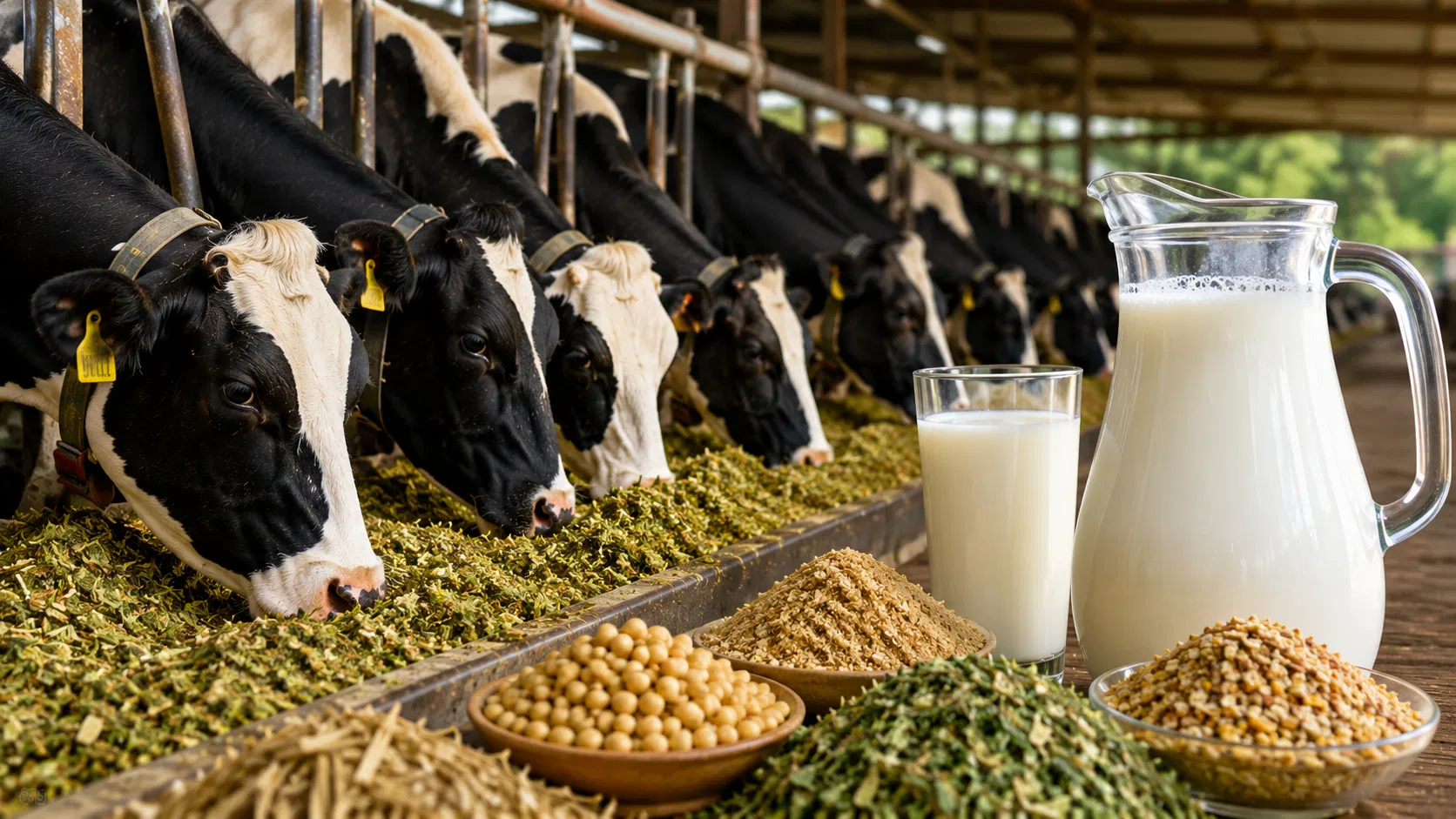
If your herd is producing plenty of milk but the butterfat test is lower than expected, the answer often starts in the feed bunk. Milk fat content is closely tied to diet quality, rumen health, and feeding consistency. With the right nutrition strategy, dairy producers can support healthier cows, improve milk composition, and boost overall milk value.
Proper feeding is not about simply giving cows more feed. It is about balancing energy, fiber, protein, and rumen function so cows can produce milk with stronger fat levels. When nutrition is managed well, milk fat content can improve steadily and sustainably.
Why Milk Fat Content Matters
Milk fat is one of the most valuable components of milk. Higher butterfat can improve milk checks, support product quality, and reflect better rumen performance. A drop in milk fat often signals an issue with feeding, digestion, or overall cow comfort.
Because milk fat is so sensitive to dietary changes, it serves as a useful indicator of herd nutrition. When cows are fed properly, they are more likely to maintain a healthy rumen environment that supports optimal fat synthesis.
Start with a Balanced Total Ration
The foundation of boosting milk fat content is a well-formulated total mixed ration or balanced feeding program. Cows need enough energy to produce milk, but too much rapidly fermentable starch can reduce butterfat levels.
A balanced ration should include:
- High-quality forage
- Appropriate levels of effective fiber
- Controlled starch and sugar levels
- Proper protein balance
- Healthy fat inclusion, when needed
The goal is to feed for rumen stability. If the rumen stays stable, milk fat production is more likely to stay strong.
Prioritize High-Quality Forage
Forage is one of the most important tools for improving milk fat content. Good-quality haylage, silage, pasture, or dry hay helps stimulate chewing and saliva production, which buffers rumen pH and supports fiber digestion.
When forage is too mature, too wet, or poorly preserved, it can reduce intake and limit fat production. On the other hand, consistently high-quality forage helps cows maintain energy intake without upsetting the rumen.
Look for forage that is:
- Clean and free of mold
- Properly harvested and stored
- Digestible and palatable
- Consistent in particle size and moisture
Feeding enough forage is not enough if the quality is poor. Digestibility matters just as much as quantity.
Make Effective Fiber a Daily Priority
Effective fiber is the type of fiber that encourages rumination and helps maintain the rumen’s natural function. It is essential for producing milk fat because it supports acetate production, a key precursor for fat synthesis in the mammary gland.
Signs that cows may not be getting enough effective fiber include loose manure, reduced cud chewing, low butterfat, and inconsistent rumen activity.
To improve effective fiber intake:
- Use forages with the right particle length
- Avoid excessive processing of roughage
- Limit the amount of finely ground feed ingredients
- Mix rations consistently to prevent sorting
A cow that chews more produces more saliva, and more saliva helps keep the rumen environment stable. That stability supports better milk fat output.
Control Starch Without Undersupplying Energy
Energy is critical for milk production, but too much starch can depress milk fat. Rapid fermentation in the rumen can lower pH and disrupt fiber digestion, which often leads to lower butterfat percentages.
The key is not to eliminate starch, but to manage it carefully. A feeding program that balances starch sources, processing levels, and total inclusion rate can help preserve milk fat while still supporting production.
Useful feeding strategies include:
- Using moderate levels of starch in the ration
- Choosing grains with predictable fermentation rates
- Avoiding overprocessing of corn and other grains
- Feeding meals at consistent times each day
When starch is managed correctly, cows can get the energy they need without sacrificing milk fat content.
Include the Right Types of Fat
Dietary fat can support energy density, but too much unsaturated fat can interfere with rumen fermentation and depress milk fat. That is why fat supplementation must be handled carefully.
For many herds, the best approach is to use protected or rumen-inert fat sources when extra energy is needed. These products are designed to provide calories without disrupting the rumen microbes that are essential for milk fat synthesis.
When adding fat to the ration, remember:
- Use fat strategically, not excessively
- Avoid overfeeding free oils or unsaturated fat sources
- Monitor milk response after ration changes
- Work with a nutritionist to stay within safe limits
Feeding too much fat can do more harm than good, especially if it affects fiber digestion.
Keep the Rumen Environment Stable
Milk fat production depends heavily on rumen health. If the rumen becomes acidic or unstable, fiber-digesting bacteria are impaired and milk fat can drop quickly. This is one of the most common causes of butterfat depression in dairy herds.
To support a healthy rumen:
- Feed at consistent intervals
- Prevent feed sorting
- Maintain clean, accessible water
- Avoid sudden ration changes
- Use buffers when appropriate
Rumen stability is often the missing link between a “good” ration and a truly effective one. Even small feeding disruptions can show up in milk fat results.
Monitor Feed Intake and Cow Behavior
Feed formulation is only part of the picture. To boost milk fat content, cows must actually consume the ration consistently. Reduced intake, heat stress, overcrowding, and poor bunk management can all interfere with nutrient intake and lower milk fat.
Watch for signs such as:
- Feed sorting at the bunk
- Uneven manure consistency
- Reduced cud chewing
- Declines in milk fat percentage
- Lower overall milk yield
Small changes in cow behavior often provide early warnings of nutrition problems. Regular observation can help catch issues before they affect the whole herd.
Don’t Overlook Minerals and Vitamins
While fiber and starch get most of the attention, minerals and vitamins also support milk fat production by helping cows stay healthy and metabolically efficient. A deficiency or imbalance can reduce feed utilization and limit milk component performance.
Important nutrients include:
- Calcium
- Magnesium
- Phosphorus
- Trace minerals such as zinc, copper, and selenium
- Vitamins A, D, and E
These nutrients support immune function, digestion, and metabolism, all of which influence how well cows convert feed into high-quality milk.
Work with a Nutritionist for Fine-Tuning
Every herd is different. Breed, stage of lactation, forage quality, climate, and production goals all affect how feeding programs should be designed. A professional dairy nutritionist can help balance rations for both milk yield and milk fat content.
A nutritionist can assist with:
- Ration formulation
- Forage testing and interpretation
- Monitoring milk components
- Adjusting feed based on production stages
- Preventing fat depression issues before they spread
Fine-tuning the ration often produces better results than making broad, unspecific changes.
Conclusion: Feed for Fat, Not Just Volume
Boosting milk fat content through proper feeding is about precision, consistency, and rumen-friendly nutrition. High-quality forage, effective fiber, controlled starch, careful fat inclusion, and stable feeding routines all work together to support better milk composition.
When cows are fed for rumen health and long-term performance, milk fat often improves naturally. If butterfat is lower than expected, start with the ration, observe cow behavior, and make targeted adjustments. In dairy production, the best results come from feeding smarter, not just feeding more.
Final insight: Strong milk fat begins with a healthy rumen, and a healthy rumen begins with proper feeding.