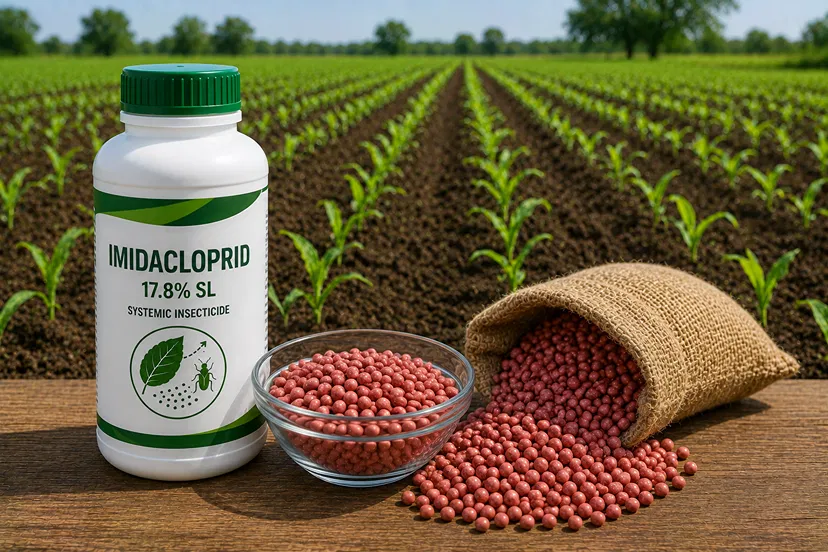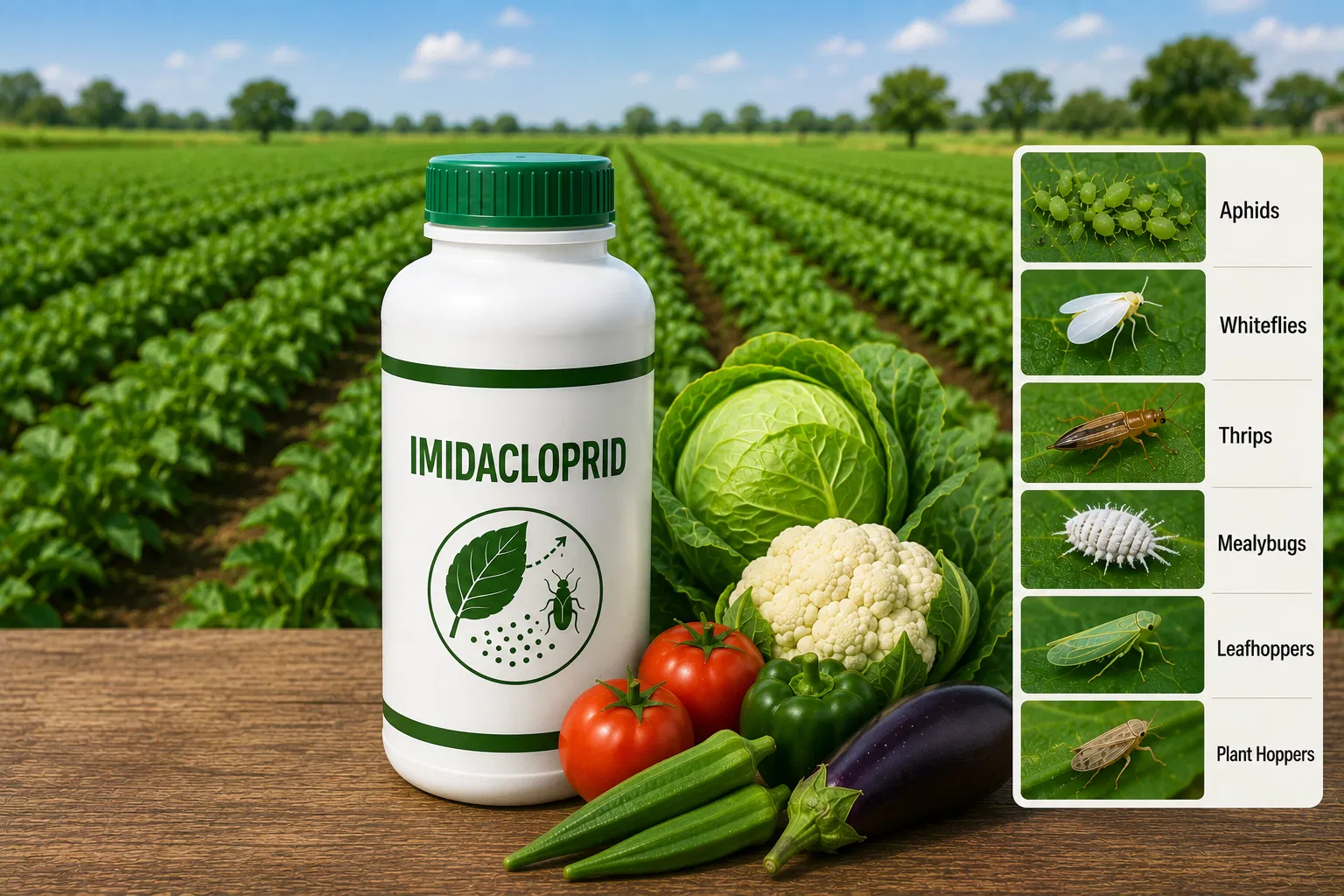
Imidacloprid is a systemic neonicotinoid insecticide used mainly against sap-feeding pests. It is available in several formulations, including soluble liquid, suspension concentrate, water-dispersible granules, seed-treatment products, and granules. Each formulation has different crop claims and rates.
When comparing imidacloprid insecticides, never transfer the rate from one formulation to another. A 17.8% SL product, a 70% WS seed dresser, and a 48% FS seed-treatment product are not interchangeable.
How Imidacloprid Works
Imidacloprid acts on insect nicotinic acetylcholine receptors. After foliar or soil application, systemic movement can protect treated plant tissue. Feeding insects ingest the active ingredient through sap or treated tissue.
Its main strength is control of sucking pests rather than large caterpillars or mites. Pest identification remains essential.
Common Target Pests
- Aphids
- Jassids or leafhoppers
- Whiteflies
- Thrips on selected label claims
- Plant hoppers in rice
- Psylla and leaf miners on selected fruit crops
- Termites in selected crops and formulations
- Hoppers on selected orchard crops
Target claims vary by formulation. Use imidacloprid only when both the crop and pest appear on the current label.
Official 17.8% SL Rate Examples
The following Indian label-claim examples show why a single universal dosage is unsafe:
| Crop | Target pests | Formulation per hectare | Water per hectare | Waiting period |
|---|---|---|---|---|
| Cotton | Aphid, whitefly, jassid, thrips | 100–125 ml | 500–700 L | 40 days |
| Paddy | Brown, white-backed and green leaf hoppers | 100–125 ml | 500–700 L | 40 days |
| Chilli | Jassid, aphid, thrips | 125–250 ml | 500–700 L | 40 days |
| Okra | Aphid, jassid, thrips | 100 ml | 500 L | 3 days |
| Tomato | Whitefly | 150–175 ml | 500 L | 3 days |
These examples apply specifically to imidacloprid 17.8% SL under the cited crop-pest claims. The product label in hand remains the controlling instruction.
Use in Cotton
In cotton, label claims commonly include aphids, whiteflies, jassids, and thrips. Scout the crop before spraying and avoid repeated neonicotinoid applications, especially when the population is already resistant or natural enemies are active.
Use in Tomato and Vegetables
For tomato, the official 17.8% SL example targets whitefly. This does not mean the same product automatically controls fruit borer, mites, leaf miner, or every sucking pest on tomato.
Vegetable harvest intervals can be short. Confirm the waiting period before application and record the spray date.
Application Method
- Identify the crop and target pest.
- Confirm the exact formulation and label claim.
- Calculate the field area accurately.
- Measure the formulation with a dedicated measuring device.
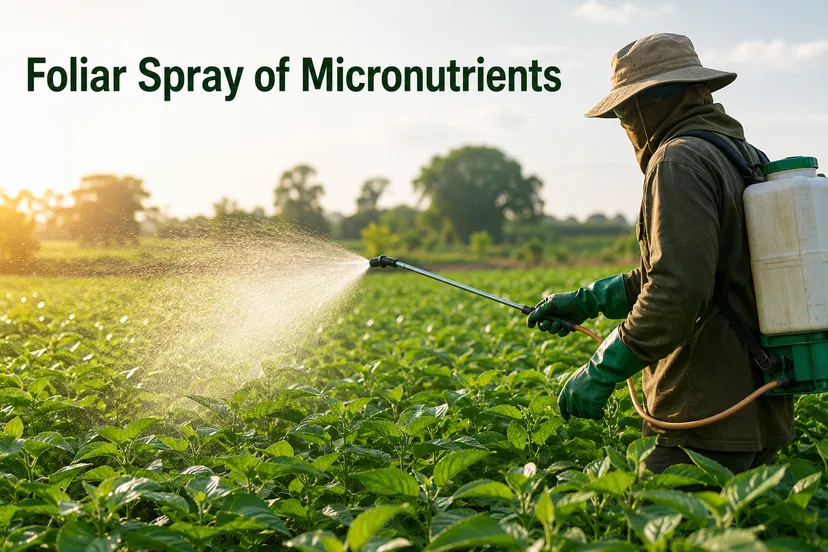
- Part-fill the tank, add the product as directed, and complete filling.
- Use calibrated sprayers for uniform coverage.
- Keep records of rate, area, date, pest, and weather.
Resistance Management
Imidacloprid belongs to IRAC Group 4A. Repeated use against successive pest generations can select resistant populations. Rotate to an effective insecticide from a different mode-of-action group and include non-chemical measures.
Do not rotate only between different Group 4 neonicotinoids and assume that resistance pressure has changed.
Pollinator and Environmental Precautions
Avoid spraying flowering crops when bees are foraging. Prevent drift and runoff into water bodies. Do not apply to crops, pests, or situations not included in the label.
Role in Integrated Crop Protection
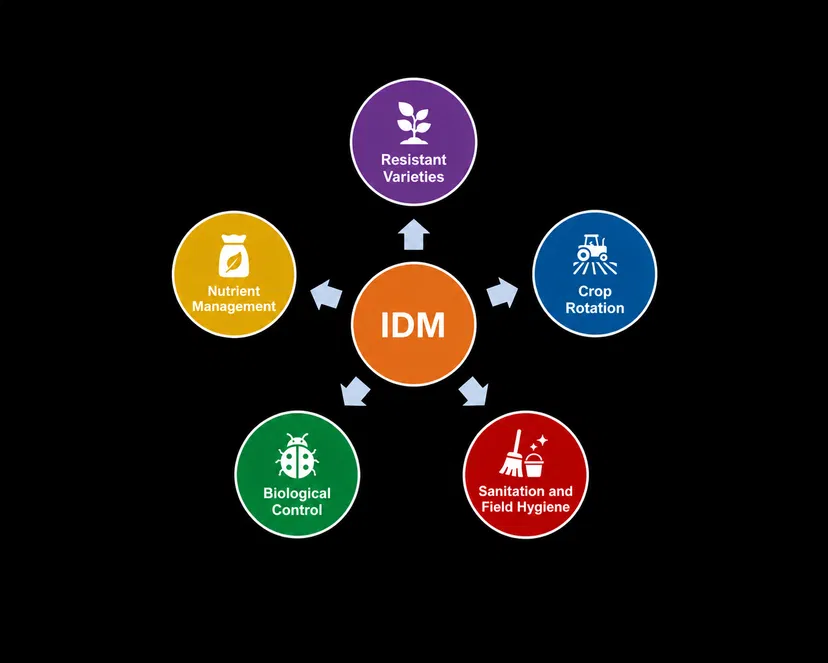
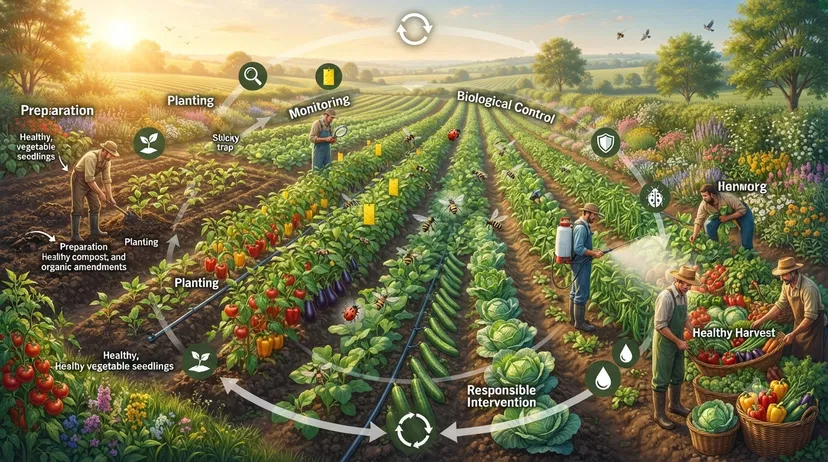
Imidacloprid should be one tool within integrated crop protection. Combine monitoring, resistant varieties, clean planting material, weed-host removal, sticky traps, biological control, and selective chemistry.
Common Mistakes
- Using a per-litre rate copied from a different crop
- Confusing 17.8% SL with 17.1% SL, 30.5% SC, 70% WG, 70% WS, or 48% FS
- Spraying for caterpillars or mites without a label claim
- Ignoring the pre-harvest interval
- Repeating the same mode of action
- Applying during pollinator activity
Final Thoughts
Imidacloprid can be effective against labelled sucking pests, but dosage is formulation-, crop-, and pest-specific. Confirm the label, calculate the field rate, respect the waiting period, and rotate modes of action.