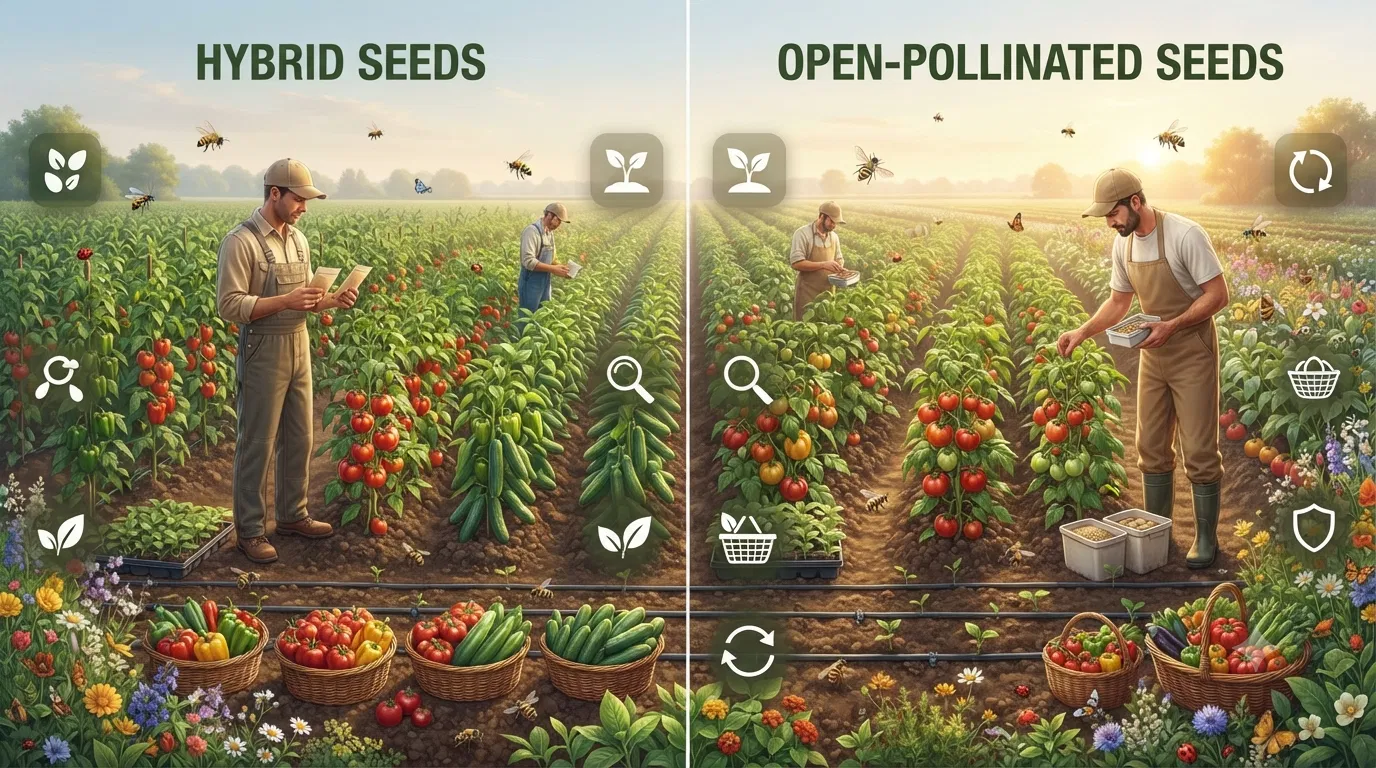
If you’re standing in a seed aisle wondering whether to choose hybrid vegetable seeds or open-pollinated seeds, you’re not alone. Both can grow healthy, productive plants, but they serve different goals. The best choice depends on what matters most to you: yield, flavor, seed saving, consistency, or adaptability.
Understanding the difference between hybrid vs open-pollinated vegetable seeds can help you make smarter gardening decisions and get better results from your garden season after season.
What Are Hybrid Vegetable Seeds?
Hybrid seeds are created by cross-pollinating two different parent plants with specific traits. The goal is to combine the best qualities of both parents into one new plant. These seeds are often labeled as F1 hybrids.
Hybrid vegetable seeds are commonly bred for:
- Higher yields
- Disease resistance
- Uniform size and shape
- Early maturity
- Improved shipping and shelf life
This makes hybrids especially popular for gardeners who want reliable harvests and visually consistent crops.
What Are Open-Pollinated Vegetable Seeds?
Open-pollinated seeds come from plants that are naturally pollinated by wind, insects, birds, or self-pollination. When grown in isolation, the plants produce seeds that grow into offspring very similar to the parent plant.
These seeds are often preferred for:
- Seed saving
- Heirloom varieties
- Genetic diversity
- Better adaptation over time
- Traditional flavor and characteristics
Many gardeners choose open-pollinated vegetable seeds because they can save seeds year after year and maintain a favorite variety.
Hybrid vs Open-Pollinated Vegetable Seeds: Key Differences
To choose the right seed type, it helps to compare them side by side.
1. Consistency
Hybrid seeds usually produce plants that are more uniform in size, shape, and harvest time. This is helpful if you want predictable results.
Open-pollinated plants may vary a bit more, but that variation can be a benefit if you value diversity in your garden.
2. Seed Saving
Open-pollinated seeds are ideal for seed saving because the offspring tend to resemble the parent plant.
Hybrid seeds, on the other hand, do not reliably “come true” from saved seed. The next generation may be inconsistent or different from the original plant.
3. Disease Resistance
Many hybrid vegetable seeds are bred for improved resistance to common diseases and pests. This can reduce crop loss and simplify garden care.
Open-pollinated varieties can also be hardy, but they may not offer the same level of built-in protection.
4. Flavor and Quality
Open-pollinated vegetables, especially heirlooms, are often chosen for outstanding flavor and traditional growing traits. Many gardeners believe they offer a more complex or authentic taste.
Hybrids can also taste excellent, especially modern varieties bred with flavor in mind. The idea that hybrids always taste worse is outdated.
5. Adaptability
Open-pollinated seeds can adapt over time to local growing conditions if gardeners save seeds from the best-performing plants.
Hybrids are designed for specific traits, so they may perform very well in many settings, but saved seed won’t maintain those same characteristics.
Bottom line: Hybrid seeds excel in performance and uniformity, while open-pollinated seeds excel in seed saving, adaptation, and preserving favorite varieties.
Why Choose Hybrid Vegetable Seeds?
Hybrid seeds are a smart choice if your main goal is a productive, dependable harvest. They are especially useful for gardeners who want to maximize output in a limited space or grow crops that face disease pressure.
Choose hybrid vegetable seeds if you want:
- Strong germination and vigorous growth
- Uniform fruits or vegetables
- Better resistance to diseases
- Higher yields in a small garden
- Faster harvests
They are a great option for popular crops like tomatoes, cucumbers, peppers, squash, and sweet corn, where performance and consistency can make a big difference.
Why Choose Open-Pollinated Vegetable Seeds?
Open-pollinated seeds are a favorite among gardeners who want to save money over time, preserve heritage varieties, or grow plants that can adapt to local conditions.
Choose open-pollinated vegetable seeds if you want:
- To save seeds from year to year
- Heirloom flavors and traditional varieties
- More genetic diversity
- Plants that can acclimate to your garden
- A more self-sustaining garden system
They’re especially popular with gardeners growing beans, lettuce, tomatoes, peppers, and herbs where preserving seed lines is important.
Which Seeds Are Better for Beginners?
For beginners, hybrid vegetable seeds can be a helpful starting point because they often provide more predictable results and stronger resistance to common problems. That means fewer surprises and a better chance of early success.
That said, open-pollinated seeds are also beginner-friendly, especially if your main goal is learning how plants grow and experimenting with seed saving.
If you are new to gardening, consider this simple rule:
- Choose hybrids for easier performance and reliability
- Choose open-pollinated for long-term seed saving and variety preservation
Can You Grow Both in the Same Garden?
Absolutely. In fact, many gardeners use both.
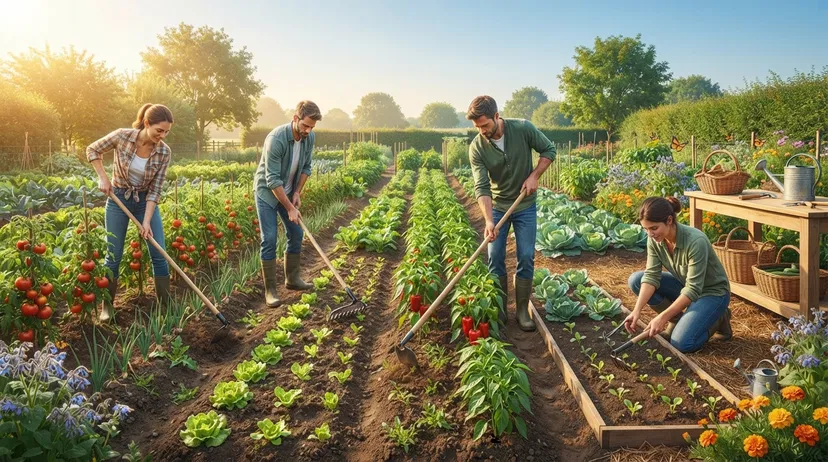
A balanced garden might include hybrid tomatoes for dependable harvests and open-pollinated beans or lettuce for seed saving. Mixing both types gives you the best of both worlds: productivity where you need it and sustainability where it matters most.
Here’s a practical approach:
- Use hybrids for crops that struggle in your climate or have high disease pressure.
- Use open-pollinated varieties for crops you love saving seed from.
- Test a few varieties each season to see what performs best in your space.
How to Decide What to Pick
When comparing hybrid vs open-pollinated vegetable seeds, the right answer depends on your gardening goals.
Ask yourself these questions:
- Do I want the highest possible yield?
- Is disease resistance important in my area?
- Do I want to save seeds for next season?
- Am I growing for flavor, consistency, or experimentation?
- Do I want a low-maintenance or self-sustaining garden?
If you value consistency, productivity, and resilience, hybrids may be the better pick. If you value seed saving, heritage varieties, and adaptability, open-pollinated seeds are likely the better fit.
Final Verdict: Hybrid vs Open-Pollinated Vegetable Seeds
There is no single winner in the hybrid vs open-pollinated vegetable seeds debate. Both have real advantages, and the best choice depends on what you want from your garden.
Pick hybrid seeds if you want uniform crops, strong yields, and better disease resistance.
Pick open-pollinated seeds if you want to save seeds, preserve heirloom varieties, and build a garden that evolves over time.
The smartest gardeners often use both. That way, they can enjoy the reliability of hybrids and the sustainability of open-pollinated varieties.
Start with your goals, choose the seed type that matches them, and your garden will thank you at harvest time.