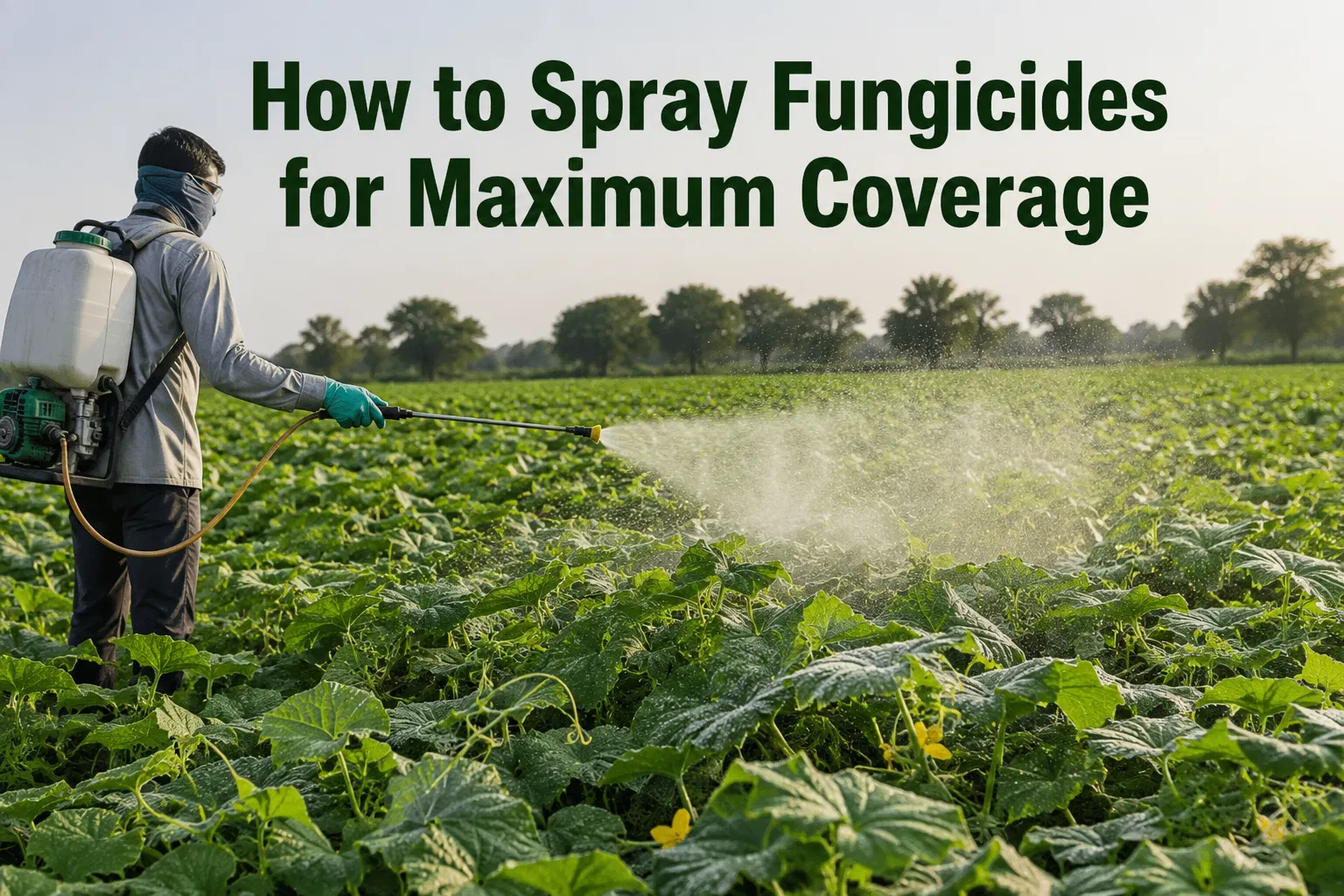
When fungal disease starts spreading, timing and coverage can make the difference between a healthy crop and a costly problem. Spraying fungicides correctly is not just about applying a product—it is about making sure every important surface gets protected. If you want better control, fewer misses, and stronger results from every application, understanding how to spray fungicides for maximum coverage is essential.
Why Maximum Coverage Matters
Fungicides work best when they reach the plant surfaces where spores land and disease begins. Poor coverage leaves gaps that fungi can exploit. Even the strongest fungicide will underperform if it does not contact the target area evenly.
Maximum coverage helps you:
- Improve disease prevention and suppression
- Reduce wasted product and unnecessary re-sprays
- Protect new growth and hard-to-reach plant surfaces
- Increase the return on your fungicide investment
Good spray technique is just as important as choosing the right fungicide.
Start with the Right Fungicide for the Job
Before you spray, make sure the fungicide matches the disease you are targeting. Different products work differently. Some are protectants that stay on the surface, while others are systemic and move within the plant. Knowing the product type helps determine how coverage should be approached.
Read the label carefully and confirm:
- The target crop or plant
- The disease to control
- Recommended application rate
- Spray volume and nozzle guidance
- Re-entry and pre-harvest intervals, if applicable
Tip: A fungicide can only perform well if it is applied according to the label. The label is the law and the best source for application details.
Choose the Right Sprayer and Nozzle
Your sprayer setup has a huge impact on coverage. The wrong nozzle or worn equipment can create uneven droplet distribution, poor canopy penetration, and missed surfaces.
Select nozzles that match your goal
Different nozzles produce different droplet sizes and spray patterns. For fungicide applications, you often want enough fine droplets to cover surfaces well, but not so fine that they drift away.
- Flat-fan nozzles: Common for many fungicide applications and provide even coverage
- Hollow-cone nozzles: Often used where better canopy penetration is needed
- Air-induction nozzles: Reduce drift while still providing useful coverage
Inspect sprayer components
Before every application, check for:
- Clogged nozzles
- Uneven wear
- Leaking hoses or fittings
- Incorrect pressure settings
- Dirty strainers or filters
Worn or partially blocked nozzles can make coverage inconsistent across the spray pattern.
Calibrate the Sprayer Before Use
Calibration ensures you are applying the correct amount of fungicide over the right area. Without calibration, you may apply too little for control or too much, which can waste product and increase the risk of crop injury or resistance pressure.
A properly calibrated sprayer helps you:
- Deliver the intended spray volume
- Maintain consistent coverage across the target area
- Improve application accuracy
- Save time and money over the season
If you have changed nozzles, pressure, ground speed, or spray volume, recalibrate before spraying.
Time Your Application for Best Results
Even perfect spraying will not overcome poor timing. Fungicides are usually most effective when applied before disease becomes severe. The earlier the product reaches the plant surface, the better the protection.
For maximum coverage and performance, spray when:
- Leaves are dry
- Wind is light and stable
- Rain is not expected immediately after application
- Plants are at the right growth stage for protection
Avoid spraying during strong winds, extreme heat, or conditions that cause rapid evaporation. These conditions can reduce deposition and increase drift.
Adjust Spray Volume to Match the Crop
One of the biggest reasons fungicide coverage fails is using the wrong spray volume. Dense canopies, tall crops, and vigorous growth often need more carrier volume to reach hidden surfaces.
Consider these factors when choosing spray volume:
- Crop type and row spacing
- Plant height and canopy density
- Target disease location on the plant
- Spray equipment type
Lower volumes may work in open canopies, but thicker foliage often requires more water to improve coverage. The goal is to get droplets onto the right surfaces, not just release spray into the air.
Use the Right Pressure and Speed
Sprayer pressure and travel speed directly affect droplet size, pattern, and coverage. Too much speed can reduce coverage because the sprayer has less time to deposit spray evenly. Excessive pressure may create smaller droplets that drift more easily.
Best practices for pressure and speed
- Maintain a consistent ground or travel speed
- Use pressure that produces the nozzle's intended droplet size
- Avoid sudden changes in speed while spraying
- Match equipment settings to the crop and weather
Consistency matters. Uniform application is key to maximum fungicide coverage.
Improve Canopy Penetration
Many fungal diseases begin in shaded, protected areas inside the plant canopy. If spray only lands on the top leaves, disease can still spread below. To improve penetration, you need to help the spray move through the canopy.
Practical ways to improve penetration include:
- Using the correct nozzle angle
- Adjusting spray nozzles to reach both upper and lower surfaces
- Spraying from the right height
- Reducing ground speed if needed
- Using enough spray volume for dense foliage
In some cases, targeting both sides of the canopy may improve protection, especially in row crops, orchards, and dense ornamentals.
Spray in the Right Weather Conditions
Weather has a major effect on how well fungicides cover plant surfaces. Calm, mild conditions usually give the best results. Wind, heat, and low humidity can all reduce spray quality.
Ideal conditions often include:
- Low to moderate wind
- Cooler temperatures
- Stable humidity
- No imminent rainfall
Wind can move droplets off target, while hot, dry weather can increase evaporation before droplets land. Always check the forecast and spray window before starting.
Use Water Quality That Supports Performance
Water quality can influence fungicide effectiveness and spray consistency. Hard water, excessive sediment, or incorrect pH may reduce product performance in some situations.
Before mixing, consider:
- Water hardness
- pH level
- Suspended particles or sediment
- Compatibility with the fungicide label
If water quality is a concern, test it and follow product guidance on conditioners or adjuvants. Always verify compatibility before adding anything to the tank.
Mix and Agitate Properly
Even coverage starts in the tank. Poor mixing can lead to uneven concentration, settled product, or inconsistent spray delivery. Follow the label directions for mixing order and agitation.
Good mixing practices include:
- Fill the tank partially with clean water
- Add products in the recommended order
- Keep agitation running during mixing and spraying
- Top off with the remaining water
- Do not let the tank sit long enough for settling
Uniform spray solution helps ensure each droplet contains the intended fungicide concentration.
Check Coverage as You Spray
Do not assume coverage is good just because the sprayer is running. It is smart to verify what is happening on the plant. Water-sensitive paper, dye tests, or visual inspection can help identify missed areas and weak spots.
Look for:
- Uniform droplet distribution
- Coverage on upper and lower leaf surfaces
- Penetration into the canopy
- Overspray or excessive runoff
If you see gaps, adjust nozzle type, volume, pressure, or travel speed before the next pass.
Avoid Common Mistakes
Several common errors can reduce fungicide coverage and weaken disease control. Avoiding these problems can make a major difference in results.
- Spraying too fast
- Using worn nozzles
- Skipping calibration
- Spraying in windy conditions
- Using the wrong spray volume
- Ignoring canopy density
- Failing to inspect coverage
Small mistakes can create big gaps in protection.
Final Thoughts
How to spray fungicides for maximum coverage comes down to preparation, equipment, timing, and technique. The best fungicide cannot do its job if it does not reach the right plant surfaces in the right amount. By choosing the proper nozzle, calibrating your sprayer, adjusting for canopy and weather, and checking your coverage as you go, you can dramatically improve disease control.
If you want stronger results from every application, focus on coverage first. Better spraying means better protection, less waste, and more reliable fungicide performance when it matters most.